Custom Noren: Design Your Unique Japanese Curtain (Made in Japan)
The Art and History of Noren: From Function to Personal Expression
Noren's Traditional Roles: Shop Signage, Privacy, and Decoration
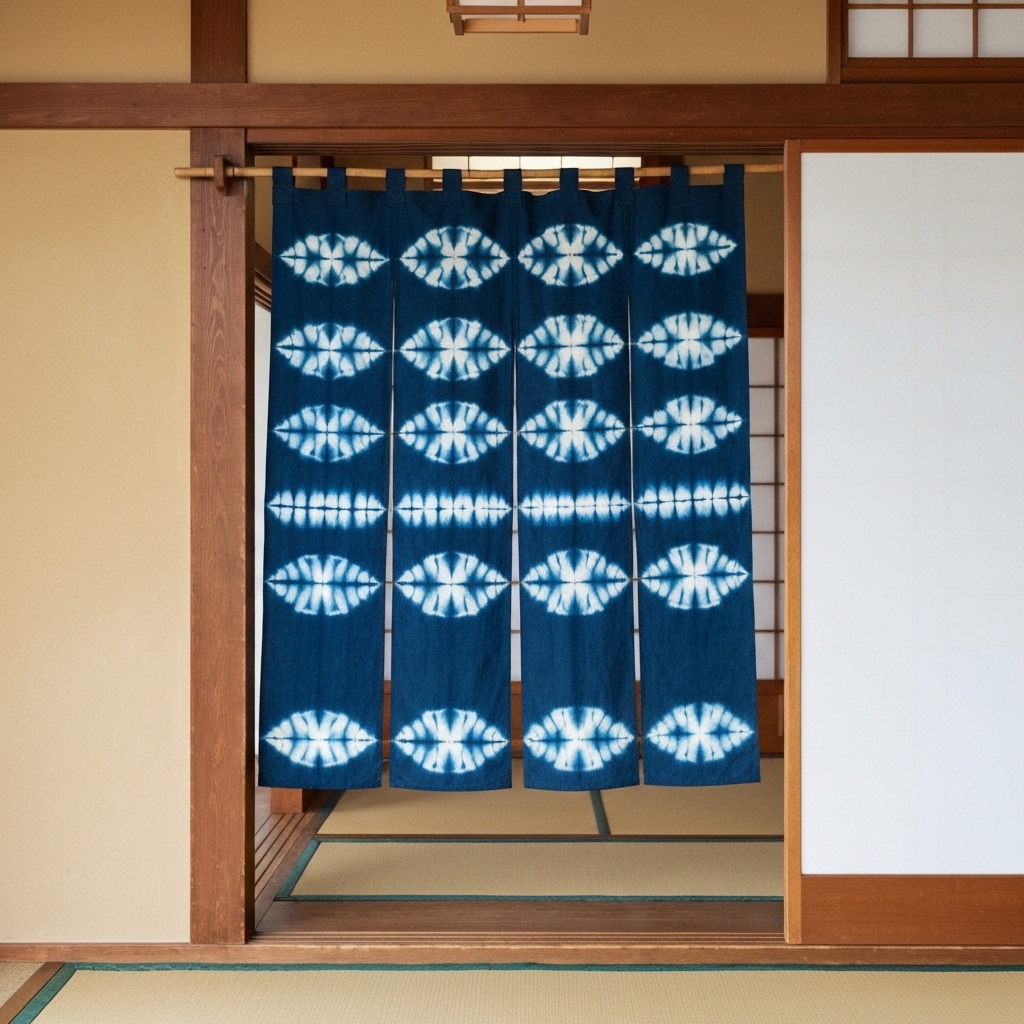
The noren (暖簾), that quintessential Japanese fabric divider, is far more than just a curtain. For centuries, it has served a vital role in both commerce and home life, acting as shop signage, a subtle room divider, and a charming decorative element. Imagine strolling through a traditional shotengai (商店街, shopping street) in Kyoto. The noren hanging at the entrance of each shop – the soft swish of momen (木綿, cotton) as you pass – immediately tells you something about what awaits inside.
Traditionally, a noren’s primary function was as a shop sign. The design, often featuring the shop’s name or mon (紋, family crest/logo), clearly indicated the type of business. A sake shop, for instance, might display a noren dyed with its brewery's unique emblem, or even simply the kanji for sake (酒). The degree of wear and tear on a noren was also a subtle indicator. A well-worn noren suggested a long-established and trusted business, its threads bearing witness to countless customers who had passed beneath.
Beyond signage, noren also offered a degree of privacy. Hung in doorways or across openings, they provided a visual barrier without completely closing off a space. In a traditional Japanese home, a noren might separate the kitchen from the dining area or create a more intimate space within a larger room. The standard length is around 85cm (33.5 inches), long enough to provide visual separation while allowing easy passage. Smaller noren measuring around 45cm (17.7 inches) in length are also common, particularly for cupboards or smaller openings.
Finally, noren have always been decorative. The simple act of hanging a noren can instantly add a touch of Japanese aesthetics to any space. From simple, indigo-dyed aizome (藍染め) noren to more elaborate, hand-painted designs, they offered an opportunity for self-expression and added a touch of visual appeal to both commercial and domestic settings.
Evolution of Noren Design: From Simple Patterns to Intricate Imagery
The earliest noren were likely quite simple, made from basic materials like asa (麻, hemp/linen) and dyed with natural pigments. These functional curtains served their purpose without much embellishment. However, as textile techniques advanced and commercial prosperity grew, noren designs became increasingly sophisticated.
The introduction of cotton (momen) allowed for finer weaves and more detailed printing. The development of dyeing techniques like katazome (型染め, stencil dyeing) enabled intricate patterns and imagery to be reproduced efficiently. Common motifs included auspicious symbols like cranes, turtles, and pine trees, as well as scenes from nature, historical figures, and even playful depictions of everyday life.
Noren designs also reflected the changing seasons. A summer noren might feature cool, refreshing colors and images of flowing water or blooming irises. An autumn noren, on the other hand, might showcase vibrant foliage or persimmon fruits. This seasonal rotation of noren is still practiced by many businesses and households in Japan today.
Consider the example of a traditional ryokan (旅館, Japanese inn). The noren at the entrance often features the inn's name or logo, but it might also include subtle details that hint at the inn's unique character or the surrounding environment. A ryokan nestled in the mountains might display a noren with a depiction of the local flora and fauna, while a seaside ryokan might feature images of waves or seabirds.
Expert Insight: When choosing a noren with kanji, take the time to learn the meaning and origin of the words, so you can appreciate the deeper significance of the design.
Noren in Modern Japanese Culture: Continued Significance and New Applications
While noren have a long and rich history, they are by no means relics of the past. They remain a vital part of modern Japanese culture, both in their traditional roles and in new and innovative applications.
You will still see noren adorning the entrances of countless shops, restaurants, and businesses throughout Japan. From tiny ramen shops to upscale boutiques, they continue to serve as a welcoming sign and a visual identifier. If you run an eatery, our restaurant noren guide covers branding, sizing, and durability for commercial use. Many onsen (温泉, hot spring baths) still use noren with the kanji 男 (otoko, male) and 女 (onna, female) to differentiate the bathing areas.
Beyond commercial use, noren are also popular in modern homes. They can be used to divide a studio apartment, create a sense of privacy in a shared living space, or simply add a touch of Japanese style to a room. Modern designs range from minimalist patterns to bold, contemporary artwork, reflecting the diverse tastes and preferences of today's consumers.
Furthermore, noren have found new applications in areas such as interior design and event decor. They can be used as wall hangings, window treatments, or even as backdrops for photo shoots. The saotooshi (竿通し, rod pocket) at the top makes them easy to hang with a simple tsuppari-bou (突っ張り棒, tension rod). Their versatility and aesthetic appeal make them a popular choice for those seeking to create a unique and inviting atmosphere. Noren design has evolved alongside culture, but the enduring appeal of the noren demonstrates their timeless beauty and functionality.
Unlocking Your Design Vision: Elements to Consider for a Custom Noren
Color Psychology: Choosing Hues that Reflect Your Brand or Personal Style
Beyond mere aesthetics, color wields significant influence, shaping perceptions and evoking emotions. In the context of custom 暖簾 (noren), strategic color choices can profoundly impact the message you wish to convey, whether for a business establishment or a personal residence.
In Japanese culture, certain colors carry distinct symbolic weight. For instance, red (赤, aka) is often associated with good luck, protection, and warding off evil. Consider its prevalent use in torii gates and Shinto shrines. While a bold red noren might command attention, it's crucial to use it judiciously to avoid overwhelming the viewer. Subtler shades, like a muted crimson (深紅, shinku), could achieve a similar effect with greater refinement.
Blue (青, ao), particularly indigo (藍色, ai-iro), is historically significant thanks to 藍染め (aizome) dyeing traditions. It's often linked to tranquility, reliability, and cleanliness, making it a common choice for businesses wanting to project trust and stability. Think of the many indigo noren gracing the entrances of traditional soba shops.
Conversely, bright yellows or oranges can exude energy, warmth, and cheerfulness. These are frequently observed at ramen shops or establishments aiming for a lively atmosphere. Consider how a carefully chosen yellow can attract the eye.
Consider how your business name interacts with color. A pharmacy utilizing a dark, calming blue is common, since people want to see the establishment and feel like it is a safe place.
Expert Insight: When choosing colors, consider the natural lighting of the location where the noren will hang. Colors appear differently under direct sunlight compared to fluorescent or incandescent light. Always test color swatches under the actual lighting conditions to ensure the desired effect.
Imagery and Motifs: Incorporating Meaningful Symbols and Patterns
Imagery breathes life into your custom noren, transforming it from a mere curtain into a visual narrative. In Japan, specific motifs carry deep cultural significance, enriching the design with layers of meaning.
Consider incorporating traditional Japanese patterns. Waves (波, nami) represent resilience and adaptability, while cherry blossoms (桜, sakura) symbolize the fleeting beauty of life. Bamboo (竹, take) embodies strength, flexibility, and prosperity. Using these symbols allows you to tap into a rich cultural heritage while adding visual interest.
For businesses, the incorporation of a kamon (家紋) or family crest, even a modernized or stylized version, is an effective way to brand your business with meaning.
Conversely, don't feel obligated to adhere solely to traditional motifs. Abstract designs, geometric patterns, or original artwork can create a truly unique and eye-catching noren. Browse our noren design ideas for inspiration across different styles.
Remember scale. A large, intricate design might be lost on a small noren, while a simple motif can be overpowering if repeated excessively on a larger one. Experiment with different layouts and consider the overall balance of the design.
Text and Typography: Selecting Fonts and Wording that Communicate Effectively
The choice of text and typography on your custom noren is critical for effectively conveying your message. Clarity and legibility are paramount, especially for businesses aiming to attract customers.
Japanese typography offers a diverse range of styles, from the traditional brushstroke elegance of calligraphy (書道, shodō) to the clean, modern lines of Gothic fonts. If using Japanese text, ensure the chosen font is appropriate for the tone you wish to convey. A formal restaurant might opt for a refined, calligraphic style, while a casual izakaya could use a bolder, more playful font.
Similarly, when selecting fonts for English text, consider their readability and overall aesthetic. Sans-serif fonts generally offer better legibility at a distance, making them a suitable choice for business names or short messages. Serif fonts can add a touch of elegance and sophistication.
Consider the sizing carefully. The characters need to be readable from a reasonable distance.
Avoid overcrowding the noren with text. A concise and impactful message is far more effective than a lengthy, cluttered one. Prioritize essential information, such as your business name or a brief tagline.
Experiment with different text layouts to find the most visually appealing arrangement. Horizontal text is generally easier to read for English speakers, while vertical text is common in traditional Japanese signage. The arrangement also affects the overall aesthetic.
Material Matters: Choosing the Right Fabric for Your Custom Noren
Choosing the right fabric is paramount to achieving the desired aesthetic and functional purpose for your custom 暖簾 (noren). The material impacts everything from drape and light diffusion to durability and the vibrancy of your design. While the possibilities are vast, understanding the core characteristics of different fabrics will empower you to make informed decisions that align with your unique vision.
Traditional Fabrics: Cotton, Linen, and Hemp Properties and Aesthetics
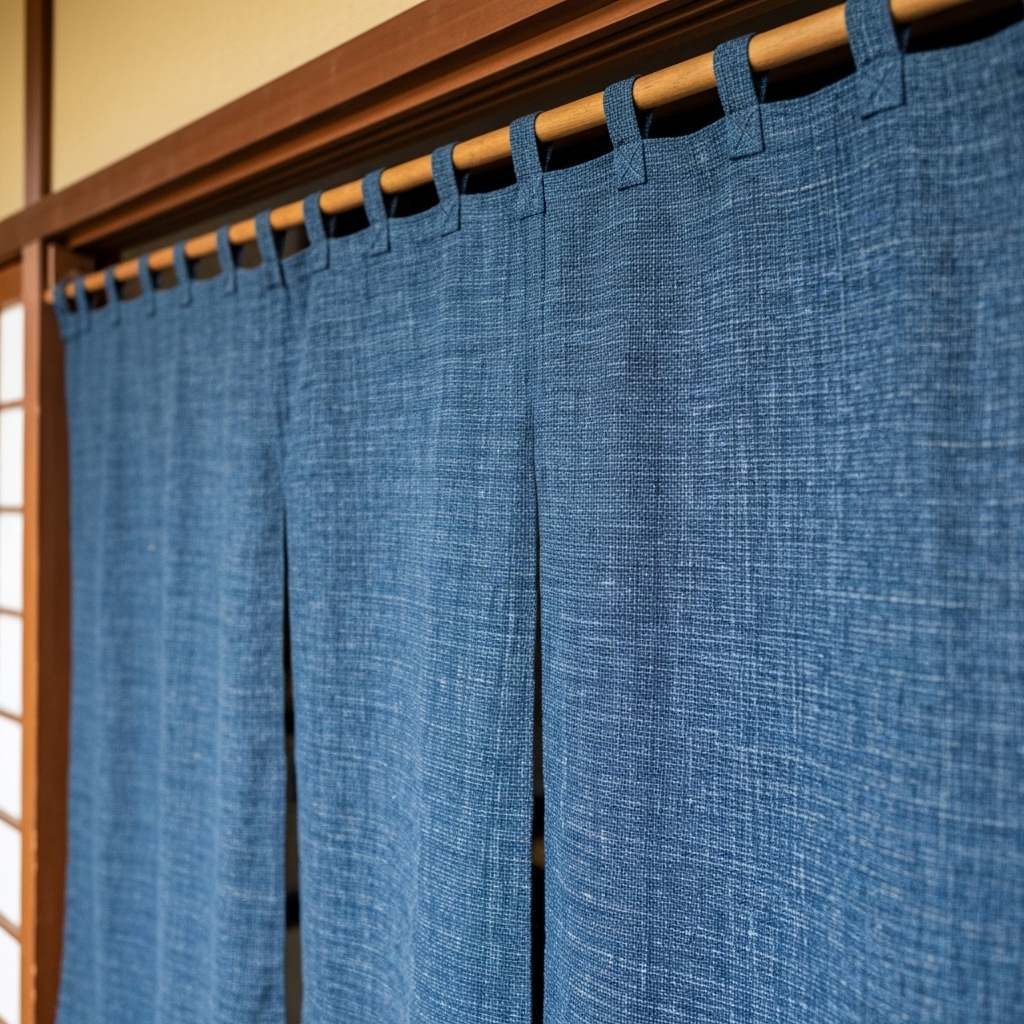
Historically, 綿 (men, cotton fabric) especially 木綿 (momen, cotton) has been a workhorse for 暖簾 due to its affordability, ease of dyeing, and comfortable feel. For a side-by-side comparison of all common fabrics, see our noren materials guide. Look closely at vintage shop 暖簾 and you'll often find a slightly rougher, heavier-weight cotton. These thicker weaves were prized for their robustness in high-traffic areas, capable of withstanding sun, wind, and frequent handling. A heavier cotton will create a more substantial drape, lending a feeling of groundedness and tradition. The inherent texture of cotton also adds depth to printed designs, especially those employing traditional techniques.
麻 (asa), encompassing both linen and hemp, presents a naturally elegant alternative. Linen, known as リネン (rinen) in Japan, offers a distinctive crispness and subtle sheen. Its fibers are stronger than cotton, contributing to superior longevity, and its open weave allows for excellent airflow, making it ideal for spaces where ventilation is important. While slightly more prone to wrinkles than cotton, these creases contribute to its character and rustic charm. Hemp, similarly robust, boasts a coarser texture and a distinctive earthy appeal. Both linen and hemp are incredibly absorbent, which is something to consider in humid environments. These qualities make them attractive choices for tea rooms or restaurants seeking a natural, refined aesthetic. Linen and hemp 暖簾 age beautifully, developing a unique patina over time.
Modern Fabric Options: Polyester and Blends for Durability and Print Quality
Modern fabric technology has introduced polyester and various blends to the world of 暖簾. Polyester offers exceptional durability, resistance to fading and shrinking, and superior colorfastness. It’s particularly advantageous for outdoor or high-traffic settings where the 暖簾 will be exposed to the elements. Polyester’s smooth surface also provides an excellent canvas for detailed printing, allowing for intricate designs and vibrant colors that remain crisp and clear over time.
Blended fabrics, such as cotton-polyester mixes, seek to combine the best qualities of both materials. These blends offer enhanced durability compared to pure cotton while retaining some of the natural feel and drape of the traditional fabric. They are often a cost-effective choice for businesses seeking a balance between longevity, aesthetics, and price point. The ratio of cotton to polyester will influence the final characteristics of the fabric. For example, a higher cotton content will result in a softer feel and more natural drape, while a higher polyester content will provide greater wrinkle resistance and color retention.
Fabric Weight and Texture: Impact on Drape, Light Filtration, and Visual Appeal
The weight and texture of the fabric profoundly influence how a 暖簾 hangs, how much light it filters, and its overall visual impact. Lighter-weight fabrics, generally between 100-150 gsm (grams per square meter), create a softer, more flowing drape and allow more light to pass through. These are well-suited for creating an airy and inviting atmosphere. Heavier-weight fabrics, ranging from 200 gsm upwards, offer a more substantial drape, provide greater privacy, and block out more light. These are a smart choice for spaces where privacy or light control are a priority, such as dressing rooms or storage areas.
The texture of the fabric also plays a crucial role in the overall aesthetic. Smooth fabrics tend to create a more modern and refined look, while textured fabrics add depth and character. The weave pattern also contributes to the texture. For instance, a plain weave will have a smoother, more uniform surface compared to a twill weave, which will have a diagonal ribbing effect. The choice of texture depends entirely on the desired aesthetic and the overall design of the space.
Expert Insight: Before committing to a large order, request fabric samples in different weights and textures. Hang them in the intended location to assess the drape, light filtration, and overall visual impact under different lighting conditions. This small step can prevent costly mistakes and ensure that your custom 暖簾 perfectly complements its surroundings.
Sizing and Construction: Ensuring Your Custom Noren Fits Perfectly
Determining the Ideal Width and Length Based on Doorway or Opening
The proportions of your noren (暖簾) are paramount to achieving the desired effect, whether it's a subtle accent or a statement piece. Our noren size guide provides detailed measuring instructions for any opening. In Japan, a very general rule of thumb is to have the noren width be approximately one-half to two-thirds of the opening's width. This allows for that characteristic gentle gathering, enabling easy passage while still preserving a sense of separation. For example, for a standard 85cm (33.5 inch) doorway, a noren between 45cm to 60cm (18 to 24 inches) is a good starting point. Keep in mind this is just a start.
The length is equally critical. Consider the function of the noren. A shorter noren might be used above a counter in a restaurant, offering a glimpse of the activity behind it. A longer noren, especially in a traditional ryokan (旅館 – Japanese Inn), can provide more privacy to a doorway or entryway. Think about the visual weight you want to create; a floor-length noren can make a space feel grander, while a shorter one can feel more casual and welcoming. Also, account for any unevenness in the floor that would affect the finished look. Measure from the rod to the desired hem point on both sides of the opening.
When thinking about length, consider the type of space and its purpose. A noren marking the entrance to a sentō (銭湯 – public bathhouse) will often be shorter, allowing for easy movement and preventing the fabric from dragging on the wet floor. In contrast, a noren used within a home might be longer, offering a greater sense of separation between spaces.
Expert Insight: Before committing to a final size, create a paper mockup of your desired noren dimensions and tape it to the doorway. Live with it for a few days to ensure you're happy with the scale and visual impact.
Slit Configuration: Single, Double, or Multiple Slits and Their Purposes
The slits, or kireme (切れ目), at the bottom of a noren aren't merely decorative; they serve a practical purpose by allowing easy passage. The number and depth of these slits can significantly alter the noren's appearance and functionality.
A single slit is less common, often found in shorter noren intended more as decorative panels or shop signs than true doorway dividers. Double slits are the most prevalent style, striking a balance between ease of movement and maintaining a visual barrier. The depth of the slit also plays a role; deeper slits allow for easier passage, while shallower slits maintain a more structured look.
Multiple slits, such as three or more, are typically seen in longer noren, particularly those used in commercial settings like restaurants. These multiple slits further facilitate movement, especially when carrying trays or other items. The arrangement of these slits can also be customized, with variations in width and depth to create different visual effects. For instance, a noren with two wider outer slits and a narrower center slit offers a unique aesthetic.
Beyond purely practical consideration, a greater number of slits will influence the overall drape of the noren. The more segments there are, the more movement and fluidity the noren will display when someone passes through or when exposed to a draft. This can add a dynamic feel to your space.
Header Styles: Rod Pockets, Ties, and Grommets for Hanging Options
The header of your noren, which is the top portion used for hanging, is critical for both aesthetics and functionality. The most traditional method uses a saotooshi (竿通し – rod pocket), a sewn channel that allows a rod to slide through. These are commonly used with tsuppari-bou (突っ張り棒 – tension rods), readily available in various lengths.
Ties, traditionally made of the same fabric as the noren, offer a more rustic and handcrafted feel. These are sewn along the top edge and can be tied to a rod or other support. They allow for a more adjustable hanging height, as the ties can be tightened or loosened.
Grommets, while less common in traditional Japanese noren, offer a modern and durable option. These metal rings are inserted into reinforced holes along the top edge, allowing the noren to be hung from hooks or rings. Grommets provide a clean, contemporary look and are particularly suitable for heavier fabrics or noren that will be frequently adjusted. The spacing of the grommets also needs careful consideration to evenly distribute the noren's weight along the hanging rod.
Bringing Your Custom Noren to Life: Design Process and Collaboration
Working with Designers: Communicating Your Vision and Receiving Feedback
Commissioning a custom 暖簾 (noren) design often begins with bridging the gap between your mental picture and the artist's interpretation. It’s crucial to clearly articulate your aesthetic preferences. This goes beyond simply stating "I like blue." Instead, gather visual references. Compile a mood board of fabrics, patterns, color palettes, and even interior design styles that resonate with you. Don't underestimate the power of Japanese washi paper samples showcasing texture and color gradients, or photographs of antique textiles exhibiting intricate motifs.
When describing your ideal noren, be specific about the intended atmosphere. Are you aiming for a rustic, farmhouse aesthetic echoing a traditional minshuku (民宿, guesthouse)? Or a sleek, minimalist vibe reminiscent of a modern Ginza boutique? Conveying the feeling is just as important as the visual details.
Communication shouldn’t be one-way. Engage actively with the designer’s feedback. They may offer valuable insights regarding the practicality of your design, pointing out, for instance, that overly intricate patterns may not translate well onto a certain fabric type, or that the desired color combination may shift unpredictably during the dyeing process. Remember that collaboration is key, and the artist’s expertise is an asset to achieving your vision. Don't be afraid to ask them to share their vision and why they are suggesting changes. You may find they are thinking of details, like sunlight fading, that you haven't considered.
Expert Insight: Ask the designer to provide preliminary sketches in grayscale. This allows you to focus solely on the composition and layout without being distracted by color choices. This is especially helpful for appreciating the interplay of positive and negative space, which is fundamental in Japanese design.
Creating Your Own Design: Utilizing Digital Tools and Templates
While professional designers offer invaluable expertise, creating your own noren design is entirely achievable with readily available digital tools. Several graphic design software options, ranging from free online platforms to professional-grade applications, provide templates and drawing tools suitable for creating custom noren patterns.
Begin by finding a template that matches the desired dimensions of your noren. Remember to consider the saotooshi (竿通し, rod pocket) at the top when calculating the overall height. Most templates are measured in pixels, so understanding how pixels translate into centimeters or inches is crucial. 300 DPI (dots per inch) is a standard resolution for print-ready artwork.
Experiment with different elements such as geometric patterns, Japanese calligraphy, or stylized floral motifs. Many digital tools offer libraries of pre-made icons and illustrations, providing a starting point for your design. Remember that simplicity is often key in Japanese aesthetics. Resist the urge to overcrowd the design. Allow for ample negative space to create a sense of balance and tranquility. Consider mirroring the pattern to create a symmetrical design – a common technique employed in traditional Japanese textiles.
Proofing and Mockups: Ensuring Accuracy and Satisfaction Before Production
Before committing your design to the dyeing process, meticulous proofing and mockups are essential. Request a digital mockup of your design superimposed on a photograph of the intended fabric. This will provide a realistic preview of the final product, allowing you to assess how the colors and patterns interact with the fabric's texture.
Pay close attention to the scale of the design elements. A pattern that looks appealing on a computer screen may appear distorted or overwhelming when enlarged to the actual size of the noren. Request a printed proof of a small section of the design, particularly if it features intricate details or subtle color gradations. This allows you to assess the accuracy of the colors and the sharpness of the lines.
Examine the mockup under different lighting conditions to ensure that the colors remain true and the design retains its impact. Ask for adjustments to the design or color palette if necessary. This is your last chance to fine-tune the details and ensure that the final product meets your expectations.
Remember that handmade items often have slight variations. Accept a degree of individuality in your custom 暖簾 (noren). This is part of their charm and proof that they were made with care! A custom noren also makes a wonderful Japanese noren gift for anyone who appreciates authentic craftsmanship.
Maintaining the Beauty of Your Custom Noren: Care and Longevity Tips
Your custom 暖簾 (noren) is more than just a fabric partition; it's a reflection of your personal style and a connection to Japanese tradition. With proper care, it can remain a vibrant part of your home or business for years to come.
Cleaning Instructions: Washing, Ironing, and Stain Removal Techniques
While specific cleaning needs vary depending on the material and dyes used, a gentle approach is always best. Consider the original washing instructions, if any, provided when your noren was created. When in doubt, err on the side of caution.
For general spot cleaning, a soft, damp cloth and mild, pH-neutral detergent is often sufficient. Test the solution on an inconspicuous area first to ensure it doesn't affect the color. Blot gently, working from the outside of the stain inward to prevent spreading. Avoid rubbing vigorously, as this can damage the fibers and distort the print.
If a full wash is required, hand-washing is generally recommended, especially for delicate fabrics like 絹 (kinu, silk) or items with intricate designs. Use cool water and a mild detergent specifically designed for delicates. Gently agitate the water and allow the noren to soak for no more than 30 minutes. Rinse thoroughly until all traces of detergent are gone. Avoid twisting or wringing out the fabric, as this can cause it to lose its shape. Instead, gently press out excess water or roll it in a clean towel.
For items made of 綿 (men, cotton) or 麻 (asa, linen), machine washing may be possible on a delicate cycle with cool water. Place the noren in a mesh laundry bag to protect it from snagging or tearing. Avoid using bleach or harsh chemicals, as these can fade the colors and weaken the fibers. Always hang to dry in a shaded area, away from direct sunlight.
Ironing should be done on a low setting, with the fabric slightly damp. Use a pressing cloth to protect the design and prevent scorching. For 藍染め (aizome, indigo-dyed) items, be especially careful, as the dye can sometimes transfer.
Expert Insight: For stubborn stains, consider taking your noren to a dry cleaner specializing in textiles with hand-painted designs. Professional cleaning can help preserve the integrity of your noren and prevent further damage. Always communicate the material and dyes used, as well as any potential sensitivities.
Proper Storage: Protecting Your Noren from Damage and Fading
Proper storage is crucial for preventing damage from dust, pests, and fading. When not in use, your noren should be stored in a cool, dry place, away from direct sunlight and humidity.
Before storing, ensure the noren is clean and completely dry. Fold it neatly along the existing seams to prevent creasing. Wrap it in acid-free tissue paper or unbleached muslin to protect it from dust and light.
Avoid storing your noren in plastic bags, as they can trap moisture and promote mildew growth. Instead, use a breathable cotton bag or a cedar chest, which can also help repel insects. Consider adding silica gel packets to absorb any excess moisture.
Periodically check your stored noren for signs of pests or damage. Air it out every few months to prevent the build-up of odors and moisture. Refold along different lines to prevent permanent creasing.
If space is limited, consider hanging your noren in a closet, away from direct light and sharp objects. Use padded hangers to prevent creases and distribute the weight evenly.
Repair and Restoration: Addressing Tears, Fraying, and Other Issues
Even with the best care, tears, fraying, and other minor damages can occur over time. Addressing these issues promptly can prevent them from worsening and extend the lifespan of your noren.
For small tears or holes, hand-stitching is often the best solution. Use a fine needle and thread that matches the color and material of the noren. Stitch along the tear, using small, even stitches to create a secure and invisible repair. If the fabric is thin or fragile, consider using a patch of similar material to reinforce the area.
Fraying edges can be trimmed carefully with sharp scissors. To prevent further fraying, consider applying a fabric sealant or hemming the edges with a narrow stitch. This is particularly important for areas around the 竿通し (saotooshi, rod pocket).
For more significant damage, such as large tears or extensive fading, professional restoration may be necessary. A textile conservator can assess the damage and recommend the best course of action. This may involve patching, re-dyeing, or reinforcing the fabric.
When considering repair or restoration, be sure to choose a professional who has experience working with delicate textiles and traditional Japanese techniques. They can help preserve the original character and beauty of your custom noren for generations to come.