Noren Gift Guide: Choosing the Perfect Japanese Curtain
Decoding the Symbolism: Noren Motifs and Their Meanings for Gifting
The beauty of a noren (暖簾), that humble yet impactful Japanese fabric divider, lies not only in its aesthetic appeal but also in the rich symbolism woven into its designs. Gifting a noren goes beyond simply giving a decorative item; it's a gesture laden with meaning and well-wishes. Understanding these motifs and their cultural significance allows you to choose a noren that truly resonates with the recipient and conveys your heartfelt sentiments.
Common Noren Designs: Auspicious imagery (cranes, bamboo, plum blossoms) and their associated well-wishes
Many noren designs draw inspiration from nature, particularly motifs considered auspicious in Japanese culture. These symbols, often deeply rooted in folklore and historical context, carry specific meanings and convey wishes for good fortune.
-
Cranes (鶴, tsuru): The crane is a powerful symbol of longevity and good fortune. Legend says that cranes live for a thousand years, making them synonymous with a long and healthy life. A noren featuring cranes, especially two cranes together, often represents marital happiness and enduring love. You might see them depicted in flight against a backdrop of swirling clouds, or gracefully perched amongst pine trees.
-
Bamboo (竹, take): Bamboo, with its resilience and ability to bend without breaking, embodies strength, flexibility, and perseverance. It is also associated with prosperity and growth, as it grows quickly and steadily. A noren showcasing bamboo stalks could be a wonderful gift for someone embarking on a new venture or facing challenges, symbolizing the ability to overcome obstacles and thrive.
-
Plum Blossoms (梅, ume): Plum blossoms are among the first flowers to bloom in spring, even while snow still lingers, making them a potent symbol of hope, renewal, and the ability to overcome adversity. They represent the beginning of a new season and the promise of good things to come. Gifting a noren with plum blossoms can be a thoughtful way to wish someone strength during a difficult time or celebrate a fresh start. If the recipient prefers floral motifs, a cherry blossom noren is another beautiful option that symbolizes the fleeting beauty of life.
-
Other Frequent Motifs:
- Maneki Neko (招き猫, beckoning cat): Good luck and fortune, especially in business. Often seen at the entrance of shops and restaurants. Cat lovers may also enjoy browsing noren with cat designs.
- Daruma (達磨): Perseverance and achieving goals. One eye is painted in when setting a goal, the other when the goal is achieved.
- Waves (Nami, 波): Strength, resilience, and adaptability. Often depicted as stylized, rhythmic patterns.
These are just a few examples. The possibilities are vast, and many noren combine multiple motifs to create even more nuanced meanings. For a deeper dive into the history and cultural roots of these designs, see our guide on the meaning and history of noren.
Choosing a Motif for the Recipient: Matching designs to personal values, hobbies, or desired outcomes (e.g., good health, prosperity)
Selecting the right noren design is key to making your gift truly personal and meaningful. Consider the recipient's personality, values, hobbies, and aspirations. Are they a business owner hoping for prosperity? Perhaps a noren with Maneki Neko would be appropriate. Are they passionate about a particular art form? A design inspired by traditional ukiyo-e (浮世絵, woodblock prints) might be ideal.
For someone focused on health and well-being, a noren featuring cranes or bamboo would be a fitting choice. If the recipient is starting a new chapter in their life, plum blossoms could symbolize a promising future. If they value tranquility and mindfulness, a noren with a simple, elegant design featuring nature scenes or calligraphy could be perfect.
Think about their home decor as well. A noren should complement the existing style and create a harmonious atmosphere. If their home is decorated in a traditional Japanese style, a noren with classic motifs and colors would be suitable. If their home has a more modern aesthetic, a noren with a contemporary design or abstract patterns might be a better fit. Our noren design ideas guide covers a wide range of styles to help you match the recipient's taste.
The size of the noren also matters. Standard sizes are commonly found around 85 cm (approximately 33.5 inches) wide and 150 cm (approximately 59 inches) long, but smaller versions for doorways or larger versions to divide rooms exist. Consider the space where the recipient intends to hang the noren to ensure it fits appropriately.
Beyond the Visual: Understanding the cultural significance of specific colors and patterns in a Japanese noren gift
Beyond the pictorial motifs, the colors and patterns used in a noren also carry significant meaning. In Japanese culture, colors are not merely aesthetic choices; they are imbued with symbolism and can convey specific emotions and intentions.
- Red (赤, aka): Associated with vitality, energy, and protection. Often used to ward off evil spirits and bring good luck.
- White (白, shiro): Represents purity, innocence, and new beginnings. Can also symbolize mourning, so consider the context carefully.
- Black (黒, kuro): Traditionally associated with formality, elegance, and strength. Can also represent mystery and the unknown.
- Gold (金, kin): Symbolizes wealth, prosperity, and success. Often used to create a sense of luxury and prestige.
- Blue (青, ao): Represents tranquility, calmness, and serenity. Associated with the ocean and the sky.
Patterns, too, have cultural significance. Geometric patterns like shippo (七宝), a pattern of overlapping circles, represent harmony and endless connections. Seigaiha (青海波), a wave pattern, symbolizes peace and good fortune that lasts forever.
Expert Insight: Don't be afraid to ask a Japanese friend or acquaintance for advice if you're unsure about the meaning of a particular motif or color combination. Their insights can help you choose a noren that is both beautiful and culturally appropriate.
Materials and Construction: Appreciating the Craftsmanship Behind a Japanese Noren
Fabric Choices: Hemp and Silk — Traditional Luxury Materials
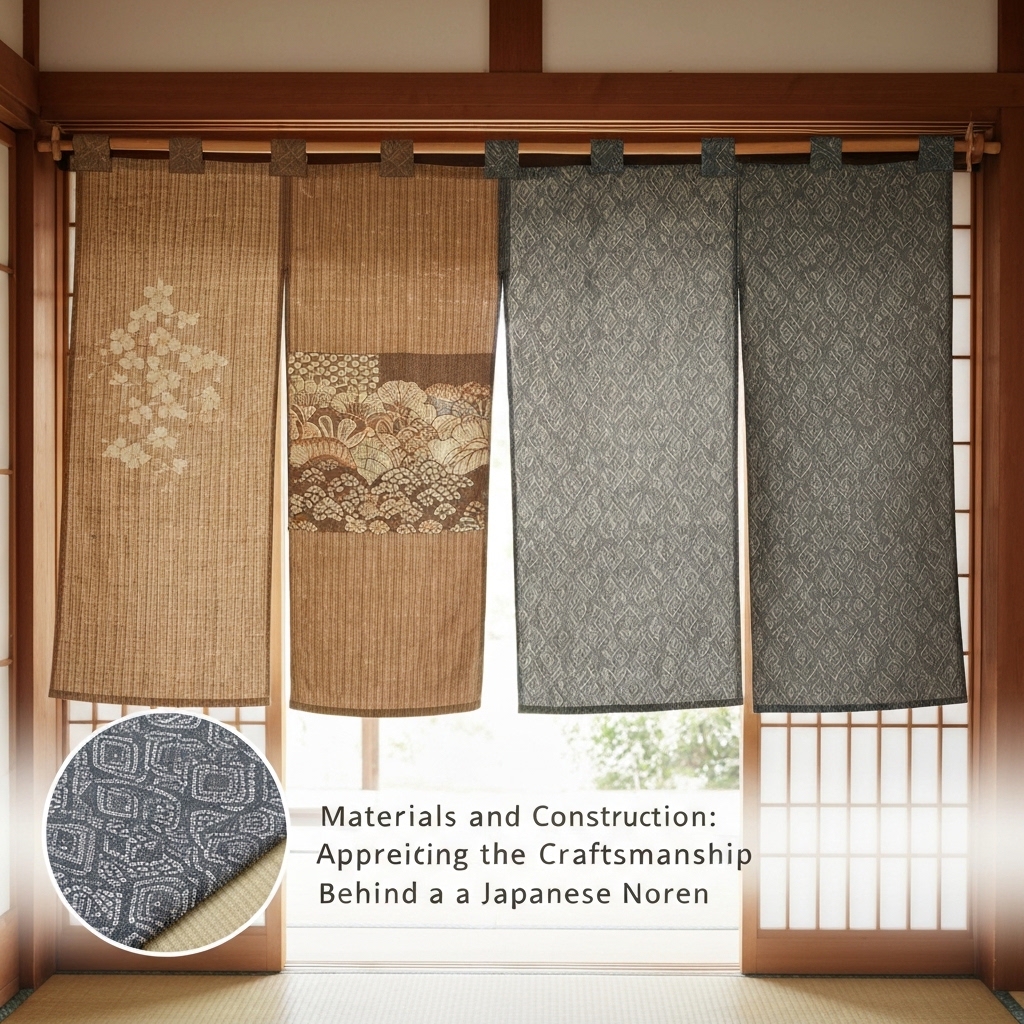
The soul of a noren (暖簾) lies in its fabric. The choice isn't arbitrary; each material possesses distinct qualities that influence the drape, durability, and overall aesthetic. While certain synthetic blends exist, the most treasured noren are crafted from natural fibers, each whispering a story of Japanese tradition.
Hemp (asa 麻) holds a venerable position. Its coarse texture and natural resistance to pests made it a historically important textile. A hemp noren presents a rustic charm, perfect for establishments aiming for a connection to the past or a natural, unrefined aesthetic. You'll often see it in soba (蕎麦) restaurants, its sturdy presence conveying a sense of timeless tradition. One characteristic of hemp is its tendency to wrinkle slightly, which many appreciate as part of its character.
Silk (kinu 絹), the most luxurious choice, lends an air of refined elegance. The smooth, flowing drape of silk creates a visually stunning entrance. Silk noren are less common due to their delicate nature and higher cost but are frequently used to delineate special spaces, or mark the entrances to traditional tea rooms. Because silk absorbs dyes readily, it allows for the most vibrant and intricate designs, often featuring hand-painted scenes. Given its susceptibility to damage from sun and moisture, it’s typically reserved for indoor use.
Dyeing Techniques: Exploring Traditional Methods like Indigo Dyeing (Aizome) and Their Unique Aesthetic Qualities
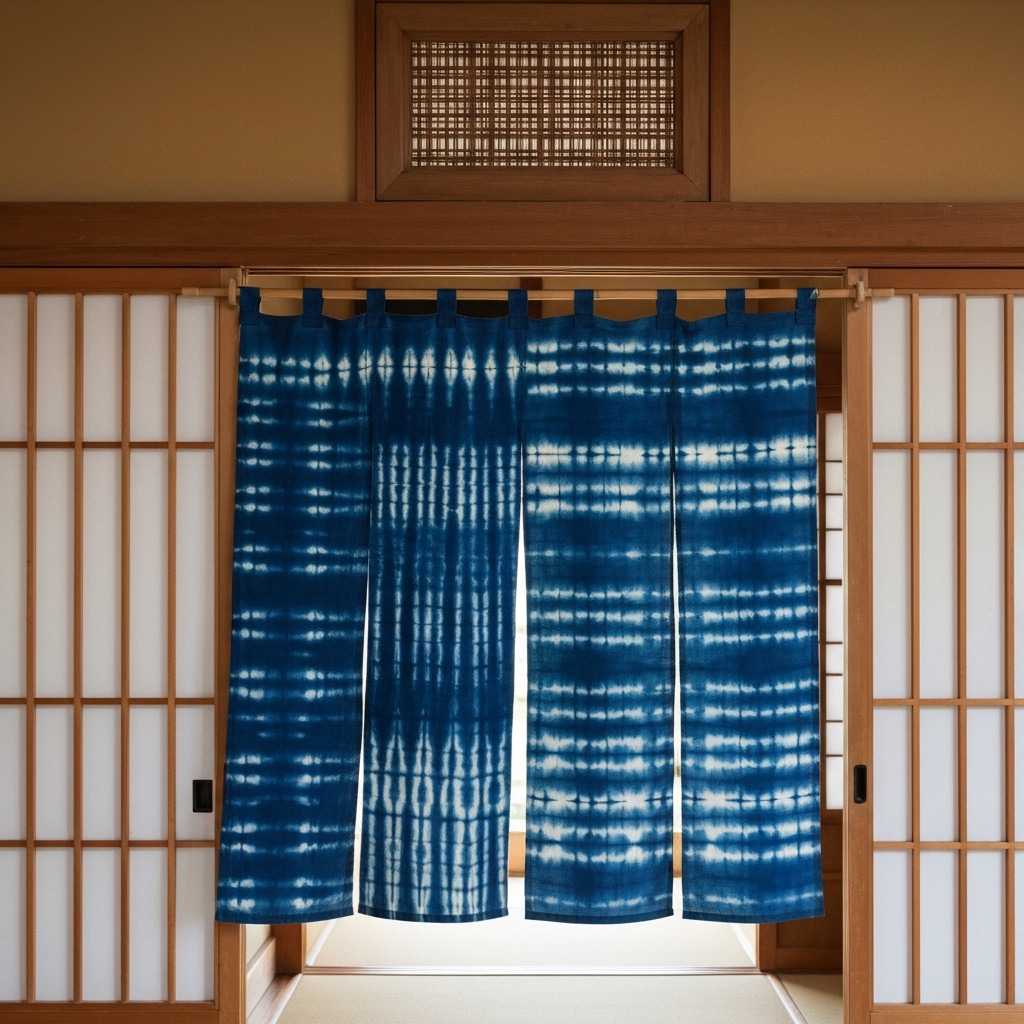
The colors of a noren are more than just decoration; they are imbued with meaning and history through time-honored dyeing practices. Among the most celebrated is aizome (藍染め), the art of indigo dyeing. This natural dye, derived from the Japanese indigo plant (Persicaria tinctoria), creates a range of blues, from the palest sky to the deepest midnight. The process is labor-intensive, involving multiple dips in the indigo vat, each layer adding depth and richness to the color.
Aizome is particularly beloved for its unique aesthetic qualities. The subtle variations in shade, the slight imperfections, tell a story of the dye's natural origin and the artisan's hand. Historically, aizome was favored for its purported insect-repellent properties, making it a practical choice for businesses. Beyond indigo, other natural dyes derived from plants, barks, and even insects create a spectrum of earthy tones and vibrant hues, although synthetic dyes are now also widely used to achieve brighter, more consistent colors.
Resist dyeing techniques, such as itajime (板締め), where fabric is folded and clamped between boards before dyeing, create geometric patterns with crisp lines. Another popular technique, tsutsugaki (筒描), employs rice paste applied through a cone to create intricate designs, shielding those areas from the dye. These methods result in unique and visually striking noren that highlight the artisan’s skill.
Stitching and Finishing: Examining the Importance of Quality Seams and Reinforced Edges for Durability and Longevity
Beyond the fabric and dye, the longevity of a noren depends heavily on the quality of its stitching and finishing. Reinforced edges, typically achieved with a double-folded hem, are essential to prevent fraying, especially along the bottom where the fabric is subject to frequent contact and movement. The seams attaching the header (the top portion through which the rod passes) should be meticulously sewn to withstand the weight of the fabric and the tension from the rod.
Look for even stitching, with consistent spacing and no loose threads. Traditional hand-stitching, though less common today due to the time investment, adds a touch of artisanal character and often boasts superior durability. The header is often reinforced with a separate strip of sturdy fabric, creating a robust channel for the rod. Small details, such as carefully mitered corners, showcase the craftsmanship and contribute to the overall refined appearance.
Expert Insight: Pay attention to the thread used in the stitching. Strong, durable thread, ideally made of a natural fiber like cotton or linen, will ensure that the seams hold up over time, resisting wear and tear. Synthetic threads, while often more affordable, may not possess the same natural feel and can sometimes be prone to breakage.
Sizing and Placement: Making the Most of Your Japanese Noren Gift
Determining the Ideal Width: Measuring doorways and openings for optimal coverage and visual appeal.
Choosing the right width for your noren (暖簾) is crucial for both aesthetics and functionality. In Japan, the standard is often to choose a noren that is slightly wider than the doorway or opening it's intended to cover. This allows for gentle folds and a more welcoming appearance, rather than a stretched-taut look.
Start by precisely measuring the width of the doorway or opening in centimeters (cm) and inches. If the opening is 80 cm (approximately 31.5 inches), a noren between 85 cm and 95 cm (roughly 33.5 to 37.5 inches) would likely be suitable. For wider entrances like those leading to a tatami room, you might consider two noren side by side for a grander effect, or a single, extra-wide piece.
Consider the visual effect you want to achieve. A wider noren offers greater coverage and can create a stronger sense of separation between spaces. Conversely, a narrower noren allows for more visibility and a more casual feel. In some izakaya (居酒屋, Japanese pubs), you'll see very narrow noren used more as decorative accents than true partitions. These tend to be around 60cm (23.5 inches) or less.
When gifting a noren, it's helpful to inquire about the intended location beforehand. If possible, subtly ask for the doorway width to ensure your gift fits perfectly. If that's not possible, err on the side of slightly wider – it's easier to adjust a slightly oversized noren than to make one that's too narrow work.
Noren Length and Functionality: Considering the desired level of privacy and visibility when choosing the length.
The length of the noren dictates the degree of privacy and visibility it provides, influencing the atmosphere of the space. Floor-length noren are rarely seen in domestic settings but are commonly used in traditional shops (machiya, 町家) to create an impressive entrance while completely obscuring the interior. In contrast, shorter noren are more common in homes and casual restaurants.
For a kitchen doorway, a noren that hangs to mid-thigh height is popular, allowing for some concealment while still enabling easy passage with hands full of dishes. A standard length for this application might be around 90-120 cm (35-47 inches). For doorways leading to more private spaces, like bedrooms or bathrooms, a longer noren, perhaps reaching knee-height or slightly below (around 130-150 cm or 51-59 inches), could be more appropriate.
Think about the recipient's needs and preferences. Do they value privacy, or is the noren primarily intended as a decorative element? A shorter noren allows for increased airflow and light, which can be beneficial in smaller spaces. Conversely, a longer noren can help to block drafts and create a cozier atmosphere.
Expert Insight: When gifting a noren for a business, consider local customs. In some regions, longer noren are associated with more formal establishments, while shorter ones are typical for more casual businesses.
Installation Options: Rods, tension rods, and alternative hanging methods – ensuring secure and stylish placement.
Traditionally, noren are hung using a wooden rod called a noren-bo (暖簾棒). These rods are typically made of bamboo or other natural wood and come in various lengths to match the width of the noren. The noren-bo is inserted through the sewn-in loops or openings at the top of the noren, and then hung using brackets or hooks attached to the doorway frame.
Tension rods offer a convenient and damage-free alternative, especially for renters or those who prefer not to drill holes. These rods expand to fit snugly within the doorway frame, providing a secure and stable support for the noren. They are readily available at most home goods stores.
For lighter noren, alternative hanging methods can be employed. Small adhesive hooks can be used to hang the noren directly, although this method is best suited for thinner materials and should be tested in an inconspicuous area first to ensure the adhesive doesn't damage the surface. Another option is to use decorative clips or clothespins to attach the noren to a thin wire or string strung across the doorway.
The chosen hanging method should complement the style of the noren and the surrounding decor. A rustic bamboo rod would pair well with a traditional noren made of indigo-dyed cotton, while a sleek tension rod might be more suitable for a modern noren with a minimalist design.
Presenting a Japanese Noren Gift: Etiquette and Presentation for Memorable Impact
The Art of Gift Wrapping: Using traditional Japanese wrapping techniques (furoshiki) to enhance the presentation.
Forget generic gift bags! Elevate your noren present with the timeless elegance of furoshiki (風呂敷), a traditional Japanese wrapping cloth. Using furoshiki is not merely about aesthetics; it’s a thoughtful gesture conveying respect and care. It also aligns beautifully with the noren’s inherent connection to Japanese heritage.
Choosing the right furoshiki is the first step. Silk furoshiki are often reserved for formal occasions or gifts for superiors, while cotton furoshiki are suitable for more casual settings and everyday use. Sizes vary, but a square cloth approximately 70cm x 70cm (27.5 inches x 27.5 inches) is generally ideal for wrapping a noren that's been neatly folded. For larger noren, consider a furoshiki closer to 90cm x 90cm (35.5 inches x 35.5 inches).
Beyond material and size, consider the furoshiki's design. Traditional patterns like shippo (七宝, overlapping circles symbolizing harmony) or asanoha (麻の葉, hemp leaf representing growth and strength) add an extra layer of meaning. Opt for colors that complement the noren itself.
There are numerous furoshiki wrapping techniques. A simple yet elegant method for a rectangular gift like a folded noren is the "Otsukai Tsutsumi" (お使い包み, basic carry wrap). This involves laying the furoshiki flat, placing the folded noren in the center, bringing two opposite corners together and tying them in a knot, and then repeating the process with the remaining two corners. The resulting package is secure and visually appealing. YouTube offers a treasure trove of tutorials showcasing various furoshiki wrapping styles if you wish to explore more complex arrangements.
Accompanying Messages: Writing a heartfelt card explaining the chosen design and its significance.
The impact of your noren gift amplifies when paired with a thoughtfully written message. Resist the urge to write a generic "Hope you like it!" Instead, share your understanding and appreciation of the noren's design and meaning.
Start by acknowledging the occasion and expressing your well wishes. Then, delve into the symbolism of the chosen motif. For example, if you gifted a noren adorned with fukurou (梟, owl), you could write, "I chose this noren featuring fukurou because owls are considered symbols of wisdom and good luck in Japan. I hope it brings knowledge and fortune to your home."
Personalize the message by referencing a specific connection between the motif and the recipient's personality or interests. If the recipient is a business owner, a noren with daruma (達磨, a traditional Japanese doll symbolizing perseverance) could be accompanied by a message like, "The daruma represents resilience and determination. May this noren serve as a constant reminder of your strength as you continue to build your business."
Keep the tone sincere and genuine. A handwritten card adds a personal touch, but a neatly typed message is perfectly acceptable. Avoid overly formal language unless the occasion demands it. The length of the message should be proportionate to the occasion and your relationship with the recipient. A few heartfelt sentences are often more impactful than a lengthy, generic note.
Expert Insight: Translate a simple, meaningful phrase into Japanese to include in your card. For instance, "Kokoro kara no oiwai wo moushiagemasu (心からのお祝いを申し上げます)," which translates to "Congratulations from the bottom of my heart," adds an authentic touch.
Occasion Appropriateness: Choosing the right style and motif based on the event (housewarming, birthday, business opening).
Selecting the appropriate noren design for the occasion is crucial for ensuring your gift resonates with the recipient. A housewarming gift calls for different considerations than a business opening or a birthday present.
For a housewarming (shinchiku iwai 新築祝い), noren with auspicious symbols promoting harmony and good fortune are ideal. Motifs like gourds (hyotan 瓢箪, representing good luck and prosperity) or simple, nature-inspired designs can create a welcoming atmosphere in a new home. Avoid overly bold or dramatic designs that might clash with the recipient's existing decor. A noren featuring a gentle landscape or a single, elegant flower is often a safe and appreciated choice.
A birthday (tanjoubi 誕生日) noren allows for more personalized options. Consider the recipient's interests and hobbies. If they enjoy gardening, a noren with floral motifs is appropriate. If they are passionate about a particular art form, a design inspired by that art form could be a thoughtful gesture. A noren with their family name (if possible and culturally appropriate) can also be a unique and cherished gift.
For a business opening (kaigyou iwai 開業祝い), choose a noren that symbolizes success and prosperity. As mentioned earlier, the daruma is an excellent choice. Other suitable motifs include maneki neko (招き猫, beckoning cat) which is thought to bring good fortune, or designs featuring kanji characters representing prosperity and good luck. Ensure the noren's style aligns with the business's aesthetic and brand. A modern business might appreciate a noren with a minimalist design, while a more traditional establishment might prefer a classic motif.
Care and Maintenance: Ensuring the Longevity of a Cherished Japanese Noren
A noren, thoughtfully gifted, is more than just a decorative textile; it's a piece of Japanese artistry meant to be enjoyed for years. Proper care is key to preserving its beauty and extending its lifespan. Understanding the nuances of cleaning, storage, and minor repair will ensure that the noren remains a cherished keepsake. For comprehensive cleaning and storage advice, see our full noren care and washing guide.
Washing Instructions: Understanding Proper Cleaning Methods
The approach to cleaning a noren hinges on understanding the dyeing technique employed. Hand-dyed noren, particularly those using traditional methods like katazome (型染め, stencil dyeing) or tsutsugaki (筒描, rice paste resist dyeing), require greater caution. Submerging these in harsh detergents or high heat can irrevocably damage the dyes and distort the fabric.
Dry cleaning is often the safest route for intricately dyed noren, especially antiques or those adorned with delicate embellishments. Seek a cleaner experienced with delicate fabrics and explain the noren's origin and any known dyeing processes. Communicate the importance of preserving the original colors and avoiding harsh chemicals.
For noren that appear more resilient and have a simpler dye application, a gentle hand-washing may suffice. Use lukewarm water (around 30°C or 86°F) and a mild, pH-neutral detergent designed for delicate fabrics. Agitate the water gently and avoid scrubbing or twisting the fabric. Rinse thoroughly with cool water until all traces of detergent are gone. Avoid extended soaking as this can leach dye, especially in darker colors.
When air-drying, never place the noren in direct sunlight. This can cause fading and weaken the fibers. Instead, hang it indoors or in a shaded outdoor area. A padded hanger is ideal to prevent creases, or you can lay it flat on a clean, dry towel. Ensure proper ventilation to prevent mildew growth. Ironing may be necessary to remove wrinkles, but always use a low heat setting and iron on the reverse side, placing a pressing cloth between the iron and the fabric.
Storage Solutions: Protecting the Noren from Dust, Sunlight, and Moisture When Not in Use
Proper storage is vital for preserving a noren's condition when it's not displayed. Before storing, ensure the noren is completely clean and dry. Any lingering moisture can lead to mold or mildew, especially in humid environments.
The ideal storage location is cool, dark, and dry. Avoid attics or basements, which often experience extreme temperature fluctuations and humidity. A linen closet or under-bed storage container are generally suitable options.
Wrap the noren in acid-free tissue paper or unbleached muslin to protect it from dust and light. Avoid plastic bags, as they can trap moisture and promote mildew growth. You can also roll the noren instead of folding it to prevent harsh creases. Store horizontally rather than vertically to avoid stress on the fabric.
Consider adding silica gel packets or other desiccant materials to the storage container to absorb any excess moisture. Regularly check the noren for any signs of discoloration or damage, especially if stored for extended periods. Re-fold or re-roll it periodically to prevent permanent creases.
Expert Insight: In traditional Japanese households, valuable textiles like kimono or noren are often stored in tansu (箪笥, traditional wooden chests), often made of paulownia wood (kiri, 桐), known for its moisture-resistant properties. While a tansu might be a larger investment, it provides excellent long-term protection for cherished fabrics.
Repairing Minor Damage: Simple Techniques for Mending Small Tears or Loose Threads to Preserve its Beauty
Even with the utmost care, minor damage to a noren can occur over time. Addressing these issues promptly can prevent them from escalating and further compromising the fabric's integrity.
Loose threads are a common occurrence. Simply trim them carefully with sharp scissors, being mindful not to cut into the surrounding fabric. If the thread is part of a seam, you can gently re-secure it with a needle and thread, using a matching color.
Small tears can be mended using a technique called kakehagi (掛矧ぎ), a traditional Japanese method of invisible mending. This involves using a very fine needle and thread to weave the torn edges back together, creating a seamless repair. While mastering kake hari requires practice, even a basic stitch can effectively close a small tear. Alternatively, fusible interfacing can be used on the reverse side of the fabric to reinforce the tear.
If the noren features appliqué or embroidery, be particularly careful when mending near these areas. Use a thread that closely matches the original and take small, discreet stitches to avoid disrupting the design. For more extensive damage or complex repairs, it's best to consult a professional textile conservator or tailor specializing in delicate fabrics. Preventing further damage during this time is key so put the noren away in a safe place until it can be repaired.
Customization and Personalization: Creating a Truly Unique Japanese Noren Gift
A mass-produced noren (暖簾) can be a lovely item, but a customized one carries a weight of thoughtfulness and personal connection that elevates it to a truly exceptional gift. The ability to imprint a personal touch onto this traditional Japanese item allows you to create something lasting and deeply meaningful for the recipient.
Monogramming and Calligraphy: Adding Personalized Touches with Names, Initials, or Meaningful Phrases
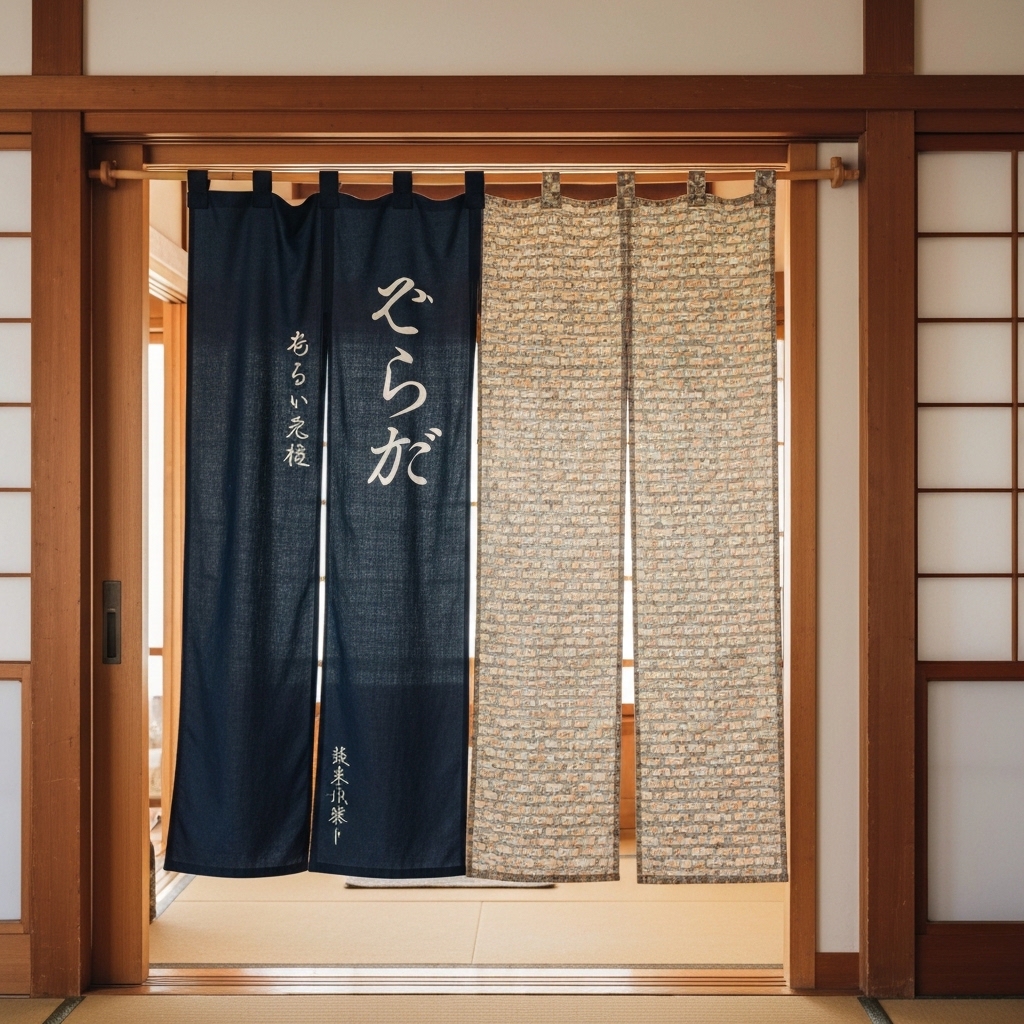
Integrating personalized text into a noren design opens a vast realm of possibilities. Consider using the recipient's given name or family name in kanji (漢字), carefully chosen for its aesthetic appeal and positive connotations. The flowing strokes of Japanese calligraphy, shodo (書道), impart a sense of artistry and sophistication.
The choice of font style is also significant. A formal, upright style like kaisho (楷書) conveys respect and elegance, while a more fluid, cursive style like sosho (草書) suggests creativity and informality. Consult with a calligrapher (shoka 書家) to determine the most appropriate style for the intended recipient and overall aesthetic.
Beyond names, short, meaningful phrases can add another layer of personalization. Proverbs (kotowaza ことわざ) expressing well-wishes, such as "一期一会" (ichigo ichie - treasure every encounter, for it will never recur), are particularly fitting. The placement of the text also impacts the overall design. Centered text creates a formal and balanced feel, while text placed off-center adds a touch of asymmetry and visual interest. Keep in mind, text is generally read right to left, top to bottom, in traditional Japanese design.
Commissioning Custom Designs: Working with Artisans to Create Bespoke Noren Featuring Specific Motifs or Imagery
For a truly unique noren gift, consider commissioning a custom design. This involves collaborating with a skilled artisan to bring a specific vision to life, potentially incorporating imagery that holds special significance for the recipient. Perhaps a scene from their favorite travel destination, a beloved pet, or a symbolic representation of their profession or hobby.
The process typically begins with a consultation to discuss the desired design, size, and color palette. The artisan will then create a preliminary sketch or digital mockup for review and refinement. The final design is then transferred onto the chosen fabric using traditional techniques such as katazome (型染め – stencil dyeing) or tsutsugaki (筒描 – rice paste resist dyeing). These methods offer a level of detail and artistry that is difficult to achieve with modern printing techniques.
The cost of commissioning a custom design will vary depending on the complexity of the design, the size of the noren, and the artisan's level of expertise. Be prepared to invest a significant amount of time and resources to ensure that the final product meets your expectations. Communication is key throughout the process, so establish a clear understanding with the artisan regarding timelines, revisions, and payment terms. For more on the custom creation process, see our dedicated guide to custom noren.
Expert Insight: When commissioning a custom design, provide the artisan with ample reference material, such as photographs or sketches, to clearly convey your vision. The more detailed your instructions, the better the artisan will be able to understand and execute your design.
Incorporating Family Crests (Kamon): Adding a Symbol of Heritage and Tradition to a Japanese Noren Gift
For individuals with Japanese ancestry, incorporating a kamon (家紋), or family crest, into a noren design is a particularly meaningful way to honor their heritage and family lineage. Kamon are ancient symbols that represent a family's identity and history, often passed down through generations.
Researching the recipient's family crest is the first step. Many resources are available online and in libraries that catalog thousands of different kamon. Once identified, the kamon can be incorporated into the noren design in a variety of ways. It can be placed prominently in the center of the noren, repeated as a subtle pattern, or used as a decorative element within a larger design.
The use of kamon on noren was historically common in businesses to denote ownership or association. Placing the family crest on a noren for a home can add a distinguished and personal element, immediately tying the modern object to centuries of tradition. The colors and style in which the kamon is depicted also influence the overall impression. A simple, understated design conveys a sense of elegance and refinement, while a more elaborate and colorful design makes a bolder statement.