Dragon Noren: Bring Mythical Elegance to Your Home Decor
The Dragon's Symbolism in Noren Design
Traditional Interpretations of the Dragon Motif
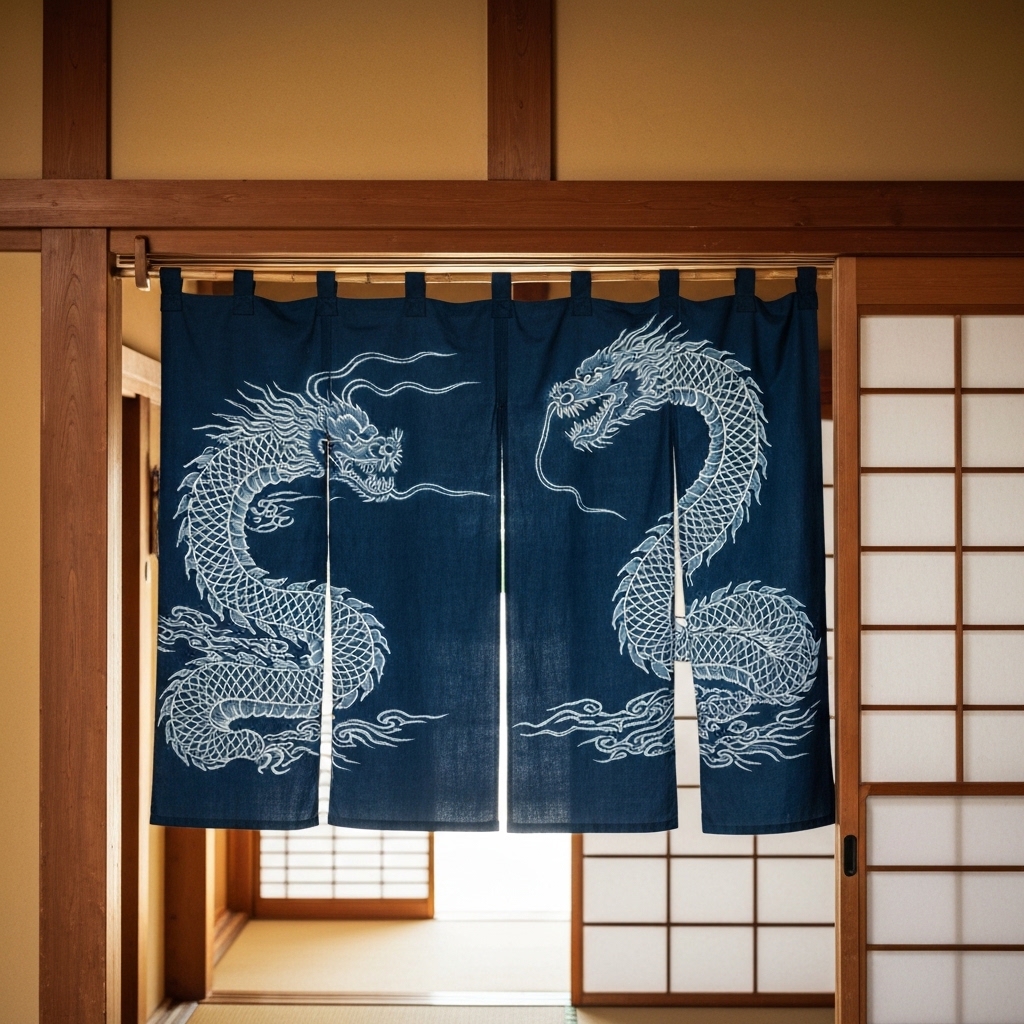
The dragon, or ryū (龍) in Japanese, isn't merely a mythical creature decorating a noren (暖簾); it's a potent symbol imbued with centuries of cultural significance. Unlike the fire-breathing, often destructive dragons of Western lore, the Japanese dragon is typically associated with water – controlling rainfall, rivers, and oceans. Think of it not as a fearsome beast, but as a benevolent guardian of natural forces, a bringer of life and prosperity.
This association with water directly connects to the function of a noren. Historically, noren were hung at the entrances of shops and restaurants, offering protection from the elements – wind, sun, and yes, even rain. Learn more about the history and meaning of noren. A dragon noren, therefore, becomes a visual invocation for favorable conditions and a flourishing business. Imagine a noren dyed with indigo (aizome 藍染め), depicting a dragon emerging from crashing waves – a powerful image of resilience and good fortune.
Beyond controlling the elements, the dragon represents wisdom, longevity, and strength. It embodies the spirit of bushido, the samurai code, symbolizing courage and unwavering resolve. You might find noren depicting dragons alongside other auspicious symbols like Mount Fuji or cherry blossoms, further amplifying their positive connotations. Explore more traditional Japanese noren motifs and their meanings. The dragon often appears in conjunction with a tama (玉), a jewel or pearl, which represents spiritual energy, wisdom, and enlightenment. The dragon is often depicted reaching for this jewel, a visual metaphor for the pursuit of knowledge and self-improvement.
The size of a dragon depicted on a noren can also be significant. A larger, more imposing dragon might be used for a business aiming to project authority and success, while a smaller, more stylized dragon might be chosen for a more modest establishment. Remember that the dimensions of a standard noren usually vary between 85 cm (33.5 inches) to 150 cm (59 inches) in width and 30 cm (12 inches) to 90 cm (35 inches) in length; even within these constraints, the dragon's size and placement matter.
Color Psychology in Dragon Noren: Meaning and Impact
The colors used in a dragon noren aren't arbitrary choices; they contribute significantly to the overall message and emotional impact. While aizome (indigo) is a classic choice, other colors carry distinct meanings:
- Gold (金色, kin-iro): Represents wealth, prosperity, and divine power. A golden dragon on a noren signifies opulence and success, often seen at entrances of high-end restaurants or traditional craft shops.
- Red (赤, aka): Symbolizes vitality, passion, and protection from evil spirits. A red dragon can be a bold statement, attracting attention and warding off negativity. This is a color often used in festival settings.
- Black (黒, kuro): Represents strength, mystery, and resilience. A black dragon noren projects an image of stability and authority, often used by established businesses.
- Green (緑, midori): Symbolizes growth, harmony, and renewal. A green dragon connects to nature and signifies a healthy, thriving business.
The choice of fabric also influences the color's impact. Indigo-dyed cotton (momen 木綿) offers a rustic, traditional feel, while silk (kinu 絹) provides a more luxurious sheen. Linen or hemp (asa 麻) gives a natural, textured look.
Expert Insight: When choosing a dragon noren, consider the existing color scheme of your shop or home. A noren that clashes with its surroundings can be jarring, while one that complements the environment will create a harmonious and inviting atmosphere.
Regional Variations in Dragon Noren Art
Dragon noren art isn't monolithic; distinct regional styles reflect local artistic traditions and cultural nuances.
- Kyoto: Known for its refined artistry and delicate details, Kyoto noren often feature dragons rendered in elegant brushstrokes and subtle color palettes, frequently employing the katazome (型染め) stencil-dyeing technique. The use of silk is more common here.
- Okinawa: Influenced by Ryukyu culture, Okinawan dragon noren may incorporate vibrant colors and bold designs, often depicting dragons with stylized features and surrounded by local flora and fauna.
- Tokyo (Edo period influence): Noren from this region often have bolder, simpler designs. They tend to use indigo with striking white patterns. The noren are more functional than artistic, typically used in shops and restaurants.
- Rural areas: In rural areas, noren often have a homespun feel, using coarser fabrics and simpler dyeing techniques. Dragon motifs may be more abstract or stylized, reflecting the local folk art traditions. You might find a simpler, less refined version of the dragon here.
These regional variations extend beyond the artistic style to the very fabric itself. A noren from a coastal region might use a more durable, weather-resistant material like cotton, while one from an inland area might favor lighter fabrics like linen. The saotooshi (竿通し), the rod pocket at the top of the noren used to hang it on a tsuppari-bou (突っ張り棒), might also be reinforced for extra strength in areas with strong winds.
Choosing the Right Dragon Noren: Purpose and Placement
Choosing a dragon noren is more than just aesthetics; it's about harmonizing symbolism with your space and intention. Consider your noren's purpose – is it a welcoming gesture for guests, a partition for privacy, or an element to boost prosperity in your business? The answer guides your choice in style and placement.
Matching Dragon Noren Style to Your Interior Design
A dragon noren shouldn’t clash with your existing décor; rather, it should complement it. Think about the overall style of your home or business. Is it minimalist and modern, embracing wabi-sabi principles? Or is it more traditional with tatami mats and shoji screens?
For modern spaces, a noren featuring a stylized, almost abstract dragon design may be more appropriate. These designs often incorporate geometric shapes and bold, contrasting colors. Simpler noren using natural materials like asa (麻, hemp/linen) with subtle dragon motifs can add texture without overwhelming the space. See our noren design ideas for more style inspiration.
Traditional Japanese interiors benefit from noren depicting more classic, detailed dragon imagery. Look for designs that feature elements such as clouds, waves, or Mount Fuji alongside the dragon. Momen (木綿, cotton) is a common choice for these traditional noren. The dye method will also greatly change the feel of the noren. A noren using indigo aizome (藍染め) will have a completely different feel than one with bolder colours.
Consider the scale of the dragon design. A small, intricate dragon might get lost in a large, open space. Conversely, an oversized dragon design could feel overwhelming in a smaller room. Balance is key. Also remember the saotooshi (竿通し, rod pocket) is typically sewn to accept standard rods that measure 2.5 cm (1 inch) in diameter.
Expert Insight: Before purchasing, create a temporary mockup using a piece of fabric roughly the same size as the intended noren. Hang it in the desired location to visualize how the size and colors will interact with the existing space and lighting.
Noren Placement & Feng Shui Principles: Harnessing Positive Energy
Placement is crucial to maximize the dragon's auspicious energy, often drawing from feng shui (風水, fūsui) principles. In Japanese culture, the dragon is often associated with the east, the direction of the rising sun and new beginnings. Placing a dragon noren on an eastern-facing doorway or window is thought to invite positive energy and good fortune.
Avoid placing a dragon noren in areas considered "yin" – dark, damp, or stagnant spaces. These locations can dampen the dragon's vitality. Ideal locations include entrances, hallways, and between rooms where energy flows freely.
If using a noren to divide a space, consider the activities taking place on either side. A dragon noren separating a living room from a bedroom could promote relaxation and tranquility in the sleeping area, while simultaneously enhancing the vibrant energy of the living room.
Bear in mind the height of the noren. A shorter noren allows for more visibility and interaction between spaces, while a longer noren offers greater privacy and a stronger sense of separation. Standard lengths are approximately 90 cm (35 inches) or 150 cm (59 inches) in length.
Commercial vs. Residential Use Cases for Dragon Noren
The application of a dragon noren differs considerably between commercial and residential settings. In a business, a dragon noren serves not only as décor but also as a branding element and a symbol of prosperity. Restaurants, bars, and shops often use noren featuring the company logo alongside a dragon motif to create a unique and memorable identity. The noren can be used as window decorations, doorway dividers, or even as a way to subtly indicate that the business is open.
Residential applications are generally more focused on personal expression and enhancing the home's atmosphere. A dragon noren in a home entryway can be a welcoming symbol of good luck for visitors. Inside, it might divide a kitchen from a dining area, adding a touch of Japanese elegance to daily life.
Durability is a key consideration for commercial noren. High-traffic areas demand more robust fabrics and fade-resistant dyes. Residential noren often prioritize aesthetics and may feature more delicate materials. The noren in a restaurant will likely need to be cleaned often, so a thicker cotton or polyester blend may be more practical than a delicate silk noren.
Materials & Craftsmanship of Dragon Noren
The enduring beauty of a dragon noren isn't just about its striking imagery; it lies equally in the quality of materials and the artistry of its creation. While dragons themselves embody power and longevity, the noren itself must be equally robust to stand the test of time.
Natural Fabrics: Hemp, Linen, and Cotton Dragon Noren Options
Selecting the right fabric foundation profoundly impacts the noren's drape, texture, and lifespan. Japanese artisans traditionally favor natural fibers, each offering unique characteristics to complement the dragon motif.
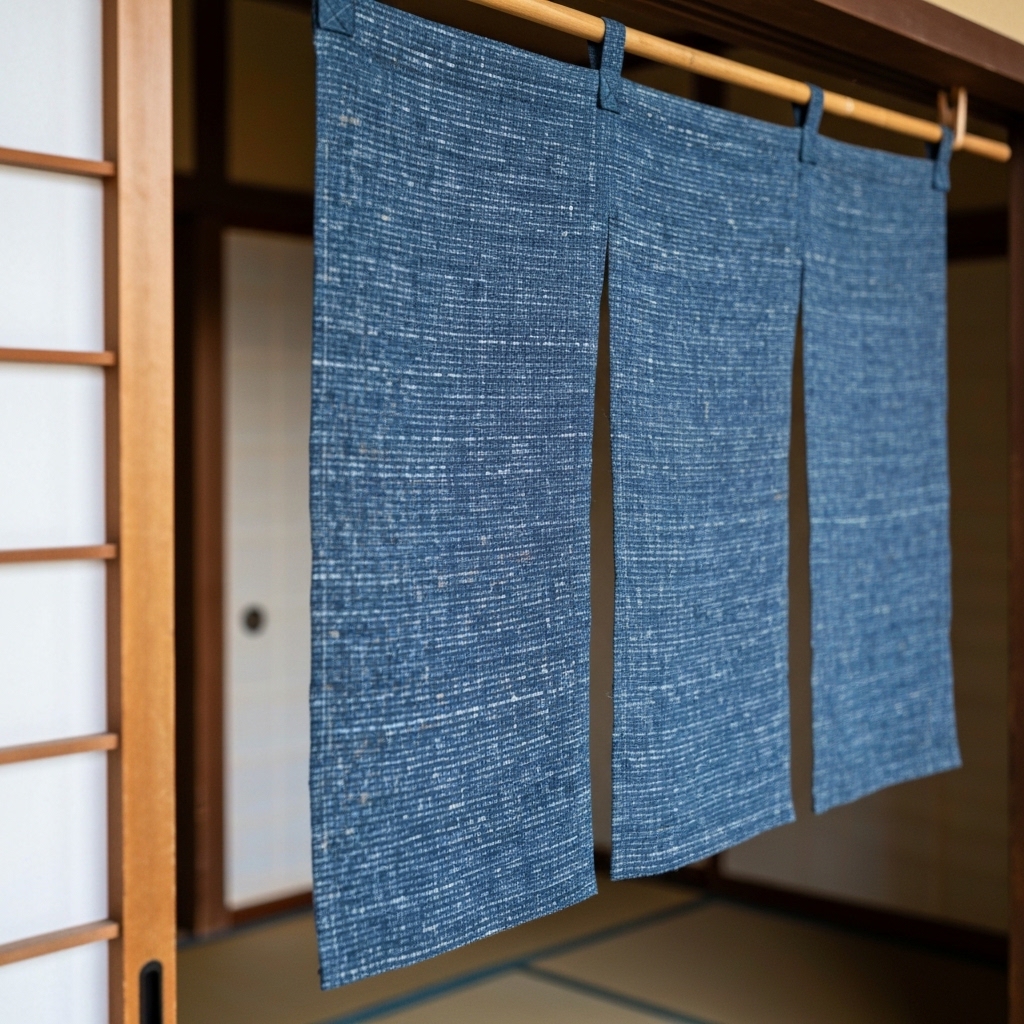
- 麻 (Asa): Often encompassing both hemp and linen, asa offers exceptional strength and breathability. Hemp, specifically, boasts a coarse texture lending an organic, rustic charm. A noren crafted from thick hemp will possess a firm structure, ideal for spaces where a bold statement is desired. Linen, while similar, tends to have a smoother hand and a more refined drape. The inherent texture of asa fabrics beautifully highlights the subtle variations in dyed dragon scales, adding depth and visual interest. Noren meant for outdoor use or high-traffic areas often benefit from the durability of asa.
- 綿 (Men) / 木綿 (Momen): Cotton, especially its heavier variant, 木綿 (momen), presents a softer, more pliable alternative. While not as inherently strong as asa, cotton provides an excellent surface for detailed printing or painting of dragon designs. A cotton dragon noren drapes gracefully, creating a more relaxed and inviting atmosphere. Its smooth texture lends itself well to intricate depictions of dragon whiskers or scales, capturing fine details with clarity. Cotton is also prized for its ability to readily absorb dyes, resulting in vibrant and long-lasting colors.
- Silk (絹, kinu): While less common for noren due to its delicacy and cost, silk offers an unparalleled luxuriousness. The shimmering sheen of silk elevates the dragon motif to a regal status. Silk noren often feature embroidered dragons, with each thread catching the light to create a mesmerizing effect. Due to its delicate nature, silk is best suited for indoor use, in areas with minimal direct sunlight.
Dyeing Techniques and Colorfastness for Long-Lasting Dragon Noren
The vibrancy and longevity of a dragon noren depend heavily on the dyeing process. Traditional Japanese dyeing techniques prioritize not only achieving rich colors but also ensuring they endure against fading and wear. Natural dyes, derived from plants and minerals, are often employed, resulting in subtly nuanced hues.
Beyond the specific dye used, the method of application directly impacts colorfastness. Noren that have been yarn-dyed (where the threads are dyed before weaving) generally exhibit superior color retention compared to piece-dyed fabrics (where the entire cloth is dyed after weaving). The depth of dye penetration into the fiber is crucial; multiple dye baths and thorough rinsing are essential for achieving lasting color.
Furthermore, skillful resist dyeing techniques such as 型染め (katazome, stencil dyeing) are meticulously employed to create intricate dragon designs. Katazome involves applying a rice-paste resist to the fabric, dyeing it, and then washing away the paste to reveal the pattern. This method allows for sharp, well-defined dragon scales and features, preventing color bleeding and ensuring a crisp, enduring image.
Expert Insight: Before purchasing, gently rub a damp, light-colored cloth against an inconspicuous area of the noren. If significant color transfers to the cloth, the dye may not be adequately fixed, potentially leading to fading over time.
Stitching and Embellishments: Examining Quality and Durability
The quality of stitching and any added embellishments are telltale signs of a well-crafted dragon noren. Look for even, consistent stitching along the edges and seams. Reinforcements at stress points, such as the 竿通し (saotooshi, rod pocket), indicate a higher level of craftsmanship and ensure the noren can withstand repeated use. A securely sewn saotooshi, typically between 4-7cm (1.5-2.75 inches) wide, prevents sagging or tearing when hung.
Embellishments, such as gold or silver thread embroidery detailing the dragon's eyes or claws, enhance the visual impact but must also be carefully executed. Loose threads or poorly attached embellishments detract from the overall quality and compromise the noren's longevity. Hand-stitched details signify a superior level of artistry and reflect a dedication to quality craftsmanship. Machine-stitched elements, while often more uniform, should still exhibit neatness and precision. Consider the thread count used in the stitching – a higher thread count indicates a denser, more durable seam. Careful attention to these seemingly minor details ensures that your dragon noren remains a captivating centerpiece for years to come.
Caring for Your Dragon Noren: Cleaning and Maintenance
Maintaining your dragon noren will ensure its longevity and preserve its vibrant imagery for years to come. The key is understanding the specific needs of the fabric and construction. For a comprehensive overview of cleaning methods, see our noren care and washing guide. Assuming the proper hanging hardware (竿通し, saotooshi or similar) is already installed, this section focuses on the actual care of the fabric itself.
Handwashing vs. Machine Washing: Best Practices for Different Fabrics
The decision between handwashing and machine washing hinges primarily on the fabric composition and any embellishments. Handwashing is always the gentler option, particularly crucial for delicate pieces featuring gold leaf accents or intricate embroidery. For robust cotton (木綿, momen) noren lacking such delicate details, machine washing might be acceptable, but extreme caution is advised.
Before even considering machine washing, perform a colorfast test. Dampen a hidden corner of the noren with cool water and blot with a white cloth. If any dye transfers to the cloth, machine washing is absolutely out of the question.
If handwashing is necessary, use a large basin or bathtub filled with cool water and a mild, pH-neutral detergent specifically designed for delicate fabrics. Submerge the noren and gently agitate the water with your hands. Avoid harsh scrubbing or twisting. Let it soak for approximately 15-20 minutes. Rinse thoroughly with cool water until no detergent residue remains.
For the daring individual contemplating machine washing a sturdy cotton (綿, men) noren, use a mesh laundry bag for protection. Choose the delicate cycle with cold water and a mild detergent. Never use bleach or fabric softener. Even with these precautions, be prepared for potential shrinkage or color fading.
Ironing and Wrinkle Removal Techniques for Noren
Wrinkles are an inevitable part of owning textiles, but there are ways to minimize their appearance on your dragon noren. The ideal ironing method depends entirely on the fabric.
-
Silk (絹, kinu): Iron on the lowest heat setting, using a pressing cloth between the iron and the fabric to prevent scorching. A steamer is an excellent alternative, allowing you to gently release wrinkles without direct contact.
-
Cotton (木綿, momen): Cotton can generally withstand higher heat settings, but always start with a lower setting and gradually increase as needed. Use steam to help release stubborn wrinkles. Consider ironing the noren while slightly damp for easier wrinkle removal.
-
Hemp/Linen (麻, asa): Hemp and linen are notoriously prone to wrinkling. Iron on a medium-high heat setting with plenty of steam. It may be necessary to iron the fabric multiple times to achieve a smooth finish.
Expert Insight: For stubborn wrinkles that refuse to budge with ironing, try hanging the noren in a steamy bathroom while you shower. The steam will naturally relax the fibers and help release creases. Just be sure to hang it away from direct water contact!
It's worth noting that in traditional Japanese aesthetics, a perfectly wrinkle-free noren is not necessarily the goal. A few subtle creases can add to its character and sense of authenticity.
Proper Storage for Seasonal Dragon Noren
Many people rotate their noren seasonally or display them only for special occasions. Proper storage is crucial to protect the fabric from dust, moths, and discoloration.
Before storing, ensure the noren is completely clean and dry. Fold it carefully along its natural seams to minimize creasing. Avoid folding it too tightly, as this can create permanent wrinkles.
Store the noren in a breathable cotton (綿, men) bag or wrap it in acid-free tissue paper. Avoid plastic bags, as they can trap moisture and lead to mildew. Add a few sachets of cedar chips or lavender to deter moths and other pests.
Choose a cool, dry, and dark storage location. Avoid attics or basements where temperature and humidity fluctuations are common. A drawer or shelf in a closet is typically a good option. If you have multiple noren, consider storing them flat to prevent creasing. Periodically check on your stored noren to ensure they remain in good condition.
Beyond the Doorway: Creative Uses of Dragon Noren
While often seen gracing the entrance of a ramen-ya or izakaya, the dynamic presence of a dragon noren extends far beyond its traditional role as a doorway partition. Their inherent artistry allows for diverse applications that enhance interior aesthetics and showcase Japanese craftsmanship.
Dragon Noren as Wall Art: Framing and Display Ideas
The bold imagery of a dragon noren makes it a compelling alternative to conventional artwork. The textile medium offers a unique tactile quality and visual depth often absent in paintings or prints.
Instead of simply tacking it to a wall, consider elevating its presentation. A simple wooden frame, either custom-built or adapted from a standard picture frame, can provide a structured and polished look. Measure the noren carefully, allowing for a slight border (around 2-3 cm or 1 inch) around the fabric within the frame. Backing the noren with acid-free board ensures its longevity, especially for antique or delicate silk (kinu) examples.
Another striking option is to suspend the noren from a decorative rod, similar to how it would be hung in a doorway. A wrought iron rod, or even a carefully selected branch, can create a rustic and natural feel. This method allows the fabric to drape freely, showcasing the dragon's dynamic form. For wider noren, consider using multiple hanging points to prevent sagging. Ensure any hanging system is securely mounted, especially if the noren is particularly heavy.
For a more minimalist approach, a simple clamp system, similar to those used for displaying tapestries, can be employed. These clamps grip the top and bottom edges of the noren, keeping it taut and creating a clean, modern aesthetic. This works best with cotton (momen) or linen (asa) noren that hold their shape well.
Repurposing Damaged Dragon Noren: Upcycling Projects
Even when a noren suffers damage – perhaps a tear, stubborn stain, or fading – its artistic value doesn’t necessarily diminish. Instead of discarding it, consider upcycling it into other unique items.
One approach is to repurpose sections of the noren into decorative cushions. Select areas featuring prominent dragon motifs or interesting patterns and carefully cut them out. Use these sections as the front panel for cushions, backing them with coordinating fabric. This is a particularly effective way to salvage a noren with localized damage.
Another possibility is to transform the noren into a wall hanging or tapestry. Cut the noren into smaller, manageable sections and sew them together to create a unique patchwork design. This allows you to showcase multiple aspects of the dragon's design and create a truly one-of-a-kind art piece. Furthermore, you could use the noren fabric to create a kinchaku (巾着), a traditional drawstring bag used for carrying small items.
Consider using smaller fragments of the noren to embellish other items. Patches featuring dragon scales or claws can be sewn onto jackets, bags, or even furniture upholstery. This adds a subtle but striking touch of Japanese artistry to everyday objects. Be mindful of the noren's original construction: if parts of it are aizome (藍染め, indigo-dyed), the color may bleed if washed.
The Dragon Noren as a Cultural Gift: Etiquette and Considerations
Presenting a dragon noren as a gift is a thoughtful gesture, particularly for those who appreciate Japanese culture or have a special connection to the dragon motif. If you want a truly unique gift, consider commissioning a custom noren with a personalized dragon design. However, certain etiquette considerations are important.
Firstly, consider the recipient's personal style and home decor. A vibrant, boldly colored noren may not be suitable for someone with a minimalist aesthetic, while a more subdued, sumi-e (墨絵, ink wash painting) style noren might be a better fit.
Secondly, be mindful of the dragon's symbolism. While generally considered auspicious, the dragon can also represent power and authority. Ensure the recipient understands and appreciates this symbolism, particularly if they are from a culture where the dragon has different connotations. Provide a brief explanation of the dragon's significance in Japanese culture to avoid any misunderstandings.
Thirdly, presentation matters. Wrap the noren carefully in washi (和紙, Japanese paper) or a similar elegant material. Including a handwritten note explaining the meaning of the dragon and the significance of the gift adds a personal touch. If you know which type of saotooshi (竿通し, rod pocket) the noren has, informing the recipient can be useful.
Expert Insight: When gifting a dragon noren, consider also including a small tsuppari-bou (突っ張り棒, tension rod) for easy installation. This shows thoughtfulness and eliminates the recipient having to source one themselves.
Understanding the History and Evolution of Dragon Noren
Origins of Noren and the Adoption of Dragon Imagery
The precise origin of the noren remains somewhat shrouded in historical mist, although its roots are generally traced back to the early centuries of Japan's history. Initially, simple fabric dividers served practical purposes – shop curtains to shield goods from the elements, markers of establishment boundaries, and even simple forms of advertisement. These early noren were likely undecorated or bore very basic geometric patterns.
The association of the dragon with the noren is a later development, gaining traction during the Edo period (1603-1868). The dragon, already a potent symbol of power, good fortune, and protection in East Asian mythology, resonated strongly with merchants and artisans. Businesses sought to imbue their establishments with these qualities, believing that a dragon motif would attract prosperity and safeguard their endeavors. The noren, prominently displayed at the entrance, became an ideal canvas for this auspicious imagery. Think of it less as simple decoration and more as a visual invocation of good fortune to anyone passing underneath.
The transition from plain cloth to ornately decorated noren, particularly with dragon designs, reflected the increasing sophistication of Japanese commerce and the growing prosperity of the merchant class. The size of a noren often indicated the size or status of the business. A larger, elaborately designed dragon noren sent a clear message about the establishment's success and ambitions.
Dragon Noren Design Through Different Eras
Dragon noren design evolved alongside Japanese art and culture. Early examples, perhaps rudimentary in their execution, likely featured simpler, bolder representations of the dragon, emphasizing its raw power. As artistic techniques advanced, so too did the complexity and refinement of dragon depictions.
The Meiji era (1868-1912), marked by rapid modernization and Western influence, saw some interesting hybrid designs. While traditional dragon motifs persisted, some noren incorporated Western fonts or incorporated elements of realism into the dragon's portrayal. The Taisho (1912-1926) and Showa (1926-1989) eras continued this evolution, reflecting prevailing artistic trends and evolving societal values.
Post-World War II, a resurgence of interest in traditional crafts led to a renewed appreciation for classic dragon noren designs. Contemporary artisans often blend traditional techniques with modern sensibilities, creating noren that pay homage to the past while embracing a contemporary aesthetic. For example, you might see a noren employing classic indigo dye (aizome) techniques featuring a dragon rendered in a minimalist, almost abstract style. The length can also vary greatly - from short cafe curtains (around 45cm or 18 inches long) to full-length door coverings (180cm/71inches +).
The Influence of Ukiyo-e on Dragon Noren Depictions
The ukiyo-e woodblock print movement, flourishing from the 17th to the 19th centuries, exerted a profound influence on noren design, especially dragon depictions. Ukiyo-e artists, masters of line, color, and composition, captured the essence of Japanese life, including its folklore and mythology. Their portrayals of dragons, often dynamic and visually arresting, found their way onto noren, transforming functional fabric dividers into miniature works of art.
Artists like Hokusai and Hiroshige, although not exclusively dragon artists, influenced the aesthetic landscape. Their innovative use of perspective, color palettes, and depiction of natural elements like waves and clouds provided a rich visual vocabulary for noren designers. The swirling waves that Hokusai famously depicted in his "Great Wave" print often found their way into dragon noren, serving as a powerful backdrop for the mythical creature.
The accessible nature of ukiyo-e prints allowed these designs to be widely disseminated, impacting not only noren art but also other forms of applied art and design. The crisp lines, bold colors, and dramatic compositions of ukiyo-e-inspired dragon noren helped establish the dragon as a truly iconic image, forever linking it with the doorway of Japanese businesses and homes. The ability to mass-produce these prints influenced the katazome (stencil dyeing) methods used to create noren with increased efficiency.
Expert Insight: When considering a dragon noren for a modern space, look for designs that subtly reference ukiyo-e aesthetics. A stylized wave pattern or a dragon depicted in a dynamic, flowing pose can add a touch of historical elegance without feeling overly traditional.