Decoding Japanese Noren Motifs: Meaning & Symbolism
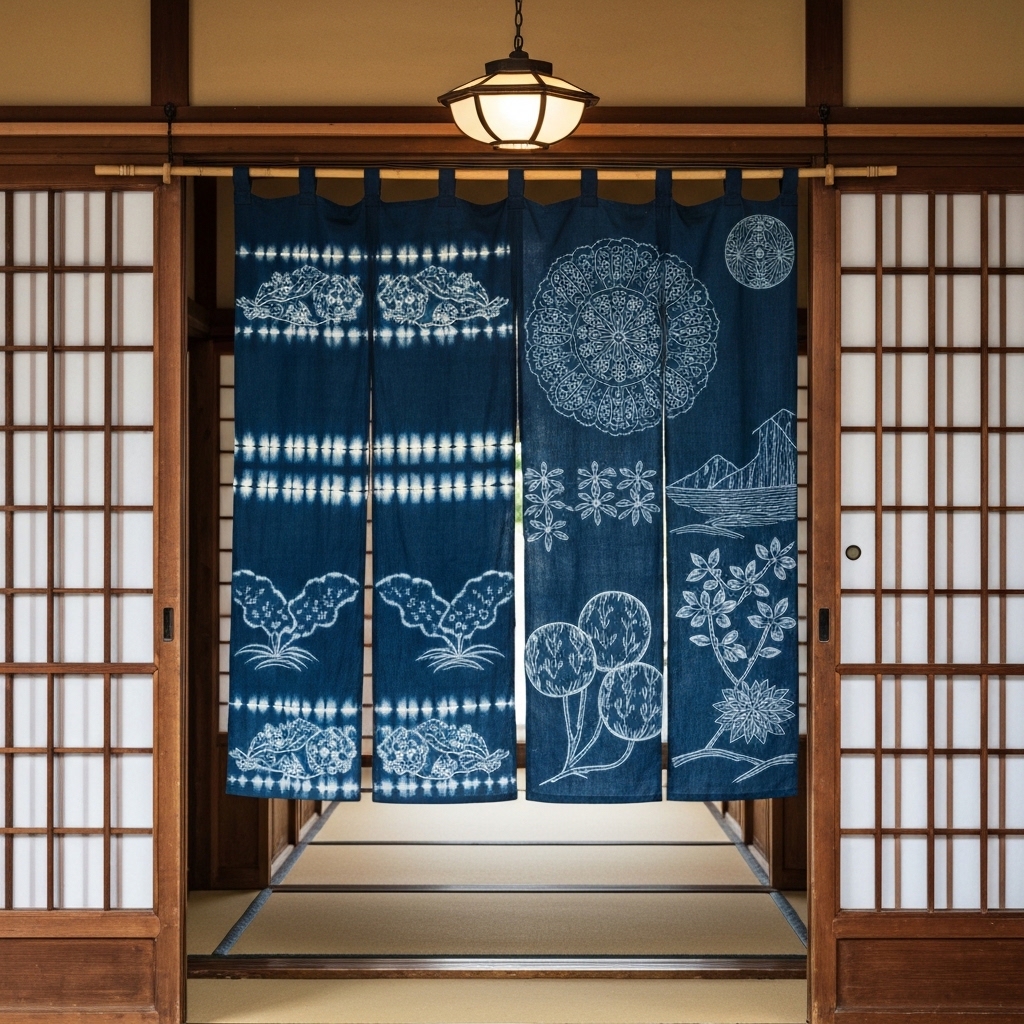
Decoding Traditional Japanese Noren Motifs: Symbolism and Meaning
The noren (暖簾), that humble fabric divider often seen hanging in doorways across Japan, is far more than a simple curtain. It’s a canvas rich with symbolism, reflecting centuries of Japanese culture, beliefs, and aesthetics. Decoding these motifs offers a fascinating glimpse into the soul of Japan. Whether adorning the entrance to a bustling izakaya (居酒屋) or gracing the doorway of a serene tea room, the noren's design communicates volumes. To understand the broader history and meaning of noren, start with our pillar guide. Let's explore some of the most common and compelling motifs found on these ubiquitous fabric portals.
Animals and Mythical Creatures: Dragons, Cranes, and Their Significance
Animals and mythical beasts have long held profound significance in Japanese art and folklore, and the noren is no exception. The dragon, or ryū (龍), is perhaps the most powerful and auspicious creature depicted. Unlike its Western counterparts, the Japanese dragon is generally considered a benevolent protector, representing wisdom, strength, and good fortune. Explore our dedicated guide to dragon noren for more on this iconic motif. You might see a dragon on a noren advertising a business, signifying prosperity and success. The image is often rendered in bold strokes of indigo dye, aizome (藍染め), on a simple momen (木綿) or asa (麻) fabric. The scale of the dragon itself is important: a smaller, more stylized dragon might represent personal growth, while a large, imposing dragon conveys established power.
The crane, or tsuru (鶴), is another beloved symbol, representing longevity, happiness, and marital fidelity. Due to its association with long life, cranes are frequently seen on noren hanging in homes or businesses catering to an older clientele. A pair of cranes facing each other often adorns noren used for celebratory occasions like weddings, symbolizing a long and happy marriage. The elegant form of the crane lends itself beautifully to traditional katazome (型染め) dyeing techniques, where intricate stencils create detailed and graceful depictions. The use of gold or silver thread in depicting the crane’s feathers adds an extra layer of auspiciousness.
Sometimes, less overtly powerful animals also feature. Koi carp (koi 鯉), symbolizing perseverance and courage, can be seen, especially around Tango no Sekku (端午の節句), Boy's Day. Their upward swimming motion represents overcoming obstacles. Even the humble cat (neko 猫) appears, often beckoning good fortune (招き猫, maneki-neko) into shops and restaurants.
Expert Insight: When choosing a noren with an animal motif, consider the context of its placement. A dragon might be perfect for a business, while a crane is more suitable for a home or gift celebrating a special occasion.
Plants and Natural Elements: Bamboo, Cherry Blossoms, and Water
Nature provides a constant source of inspiration in Japanese art, and the noren reflects this deep connection. Bamboo, or take (竹), is a particularly potent symbol, representing resilience, flexibility, and good fortune. Its ability to bend without breaking makes it a metaphor for weathering life’s challenges. A noren featuring bamboo might be found outside a traditional crafts shop, hinting at the enduring quality of the goods within. Bamboo leaves, often depicted in minimalist designs, evoke a sense of tranquility and harmony.
Cherry blossoms, or sakura (桜), are perhaps the most iconic symbol of Japan. Their fleeting beauty represents the ephemeral nature of life, reminding us to appreciate each moment. Sakura noren are especially popular in spring, adding a touch of elegance and celebrating the arrival of the season. See our guide to cherry blossom noren for styling ideas. These noren are often crafted from lighter fabrics like kinu (絹) silk or fine momen, allowing the light to filter through and create a delicate, ethereal effect. The colors used range from pale pinks to deeper shades of magenta, capturing the full spectrum of the blooming sakura.
Water, or mizu (水), represented by swirling patterns or stylized waves, symbolizes fluidity, adaptability, and the constant flow of life. Water motifs on noren can create a sense of coolness and serenity, making them popular for use in the summer months or in businesses promoting relaxation and well-being. The scale of the waves can also convey different meanings: small, gentle waves represent tranquility, while larger, more dynamic waves suggest strength and resilience.
Geometric Patterns and Abstract Designs: Their Origins and Interpretations
Beyond representational imagery, geometric patterns and abstract designs also play a significant role in noren design. These patterns, often rooted in historical traditions, add a layer of depth and sophistication.
One common pattern is the shippō (七宝), an endless linked circle motif symbolizing harmony, connection, and prosperity. The shippō pattern is often used as a background element, creating a sense of continuity and good fortune.
Another frequently seen pattern is the ichimatsu (市松), a checkered pattern that represents continuity and growth. This pattern gained significant popularity during the Edo period and continues to be a beloved design element in Japanese textiles. You might find this bold, modern pattern adorning a noren for a contemporary shop or restaurant.
Abstract designs, while seemingly simpler, can also carry profound meaning. A single kanji character (漢字) prominently displayed on a noren can instantly convey the business’s name or core value. For example, a noren with the kanji for "sake" (酒) clearly indicates a sake shop or bar. Similarly, simple lines and shapes can evoke natural elements or abstract concepts, allowing the viewer to interpret the design based on their own experience and perspective. The use of negative space is also crucial, creating a sense of balance and harmony. The saotooshi (竿通し) or rod pocket at the top edge typically has a width of 4-5 cm (1.5-2 inches) to fit a standard tsuppari-bou (突っ張り棒) or tension rod.
Seasonal Noren: Adapting Traditional Japanese Noren Motifs to the Calendar
The artistry of noren goes far beyond mere decoration; it’s a living expression of the seasons, mirroring the subtle shifts in the natural world and the cultural rhythms of Japanese life. Choosing noren with seasonal motifs allows you to participate in this tradition, bringing a touch of the outside world into your home or business throughout the year.
Spring: Celebrating Renewal with Floral and Bird Designs
Springtime in Japan is synonymous with sakura (桜, cherry blossoms), and naturally, they are a common motif adorning noren. You’ll often find them depicted in various stages of bloom, from tight buds just beginning to unfurl, to full, cascading blossoms. Rather than a mere depiction, the sakura represents the ephemeral nature of life and the beauty of the present moment. A noren featuring sakura in a gentle breeze instantly evokes the feeling of haru (春, spring).
Beyond cherry blossoms, other popular floral motifs include ume (梅, plum blossoms), which bloom even earlier in the spring, and botan (牡丹, peonies), symbolizing wealth and prosperity. Bird designs frequently accompany these floral elements. Uguisu (鶯, Japanese bush warbler), known for its distinctive song, is a typical choice, as are swallows (tsubame, 燕), harbingers of warmer weather.
A standard noren size showcasing these spring motifs might measure around 85 cm wide by 150 cm long (approximately 33.5 x 59 inches), offering a generous canvas to display the blossoming imagery. Another, shorter style, perhaps 90 cm wide by 90 cm long (approximately 35.5 x 35.5 inches) could feature a smaller, more concentrated design – perhaps a single branch of sakura or a pair of tsubame in flight.
Expert Insight: When selecting a spring noren, consider the lighting in your space. Lighter fabrics allow more sunlight to filter through, creating a brighter, airier feel, perfect for the season of renewal.
Summer: Cool Colors and Aquatic Motifs for Hot Weather
As the days grow longer and temperatures rise, noren designs shift to reflect the coolness and tranquility sought during the hot summer months. Aquatic motifs are particularly prevalent.
Kingyo (金魚, goldfish) are a common sight, their vibrant colors adding a touch of liveliness against a backdrop of cool blues and greens. Kawa (川, rivers) and mizu (水, water) designs evoke a sense of refreshing movement, offering visual relief from the heat. Consider noren decorated with ajisai (紫陽花, hydrangea), blooming in various shades of blue and purple, or asagao (朝顔, morning glory) which symbolizes fleeting beauty.
Waves, often depicted in the classic seigaiha (青海波) pattern, provide another popular motif. The repeating pattern of overlapping waves symbolizes peace and good fortune, a welcome sentiment during the often-challenging summer months. These wavy motifs help to establish a cooling environment.
Summer noren frequently feature lighter fabrics to allow for better air circulation. Sometimes these may be shorter, perhaps 45 cm in length by 85 cm wide (approximately 17.7 x 33.5 inches). These smaller noren are perfect for smaller doorways or spaces where you want to add a touch of summer without completely blocking the light.
Autumn and Winter: Harvest Themes and Winter Landscapes
Autumn noren designs embrace the rich colors and bountiful harvest of the season. Kaki (柿, persimmon), kuri (栗, chestnuts), and ine (稲, rice plants) are common motifs, representing abundance and gratitude for the year's yield.
Momiji (紅葉, Japanese maple leaves) in vibrant shades of red, orange, and yellow, are a quintessential symbol of autumn. These are often depicted swirling in the breeze, capturing the fleeting beauty of the changing leaves. Other autumnal motifs include tsuki (月, the moon), particularly the full moon of the harvest season, and suzuki (薄, Japanese pampas grass), swaying gently in the autumn wind.
Winter noren often feature scenes of snow-covered landscapes, pine trees (matsu, 松) dusted with snow, or yuki (雪, snow) itself. Cranes (tsuru, 鶴), symbols of longevity and good fortune, are another popular choice, adding a touch of elegance and grace to the winter scene. Noren with these motifs tend to create a sense of warmth and comfort during the colder months. You might see noren showcasing yuki-daruma (雪だるま, snowman) for a playful touch. These noren tend to feature heavier fabrics to create a warmer atmosphere inside.
Crafting and Preservation: Traditional Techniques in Noren Production
Fabric Choices: Indigo Dyeing and Other Traditional Methods
The soul of a traditional 暖簾 (noren) lies as much in its fabric as it does in its design. While modern manufacturing offers diverse materials, authentic noren often feature natural fibers chosen for their texture, durability, and affinity for traditional dyes. Woven with care, the fabric provides the ideal canvas for intricate patterns and vibrant colors.
綿 (men), or cotton fabric, especially 木綿 (momen), remains a staple for its robust nature and absorbency. Its versatility allows for a wide range of dyeing techniques and print applications. Another cherished material is 麻 (asa), encompassing hemp and linen. Linen, in particular, offers a beautiful drape and a slightly rougher texture that lends character to the noren. Linen's inherent breathability also makes it suitable for use in warmer months, promoting airflow in doorways. Historically, 絹 (kinu), or silk, was reserved for more elaborate and decorative noren, often used in temples or wealthy households.
Beyond the base material, the threads used for stitching and reinforcement play a role. Cotton threads, again, are common, but sometimes linen or even silk threads are employed to match the fabric's quality. The density of the weave also matters. A tighter weave provides a smoother surface for delicate patterns, while a looser weave can create a more rustic and textured look.
Stenciling and Dyeing Techniques: Maintaining Authenticity
型染め (katazome), the resist-dyeing technique using stencils, is a cornerstone of traditional noren production. The process begins with meticulously carving a stencil from durable paper, often treated with persimmon tannin for water resistance. These stencils, sometimes incorporating multiple layers for complex designs, are then placed on the fabric, and a rice-paste resist is applied.
The true artistry comes in the dyeing process. Master artisans carefully apply dyes, often natural pigments derived from plants and minerals, to the exposed areas of the fabric. The resist prevents the dye from penetrating the covered areas, creating the desired pattern. After the dyeing is complete, the resist is removed, revealing the intricate design. The precision and skill required to align multiple stencils and apply the dyes evenly are marks of a true craftsman. Imperfections are considered part of the beauty of hand-crafted textiles. Digital printing has become widespread, but hand-dyeing ensures a rich, layered look to the textile.
Repairing and Preserving Antique Noren: Best Practices
Antique noren, often bearing the marks of time and use, represent a tangible link to Japan's cultural heritage. Careful preservation is crucial to ensure these pieces can be appreciated for generations to come.
First, assess the condition of the noren. Look for tears, stains, fading, and areas of weakened fabric. Minor tears can often be repaired with careful stitching, using threads that closely match the original material and color. A running stitch (in Japanese: 運針, unshin) can work very well for small repairs.
For more significant damage, consider consulting a textile conservator. They possess the expertise to stabilize fragile fabrics, mend tears invisibly, and clean delicate pieces without causing further harm. Avoid harsh cleaning methods that can damage the fibers or fade the dyes. Gentle spot cleaning with a pH-neutral soap is preferable. Vacuuming the textile with a low setting and without brushes can also help remove dust.
Proper storage is equally important. Store antique noren flat or rolled in acid-free tissue paper in a cool, dry, and dark place. Avoid direct sunlight, which can accelerate fading. Consider framing the noren with UV-protective glass to display it while minimizing damage from light.
Expert Insight: When repairing small tears, use a fine needle and thread and try to match the original stitching pattern. This will help to preserve the original look and feel of the noren.
Noren in Business: Using Traditional Motifs to Convey Identity
Shop Names and Family Crests: Customizing Noren for Branding
For generations, businesses in Japan have understood the power of the 暖簾 (noren) as more than just a simple door covering. It's a dynamic signboard, a subtle yet powerful statement about the shop's identity. Learn more about noren for restaurants and commercial use. Central to this is the incorporation of the shop's name (屋号, yagō) and, in some cases, the family crest (家紋, kamon).
The way a shop name is rendered on a 暖簾 (noren) speaks volumes. A traditional calligraphy style evokes a sense of history and trustworthiness, particularly effective for establishments specializing in time-honored crafts or cuisine. Conversely, a more modern, clean typeface can signal a contemporary approach. The size and placement of the name are equally important. A large, boldly displayed name asserts confidence, while a more understated rendering suggests quiet sophistication.
Family crests, while less common in modern urban settings, continue to grace the 暖簾 (noren) of many established businesses, particularly those with deep roots in their communities. They serve as a silent testament to the lineage and reputation of the establishment. Think of a traditional sake brewery or a long-standing kimono shop – the 家紋 (kamon) is a visual shorthand for quality and tradition. Often, the crest is subtly incorporated, perhaps in a repeating pattern or as a small, elegant detail near the bottom of the 暖簾 (noren). This approach avoids ostentation while still subtly conveying heritage.
The dimensions of the 暖簾 (noren) itself contribute to the branding message. A wider 暖簾 (noren) (e.g., 150cm/59 inches wide) creates a more welcoming and expansive feel, while a narrower one (e.g., 90cm/35 inches wide) can project an air of exclusivity or specialization. The length, typically around 70-90cm (27-35 inches), is adjusted to provide visual balance with the entrance and the shop's overall facade.
Placement and Visibility: Optimizing Noren for Attracting Customers
The strategic placement of a 暖簾 (noren) is crucial for attracting customers. It's not simply about hanging it over the doorway; it’s about considering the surrounding environment and how the 暖簾 (noren) interacts with it.
Consider the streetscape. Is the shop located on a busy thoroughfare or a quiet side street? On a bustling street, a brighter, more eye-catching 暖簾 (noren) may be necessary to stand out from the visual clutter. On a quieter street, a more subtle and refined design can be effective in attracting discerning customers.
The height at which the 暖簾 (noren) is hung is also important. It should be positioned to be easily seen by passersby, but not so low that it obstructs entry or feels imposing. A good rule of thumb is to hang it so that the bottom edge is at eye level for most people. This ensures maximum visibility and encourages interaction. Also consider the position of any lighting around your entrance. Light shining from behind the 暖簾 (noren) can create an attractive backlit effect that draws the eye, whereas the wrong angle may create an unsightly glare.
The slits (割れ, ware) in the 暖簾 (noren) also play a role in visibility. Deeper slits allow for more of the interior to be seen, creating a sense of openness and inviting customers to peek inside. Shallower slits offer more privacy and can create a sense of mystery. The number of slits also matters. A single slit is typical for smaller 暖簾 (noren), while two or three slits are common for larger ones.
Expert Insight: Observe successful shops in your neighborhood. Note how they use 暖簾 (noren), signage, and lighting to create an inviting and effective storefront. Emulate what works, but always strive to create a unique identity for your business.
The Evolution of Traditional Japanese Noren Motifs in Modern Interiors
Blending Traditional and Contemporary Styles: Creative Noren Applications
The modern Japanese home, often a study in minimalist design, welcomes the noren in unexpected ways. Beyond the shopfront and kitchen doorway, you'll find them subtly redefining spaces. Think of a sleek, modern apartment where a long, slender noren, perhaps 90 cm (35 inches) wide and reaching the floor, acts as a gentle room divider, separating a workspace from the living area. The fabric might be a contemporary blend – perhaps a linen-rayon mix – dyed in muted, earthy tones, with a subtle, geometric pattern echoing traditional asanoha (麻の葉, hemp leaf) but rendered in a thoroughly modern way.
Another interesting application is using noren as closet doors. Instead of bulky sliding doors in a small apartment, a pair of noren hung side-by-side can create a softer, more visually appealing closure. The motif here might be something personal – a stylized family crest or a simple graphic inspired by nature. This approach is particularly popular in machiya (町家, traditional wooden townhouses) renovations, preserving the architectural spirit while introducing modern functionality.
Even bathrooms are seeing the noren's resurgence. Instead of a shower curtain, consider a shorter noren, perhaps 60 cm (24 inches) in length, hung just outside the shower stall. While not entirely waterproof, it offers a decorative element and adds a touch of Japanese aesthetic to an otherwise utilitarian space. Look for fabrics treated with a water-repellent finish for this application.
Expert Insight: When using noren in areas with high humidity, such as bathrooms or kitchens, consider opting for natural fiber blends with improved ventilation or quick-drying properties to prevent mold and mildew.
Adapting Traditional Motifs: How Artists Reinvent the Classics
Contemporary noren artists are not simply replicating old designs; they're engaging in a dynamic conversation with tradition. A classic motif like maneki-neko (招き猫, beckoning cat), traditionally found on shop noren, might be reimagined with bold, abstract strokes in a pop-art style. Instead of traditional indigo, vibrant, unexpected colors could be used. This allows the artist to retain the familiar image while injecting a dose of modern personality.
Another avenue is to use traditional motifs as inspiration for entirely new designs. The flowing lines of seigaiha (青海波, blue sea wave pattern), for example, might be abstracted into swirling, almost psychedelic patterns on a noren intended as a statement piece in a modern living room. Or a detailed depiction of sakura (桜, cherry blossom) might be broken down into minimalist, geometric shapes.
Digital printing techniques also allow artists to experiment with complex patterns and gradients that would be difficult or impossible to achieve with traditional dyeing methods. This has opened up a whole new world of possibilities for noren design, allowing for greater freedom of expression. For more ways to incorporate these designs into your space, explore our noren design ideas. Some artists are even incorporating photographic images into their noren designs, blurring the lines between traditional art and contemporary photography.
Using Noren as Art: Framing and Displaying Vintage Pieces
Antique noren, especially those featuring elaborate katazome (型染め, stencil dyeing) or intricate embroidery, are increasingly being recognized as valuable works of art. Instead of hanging them in a doorway, collectors are choosing to frame them or display them as wall hangings. A deep shadow box frame can showcase the noren's texture and detail, protecting it from dust and UV damage.
Another option is to mount the noren on a stretched canvas, similar to how paintings are displayed. This gives the noren a more structured and formal appearance. The canvas provides support, preventing the fabric from sagging over time. This method is especially well-suited for noren made from heavier fabrics like momen (木綿, cotton fabric) or kinu (絹, silk).
When displaying a vintage noren, consider the lighting carefully. Direct sunlight can cause fading and damage, so it's best to place it in a location with indirect light. LED lighting is a good choice, as it emits minimal heat and UV radiation. Regular dusting is also essential to keep the noren looking its best. Avoid using harsh chemicals or abrasive cleaners, as these can damage the delicate fabrics and dyes.
Creating Your Own Noren: A Beginner's Guide to Design and Construction
Choosing a Design: Finding Inspiration from Traditional Sources
Embarking on your noren (暖簾) creation is an exciting journey. Instead of feeling overwhelmed, consider drawing inspiration from the vast well of Japanese visual culture beyond just existing noren. Textile designs from yukata (浴衣) or tenugui (手拭い) often translate beautifully. Visit museums showcasing historical textiles for unique motif ideas. Consider the art of origami (折り紙); abstracting the geometric shapes of folded paper into a repeating pattern creates a modern yet undeniably Japanese feel.
Examine washi (和紙) paper patterns. The subtle textures and delicate designs found on handcrafted paper can be reproduced with paint or stencils. Look to nature, not just for iconic imagery like cherry blossoms or cranes, but also for more subtle details. The intricate veins of a maple leaf, the swirling patterns of sand in a Zen garden – these can be simplified and stylized for your noren. Focus on conveying the essence of the subject, rather than literal representation. For example, instead of depicting a full carp, consider a stylized scale pattern.
Think about adapting a kamon (家紋) – a family crest. While using an existing crest without permission is strongly discouraged (especially of a registered trademark), drawing inspiration from the circular format and abstract designs offers a starting point for a unique and personalized motif. Research the history and symbolism of different kamon styles to inform your own design choices.
Simple Sewing Techniques: Creating a Basic Noren at Home
Constructing a basic noren doesn't require advanced sewing skills. A straight stitch is the workhorse of this project. Decide on your final dimensions, adding seam allowances. A typical doorway noren might be 85cm (33.5 inches) wide and 90cm (35.5 inches) long, but adjust this to fit your specific space. Remember to factor in the desired length of the slit – traditionally, noren are split partially up the center, allowing for easy passage. A slit that extends roughly 2/3 of the way up is a common starting point.
Hem all four sides of your fabric rectangle. For the saotooshi (竿通し, rod pocket), fold the top edge over by approximately 5cm (2 inches), press, and stitch to create a casing for your rod or dowel. Make sure the casing is wide enough to accommodate your chosen hanging method – a tsuppari-bou (突っ張り棒, tension rod) is a simple and readily available option.
To create the slit, carefully measure and mark the desired center point at the bottom of your noren. Stitch a reinforced seam along each side of the intended slit line, working your way upwards. Backstitch securely at both the starting and ending points to prevent fraying. Carefully cut along the marked line between the two stitched seams. For added durability, consider a small triangular reinforcement stitch at the top of the slit on both sides.
Adding Personal Touches: Stencils, Dyes, and Embellishments
Once the basic noren is sewn, personalize it with your chosen design. Simple stencils cut from cardstock or acetate are an excellent way to apply repeating patterns or bold graphic elements. Use fabric paint or acrylic paint mixed with a textile medium for durability. Experiment with layering stencils to create more complex designs.
Embroidery, even basic running stitches, can add subtle texture and detail. Consider outlining stencil designs with embroidery or adding small embroidered motifs like stars or leaves. Appliqué is another simple technique. Cut shapes from contrasting fabrics and stitch them onto the noren. Use fusible interfacing to secure the appliqués before stitching for a cleaner finish.
Fabric markers offer a quick and easy way to add fine details or handwritten text. Practice on a scrap of fabric first to get a feel for the marker and prevent bleeding. Consider adding kanji (漢字) characters that reflect the noren's location or purpose.
Expert Insight: Before committing to a final design, create a small-scale mock-up using paper or inexpensive fabric. This allows you to experiment with different motifs, colors, and layouts without wasting materials or time on the full-size noren.