Indigo Noren Meaning: Unveiling Symbolism in Japanese Curtains
The Historical Significance of Indigo Dye in Noren Production
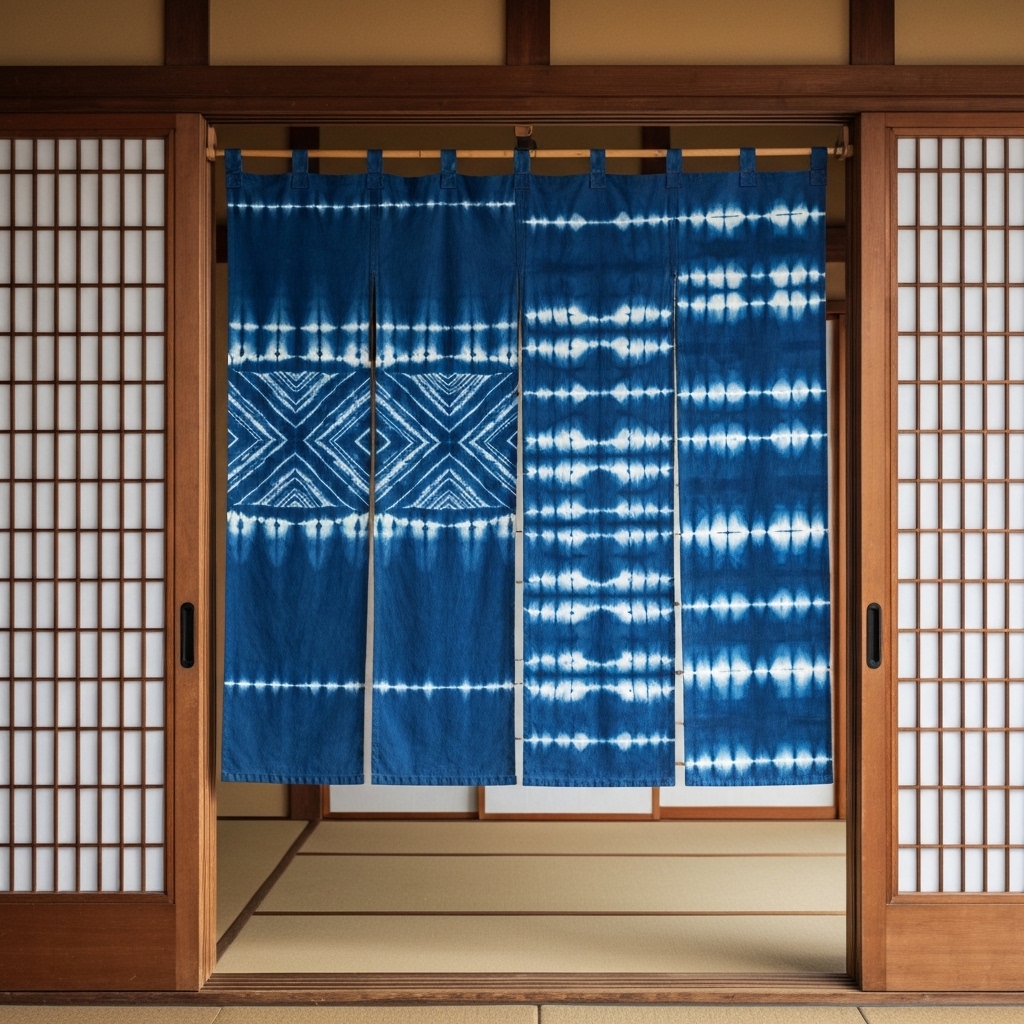
Indigo, or ai (藍), isn’t just a color; it's a profound part of Japan's cultural fabric. When we talk about indigo noren (暖簾), we're not just discussing a simple doorway curtain. We're touching upon centuries of tradition, craftsmanship, and the spirit of wabi-sabi – finding beauty in imperfection. In this section, we will explore the historical depth of indigo dye and its connection to the creation and use of noren throughout Japan.
Indigo as a Symbol of Edo-Era Japan: Affordability and Availability
While noren existed before the Edo period (1603-1868), it was during this era that they truly became ubiquitous, weaving their way into the daily lives of commoners. For a broader look at how noren evolved through the centuries, see our guide on the history and meaning of noren. Indigo, specifically, became the dominant dye. Why? While the nobility had access to costly and vibrant dyes derived from sources like safflower (benibana) or purple gromwell (murasaki), indigo was relatively affordable and readily available to the burgeoning merchant class (shōnin) and artisans (shokunin). This accessibility democratized the use of color in everyday life.
Imagine the bustling streets of Edo (modern-day Tokyo): row upon row of shops, each distinguished by its unique noren. A sake shop might display a deep indigo noren with a large white sake barrel symbol. A noodle shop, perhaps a lighter shade of indigo with its name boldly stenciled in white. The noren weren’t just decorative; they were functional advertisements, clear signifiers of what lay behind the curtain.
Indigo noren also played a vital role in distinguishing different types of businesses, and the shade of indigo could even subtly indicate the quality or specialty of the shop. While a brighter, fresher indigo might suggest a newly opened establishment, a more subdued, aged indigo could imply a long-standing, reputable business. The fading of indigo was never seen as a negative; rather, it was seen as adding to the charm and character, a testament to the passage of time and the dedication to craft.
Furthermore, indigo's association with the working class fostered a sense of community and shared identity. Farmers, tradespeople, and merchants alike embraced indigo-dyed textiles, from work clothes to bedding, further solidifying its place as the color of everyday life. It was a visual representation of the values of practicality, resilience, and enduring craftsmanship.
Traditional Dyeing Techniques: From Sukumo to Ai-zome
The magic of indigo lies not just in the dye itself, but in the painstaking process of extracting and applying it. The traditional Japanese method, ai-zome (藍染め), is an intricate process that involves fermenting indigo leaves to create a dye vat. The journey begins with cultivating indigo plants, primarily Polygonum tinctorium, which are harvested and dried. The dried leaves are then processed into sukumo (蒅), a compost-like material that forms the basis of the indigo dye.
Creating a proper indigo vat is a labor of love, requiring constant attention and precise adjustments. Ingredients such as wood ash lye, wheat bran, and sake are added to the sukumo to initiate fermentation, creating a living, breathing ecosystem within the vat. The dyer, or ai-ya (藍屋), carefully monitors the vat's temperature, pH level, and overall health, adjusting the recipe as needed to maintain optimal dyeing conditions.
The fabric, usually momen (木綿, cotton) or asa (麻, hemp/linen) for noren, is repeatedly dipped into the vat, each dip deepening the color. This layering process, often repeated dozens of times, is essential to achieving the desired hue. The fabric is then exposed to air, where oxidation causes the indigo dye to transform from a greenish-yellow to its characteristic blue.
The designs on the noren themselves are often created using katazome (型染め), a stencil dyeing technique. Rice paste is applied to the fabric through intricately carved stencils, resisting the indigo dye and leaving behind the desired patterns. This technique allows for the creation of complex and detailed designs, adding another layer of artistry to the humble noren.
The Practical Benefits of Indigo: Repellency and Preservation
Beyond its aesthetic appeal, indigo-dyed fabric offered several practical advantages that contributed to its popularity in noren production. Indigo possesses natural insect-repelling properties, making it an effective barrier against pests. This was especially important in food-related businesses, where protecting goods from insects was a constant concern.
Moreover, indigo dye has antibacterial and deodorizing qualities. In a time when hygiene was less advanced, this was a significant benefit. The dye's ability to inhibit bacterial growth helped to keep the noren clean and fresh, reducing the spread of germs and odors.
The dyeing process also strengthens the fabric. The multiple dips and oxidation involved in ai-zome effectively coat the fibers, increasing their durability and resistance to wear and tear. This was especially valuable for noren, which were often exposed to the elements and subjected to frequent use.
Expert Insight: If you have an antique or vintage indigo noren, avoid harsh detergents when cleaning it. Opt for a gentle hand-washing in cool water with a pH-neutral soap to preserve the integrity of the natural dyes and fibers.
Deciphering the Indigo Noren Meaning: Symbolism and Purpose
Shop Signage and Branding: How Indigo Noren Communicate Business Identity
Beyond simply indicating an open doorway, indigo noren function as subtle yet powerful branding tools for Japanese businesses. The shade of indigo itself speaks volumes. A deep, almost black aizome (藍染め) noren often signifies a long-established business, one confident in its reputation and expertise. Think of a traditional soba (蕎麦) shop, its noren weathered by years of sun and rain, proclaiming its authenticity. Conversely, a lighter, brighter indigo might suggest a more modern or casual establishment.
The length and cut of the noren also contribute to the message. A shorter noren, perhaps only reaching waist-height, might be seen at a bustling izakaya (居酒屋), encouraging quick entry and a lively atmosphere. Longer noren, conversely, add an air of formality, often found at restaurants with a more refined ambiance or traditional craft shops.
The text or design emblazoned on the noren is, of course, crucial. A simple family crest (kamon / 家紋) silently communicates heritage. The shop’s name in bold kanji is typical, but some establishments opt for evocative imagery – perhaps a silhouette of a teapot for a tea house, or a brushstroke depicting a wave for a seafood restaurant. The font itself plays a role, with more calligraphic styles conveying tradition and simpler, modern fonts suggesting a contemporary approach. The saotooshi (竿通し), or rod pocket, is also a design element, sometimes featuring contrasting fabric or decorative stitching.
A standard noren width is around 85 cm (33.5 inches), though they can range from narrower versions for smaller doorways to wider ones for larger entrances. The height is much more variable, influencing the feeling of openness versus privacy the noren provides.
Expert Insight: Look closely at the number of slits (typically 3 or 5) in a shop's noren. While practical for allowing passage, some believe the number carries significance based on numerology or local custom.
Seasonal Variations and Occasional Use: Festivals and Special Events
While some businesses display the same indigo noren year-round, many swap them out seasonally or for specific events. This practice reflects the Japanese appreciation for the changing seasons and offers an opportunity to refresh the business's image. For example, a noren featuring cherry blossoms (sakura / 桜) might appear in spring, replaced by one depicting cool water motifs in summer.
During festivals (matsuri / 祭り), temporary noren are commonly used to decorate stalls and vendor booths. These are often brightly colored and feature festive designs, such as traditional patterns, lucky symbols, or depictions of festival characters. Unlike the typically somber indigo, these festival noren embrace a vibrant palette.
Special events, such as anniversaries or grand openings, also provide an opportunity to display unique noren. These might feature special logos, promotional messages, or even the names of sponsors. In these cases, the noren functions more explicitly as advertising, moving beyond subtle branding into direct marketing.
The use of noren for these occasions exemplifies their versatility, transforming from everyday signage into dynamic expressions of celebration and commemoration.
Noren in Residential Settings: Privacy, Decoration, and Feng Shui (Kasou)
In Japanese homes, noren serve a different, yet equally important, function. They provide a measure of privacy without completely blocking light or airflow, creating a sense of separation between rooms. You might find a noren hanging in a doorway leading to a kitchen, bathroom, or storage area, softening the transition and adding a touch of visual interest.
Beyond practicality, noren also serve as decorative elements, reflecting the homeowner's personal style and taste. While indigo remains a popular choice, residential noren often feature a wider range of colors and patterns, from floral motifs to abstract designs. The fabric choice, too, reflects the homeowner's preferences.
From a fūsui (風水, feng shui) perspective, the placement of noren can influence the flow of ki (気) throughout the home. A noren placed at the entrance to a room can help to contain energy and prevent it from escaping. The color and design of the noren can also be chosen to harmonize with the surrounding environment and enhance the overall well-being of the occupants. For instance, blue or green tones are believed to promote calmness and relaxation, making them suitable for bedrooms or meditation spaces. The gentle movement of the noren in a breeze is also considered beneficial, helping to circulate ki and prevent stagnation.
Understanding Indigo Shades and Dyeing Variations in Noren Design
The Spectrum of Indigo: From Pale 'Asagi' to Deep 'Kon-ai'
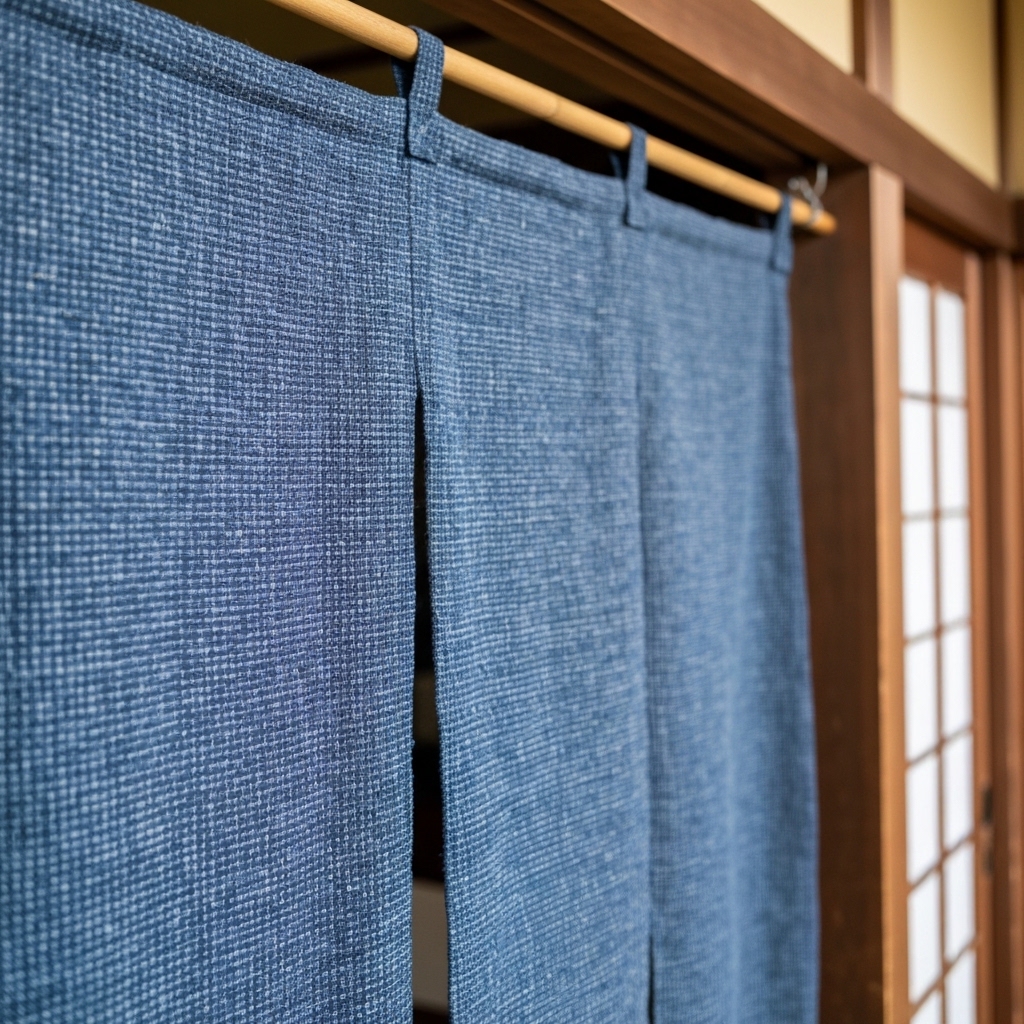
The world of indigo is far from monolithic. It’s a nuanced and expressive spectrum, a painter’s palette rendered in shades born from fermented leaves. When considering indigo noren, understanding these shades is crucial to appreciating their depth. The palest of indigos, often referred to as asagi (浅葱), evokes the freshness of a spring sky just after dawn. Imagine a noren in this hue gently billowing in the doorway of a traditional confectionery shop, signaling a light and airy sweetness within.
Moving deeper, we encounter a range of mid-tone blues, each with its own subtle character and appropriate applications. These variations might be described using terms tied to specific dyers or regional techniques, reflecting the unique character of the aizome (藍染め) process in different parts of Japan. Some dyes might lean towards a cooler, almost greyish blue, while others possess a warmer, more vibrant quality.
At the deepest end of the spectrum lies kon-ai (紺藍), the color of a twilight sky just before the stars appear. This profound indigo is often used for noren gracing the entrances of established businesses, imparting a sense of gravitas and tradition. Consider a kon-ai noren at the entrance of a long-standing sake brewery, subtly suggesting the depth and complexity of the product within. The number of times the fabric is dipped in the dye bath directly impacts this hue and saturation.
Resist Dyeing Techniques: Shibori, Katazome, and Tsutsugaki
Beyond the solid fields of indigo, many noren showcase intricate patterns achieved through various resist dyeing methods. These techniques protect specific areas of the fabric from the indigo dye, resulting in striking designs.
Shibori (絞り), a form of tie-dye, offers a seemingly endless array of patterns. Tiny stitches, intricate binding, and clever folding each result in unique textures and designs. Imagine a noren with delicate shibori patterns resembling snowflakes – it adds a touch of refined elegance to any space.
Katazome (型染め) employs stencils to create bolder, more graphic designs. A rice paste resist is applied through the stencil onto the fabric, preventing the dye from penetrating those areas. This allows for precise control over the pattern. Common themes include geometric shapes, auspicious symbols, and stylized representations of nature. This is often seen on noren with the name of the business boldly displayed.
Tsutsugaki (筒描) is another resist dyeing method where rice paste is applied directly to the fabric using a cone-shaped tool. The process is freehand, allowing for more organic, less rigidly defined designs. Artisans might create whimsical images, personalize family crests, or draw traditional scenes. Due to the artisan skill involved, these noren are often collector items.
Dyeing Consistency and Tone Variation: Aesthetic Choices and the Wabi-Sabi Ethos
The beauty of aizome often lies in its imperfections. Slight variations in the dyeing process can result in subtle tonal shifts across the fabric. Far from being considered flaws, these inconsistencies are embraced as part of the wabi-sabi (侘寂) aesthetic, finding beauty in imperfection and impermanence.
A noren with a slightly uneven dye, where the indigo is a touch lighter in some areas and darker in others, can possess a unique depth and character. It tells a story of the dyeing process, a testament to the handmade nature of the object. Collectors of vintage noren particularly prize these subtle variations as marks of authenticity. These variations add a tactile and visually interesting element.
Expert Insight: Before purchasing an indigo noren, ask the seller about the dyeing process and any potential tonal variations. This allows you to appreciate the unique character of the piece and ensure that it aligns with your aesthetic preferences. A reputable seller should be transparent about these nuances and highlight them as features rather than flaws.
Materials Commonly Used with Indigo Noren: Examining Fabric Choices
The beauty of an aizome (藍染め) noren (暖簾) lies not only in its captivating blue hues but also in the careful selection of materials. The chosen fabric dramatically influences the drape, texture, and overall aesthetic of the curtain. While synthetic fibers are occasionally used, traditional indigo noren often favor natural materials that complement the dyeing process and provide lasting durability.
Cotton: The Workhorse Fabric for Everyday Noren
Momen (木綿), or cotton, reigns supreme as the most prevalent fabric for indigo noren. Its versatility, affordability, and excellent dye absorption make it a natural choice for both commercial and residential settings. For a full comparison of cotton, linen, hemp, and more, see our noren materials guide. Cotton noren are commonly seen adorning the entrances of family-run restaurants (ryotei 料亭) and small shops (shotengai 商店街), adding a touch of rustic charm. The weave of the cotton can vary, from a loose, airy texture to a tightly woven, more durable cloth. A heavier cotton is ideal for noren that will see frequent use and exposure to the elements, while a lighter cotton is suitable for indoor applications.
One key characteristic of cotton is its ability to soften with age, developing a unique patina that enhances its visual appeal. Over time, repeated washings and exposure to sunlight will subtly fade the indigo dye, creating a beautifully worn and lived-in look. This aging process contributes to the wabi-sabi (侘寂) aesthetic, which celebrates the beauty of imperfection and impermanence. For noren with intricate katazome (型染め) patterns, a smoother, higher-quality cotton is often preferred to ensure crisp and clear design execution.
Expert Insight: Consider the weight of the cotton noren in relation to your saotooshi (竿通し, rod pocket) and the tsuppari-bou (突っ張り棒, tension rod) or other hanging method. A very heavy noren may require a sturdier rod to prevent sagging.
Linen: A Breathable and Durable Option for Summer Use
Linen, known as asa (麻) in Japanese, offers a compelling alternative to cotton, particularly during the warmer months. Its naturally breathable fibers allow for excellent air circulation, making it a comfortable choice for doorways in humid climates. Linen noren possess a distinctive textured appearance that adds visual interest and a touch of understated elegance. While slightly more expensive than cotton, linen's superior durability makes it a worthwhile investment for those seeking a long-lasting and aesthetically pleasing noren.
Furthermore, linen is inherently resistant to fading and mildew, making it well-suited for outdoor use. The slightly coarser weave of linen provides a beautiful contrast to the smooth, even tones of indigo dye. This texture is particularly well-suited to simpler designs or solid indigo fields. The natural fibers often have a slight slub, giving each noren character. A linen noren, swaying gently in the breeze, is an iconic sight in traditional Japanese homes during the summer season.
Hemp: Strong Fibers and a Natural Aesthetic
Hemp, also falling under the umbrella term asa (麻), is a strong and sustainable fiber that has been used in Japanese textiles for centuries. Hemp noren offer exceptional durability and a unique, slightly rough texture that complements the natural beauty of indigo dye. While less common than cotton or linen, hemp noren are valued for their resilience and earthy aesthetic. They are typically heavier than cotton or linen, making them ideal for use in high-traffic areas or as room dividers.
The cultivation of hemp requires minimal resources and is considered environmentally friendly, making it a sustainable choice for conscious consumers. The robust nature of hemp fibers ensures that a hemp noren will withstand years of use and maintain its structural integrity. Its natural, undyed color is a light tan/beige which, when dyed, creates an interesting effect alongside the indigo. In addition, hemp fibers have a naturally antimicrobial property that resists odors and prevents mold.
Maintaining the Richness of Your Indigo Noren: Care and Preservation
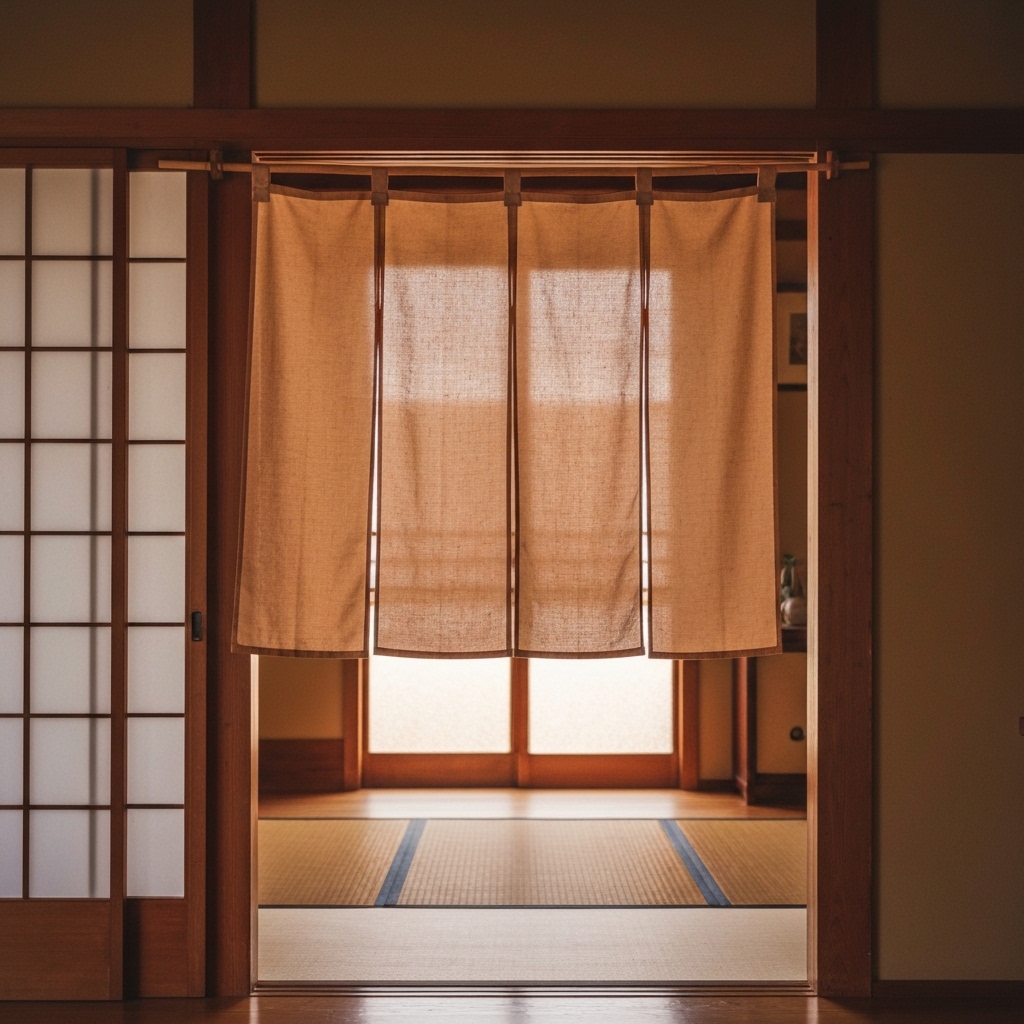
An indigo noren (暖簾) isn't merely a decorative object; it's a piece of artistry, often imbued with personal or familial meaning. Proper care ensures its longevity and the preservation of its vibrant color. For general washing and storage advice that applies to all fabrics, see our noren care and washing guide. Treating it with respect reflects the tradition it represents.
Gentle Washing Techniques: Preserving Color and Preventing Fading
Unlike modern synthetic dyes, aizome (藍染め) indigo possesses a unique character. Its beauty lies not just in its initial intensity but also in the subtle shifts it undergoes over time. However, aggressive washing can prematurely accelerate this aging process, leading to undesirable fading.
When laundering your indigo noren, remember that less is often more. Hand washing remains the gentlest approach. Use cool or lukewarm water—never hot. The water temperature should ideally be around 30°C (86°F). Use a pH-neutral detergent specifically designed for delicate fabrics or, traditionally, a small amount of rice bran water ( nuka-jiru 糠汁) known for its gentle cleansing properties. Avoid detergents containing bleach or optical brighteners, as these will strip the indigo dye.
Gently agitate the noren in the water, avoiding harsh scrubbing or twisting. Rinse thoroughly with cool water until all traces of detergent are gone. To remove excess water, gently press the noren between two clean towels, or hang it carefully. Avoid wringing, as this can distort the fabric and damage the weave. When hanging to dry, choose a shaded area away from direct sunlight. Sunlight will accelerate fading. The noren should be hung straight to minimize wrinkles. If ironing is necessary, use a low heat setting and iron on the reverse side.
Expert Insight: For the initial wash, consider adding a tablespoon of salt to the water. Salt helps to set the remaining dye and minimize initial color bleeding, especially in newly dyed noren.
Storage Recommendations: Protecting Against Sunlight and Pests
Proper storage is crucial to protect your indigo noren when it is not in use. The primary enemies of natural indigo are sunlight, moisture, and pests.
Before storing, ensure the noren is completely dry to prevent mold or mildew. Fold it neatly along its natural seams. Consider wrapping it in acid-free tissue paper or unbleached cotton cloth. These materials provide a barrier against dust and light while allowing the fabric to breathe.
Store the wrapped noren in a dry, dark place away from direct sunlight. A cedar chest or a drawer lined with cedar chips offers natural protection against moths and other fabric pests. The scent of cedar acts as a deterrent. You can also use traditional camphorwood (kusu-no-ki, 樟) blocks, though exercise caution as the fumes could impact the dye over extended periods.
Avoid storing the noren in plastic bags, as these can trap moisture and promote mold growth. Check the noren periodically, especially during humid seasons, to ensure it remains dry and free from pests. Rotate the noren if you have multiple pieces stored together to prevent creasing along the same lines.
Repairing Tears and Damages: Extending the Life of Your Noren
Even with the best care, tears and damages can occur. Addressing these promptly can prevent them from worsening and extend the life of your noren.
For small tears or holes, consider using a traditional Japanese mending technique called sashiko (刺し子). This involves using simple running stitches to reinforce the damaged area. Sashiko not only repairs the tear but also adds a decorative element to the noren. Use indigo-dyed thread that closely matches the color of the fabric.
Larger tears may require patching. Select a piece of fabric that is similar in weight and texture to the original noren material. Position the patch behind the tear and carefully stitch it in place, using small, even stitches. For a more seamless repair, consider using a technique called kintsugi (金継ぎ) for textiles, adapting the philosophy of repairing broken pottery with gold to mend fabric, though this method is complex and best left to experts.
If the saotooshi (竿通し) or rod pocket becomes damaged, carefully remove the old stitching and replace it with a new piece of fabric. Ensure the new saotooshi is wide enough to accommodate the tsuppari-bou (突っ張り棒) or tension rod you intend to use. If you are not comfortable repairing the noren yourself, consider seeking the assistance of a professional tailor or textile conservator specializing in Japanese textiles. They will have the expertise and materials necessary to restore your noren to its former glory.
Incorporating Indigo Noren Into Modern Spaces: Interior Design and Application
Indigo noren are no longer relegated to the entrances of traditional ryokan or bustling izakaya. Their distinctive charm and versatile functionality make them a compelling addition to modern homes and commercial spaces worldwide. The key is understanding how to leverage their inherent qualities within contemporary contexts.
As Room Dividers and Decorative Accents: Functionality Meets Aesthetics
Forget cold, impersonal partitions. An indigo noren offers a soft, visually appealing alternative for delineating spaces. Consider using a longer noren (approximately 150 cm / 59 inches in length) to create a sense of separation between a living area and a home office nook. The gentle sway of the fabric adds a dynamic element, contrasting with the static nature of walls.
Alternatively, shorter noren (around 90 cm / 35 inches) can serve as decorative accents. Imagine one hung in front of open shelving in a kitchen, subtly obscuring clutter while adding a touch of wabi-sabi aesthetic. The translucence of lighter aizome fabrics allows for hints of what lies behind, creating an intriguing visual layer.
Beyond simple division, think about the positioning of the noren. Rather than always hanging it directly in a doorway, try offsetting it to one side. This asymmetry, a common element in Japanese design, can create a more dynamic and visually interesting focal point. Experiment with multiple noren hung in layered configurations for a truly unique effect.
Expert Insight: When using a noren as a room divider, consider the light. Darker indigo shades absorb more light, creating a sense of intimacy, while lighter shades allow more light to pass through, maintaining a brighter, more open feel.
Pairing with Other Japanese Design Elements: Tatami Mats, Shoji Screens, and Bonsai
The synergy between an indigo noren and other Japanese design elements elevates a space beyond mere decoration, creating a harmonious and culturally rich environment.
Tatami mats, with their natural texture and earthy tones, provide a grounding contrast to the vibrancy of indigo. Imagine a low table set on tatami, with an indigo noren hanging nearby, partially obscuring a hallway. The combination evokes a sense of calm and understated elegance.
Shoji screens (shōji / 障子), with their delicate paper panels and wooden frames, offer another opportunity for complementary design. A noren in a similar shade of indigo as the wood frame of the shōji will create a cohesive look. Consider a noren featuring a minimalist geometric pattern to echo the clean lines of the screen.
Bonsai, with their meticulously sculpted forms and natural beauty, provide a living element that complements the crafted nature of the noren. Place a bonsai near an indigo noren to create a miniature landscape within your home. The deep greens of the bonsai will beautifully contrast with the indigo, creating a visually striking focal point.
- Consider these harmonious combinations:
- Indigo noren + bamboo flooring + simple ceramic vases
- Noren with a wave pattern + textured white walls + low wooden furniture
- Indigo noren with tsutsugaki (筒描) folk pattern + Irori style coffee table + zabuton cushions
Customizing Your Noren: Selecting Designs and Motifs for a Personal Touch
While the aizome itself carries inherent meaning, the motifs adorning a noren can further personalize its significance. In the past, business owners displayed noren with their shop names and logos. In the present, you can adapt that custom to your own taste.
Consider the symbolic meaning of traditional Japanese noren motifs when choosing a design. For example:
- Cranes (鶴, tsuru): Represent longevity and good fortune.
- Cherry Blossoms (桜, sakura): Symbolize the ephemeral beauty of life.
- Carp (鯉, koi): Represent perseverance and strength, particularly ascending carp that symbolize overcoming challenges.
Beyond traditional motifs, modern designs often incorporate abstract patterns or personal crests (kamon / 家紋). You might even commission a noren featuring a design inspired by your own interests or family history.
The saotooshi (竿通し), or rod pocket, size is also a customization consideration. Measure the diameter of your tsuppari-bou (突っ張り棒) or rod to ensure a proper fit. Typically, a saotooshi of 3-5 cm (1-2 inches) is sufficient for most standard rods. Finally, many artisans offer fully bespoke noren creation. Communicate your vision clearly, specifying the desired fabric, dye shade, motif, and dimensions. This will result in a unique piece of textile art that reflects your individual style and preferences.