Vintage Noren: Add Authentic Japanese Charm to Your Home Decor
Identifying Authentic Vintage Noren: Clues in the Fabric and Dye
The appeal of vintage 暖簾 (noren) lies not just in their aesthetic charm, but also in the tangible connection they offer to Japan’s past. Understanding the nuances of fabric, dye, and construction can greatly assist in distinguishing a genuine vintage piece from a reproduction. After living in Japan for over 15 years and spending countless hours in antique shops and at flea markets, I've learned to look beyond the surface, observing subtle signs that reveal a noren's true age and history.
Recognizing Traditional Japanese Fabrics Used in Noren: Hemp, Cotton, and Linen
Historically, noren were crafted primarily from natural, readily available materials: 麻 (asa), 綿 (men), and 木綿 (momen). These terms, encompassing hemp, linen, and cotton respectively, are your starting points. Distinguishing between them requires a keen eye and familiarity with their textures.
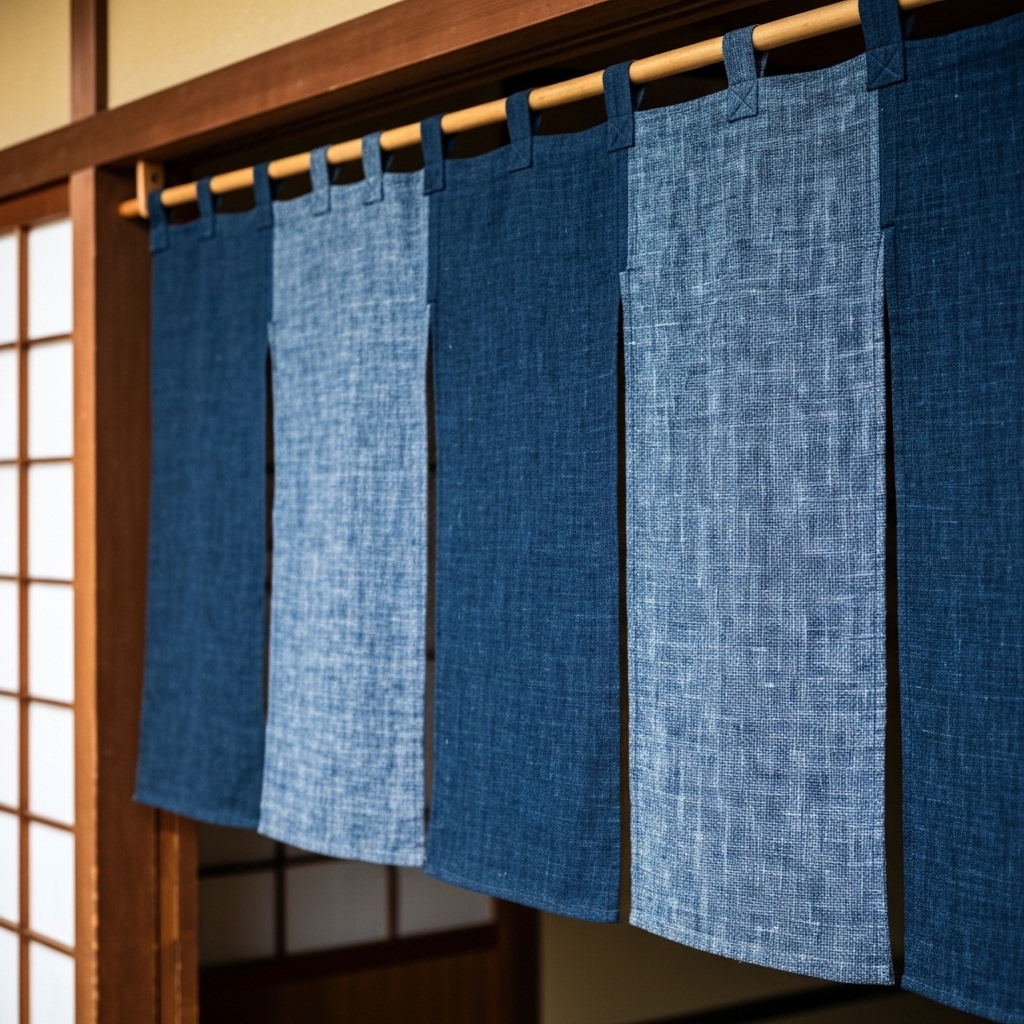
Hemp and linen (麻, asa) fabrics were prevalent, especially in older, more rustic noren. They boast a coarse, slightly irregular weave, often with visible slubs (small knots or imperfections). The fibers are strong and durable, though can become brittle with extreme age. Feel the fabric; hemp and linen have a characteristic stiffness that softens with washing, but never completely disappears. You'll see asa fabrics in the doorway of older soba shops, or maybe an izakaya (居酒屋) that's been around a long time.
Cotton (綿, men), specifically 木綿 (momen), gained widespread popularity during the Edo period and beyond. Momen is softer and more pliable than asa. Vintage cotton noren often display a tighter, more even weave, though handwoven examples will always have slight inconsistencies. Look closely at the weave under magnification. Consider the weight; heavier cottons were typically used for shop noren, while lighter varieties might adorn the entrance to a private home or tea room.
Silk (絹, kinu) noren do exist, but are relatively rare and generally used for ceremonial or decorative purposes. These are a high-end item and should be treated with the utmost care. For a full comparison of hemp, cotton, linen, and silk, see our noren materials guide.
Age-Related Dyeing Characteristics: Fading, Sun Bleaching, and Indigo Variations
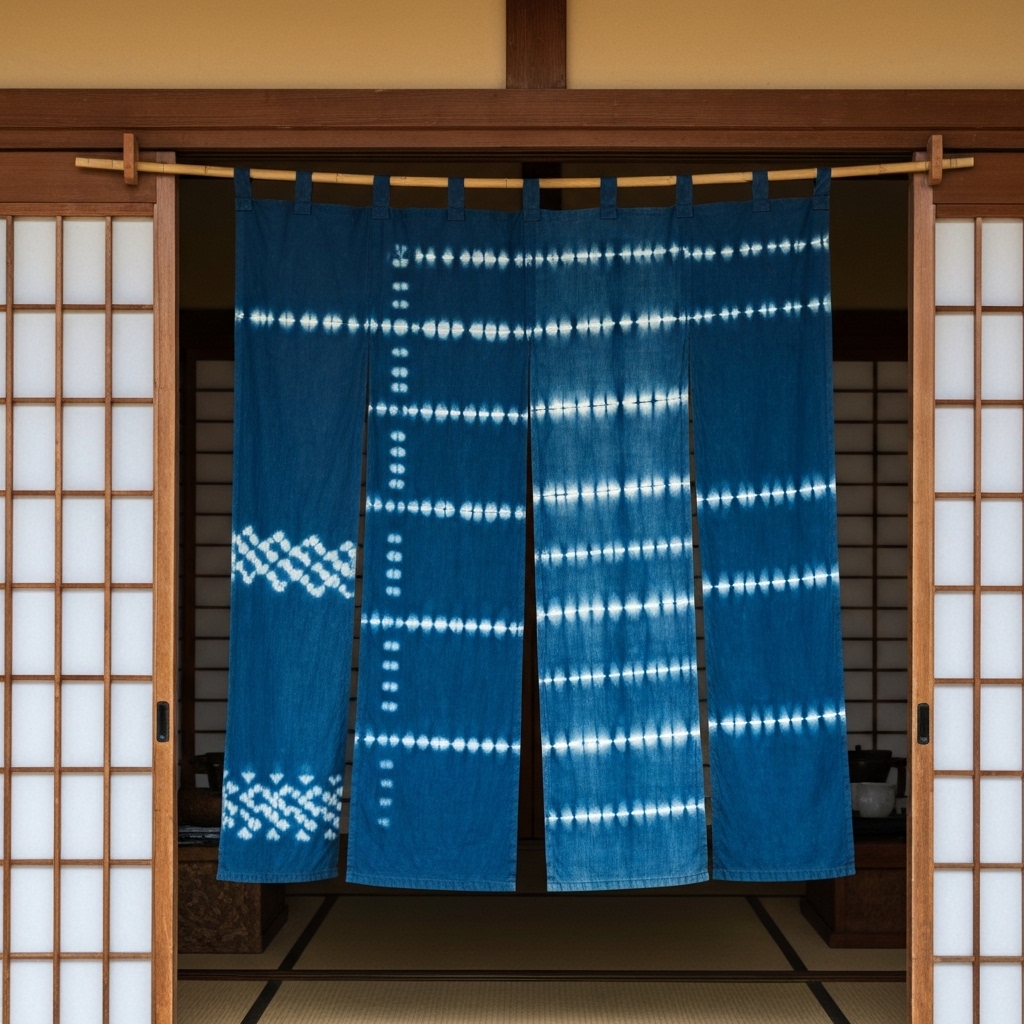
The dyes used in vintage noren tell a silent story of exposure to the elements and the passage of time. Unlike modern synthetic dyes, natural dyes, particularly 藍染め (aizome, indigo dyeing), undergo gradual transformations.
Fading is inevitable. Colors soften and mellow, acquiring a patina that’s impossible to replicate artificially. The degree of fading depends on the dye, the fabric, and the noren's past environment. Areas exposed to direct sunlight will exhibit more pronounced bleaching than those shielded from light. Look closely at the folds and edges of the noren – the color might be more intense in these protected areas.
Indigo, the iconic blue of Japan, deserves special attention — learn more about this storied dyeing tradition in our indigo noren meaning article. True aizome is a living dye, constantly evolving. With age, it can develop subtle variations in hue, ranging from deep navy to a muted grey-blue. Realize that uneven dyeing was common. Vintage aizome noren often feature charming imperfections – slight variations in shade across the fabric, adding to their unique character. Be wary of noren with uniformly bright, vibrant indigo; these are likely newer pieces utilizing synthetic dyes.
Expert Insight: Sunlight often fades the color unevenly. Check both sides of the noren. The side facing outwards would likely be more faded than the inside. This indicates the noren was actively used rather than stored away.
Construction Details: Selvedge Edges, Hanger Loops, and Stitching Techniques as Indicators of Age
The construction details of a noren, though often overlooked, can reveal valuable clues about its age and origin. Pay close attention to the selvedge edges, hanger loops, and stitching.
Selvedge edges (the finished edges of the fabric) are a good indicator of age and quality. Vintage noren, particularly those made from handwoven fabrics, will typically have neatly finished selvedges that prevent unraveling. These edges may be slightly irregular, reflecting the handcrafting process. Modern reproductions often lack these details, instead using serged or hemmed edges that look noticeably different.
Hanger loops, or 竿通し (saotooshi), are the loops at the top of the noren that allow it to be hung from a rod, often a 突っ張り棒 (tsuppari-bou, tension rod) in modern homes. Examine their construction. Are they hand-stitched or machine-sewn? Hand-stitched loops, especially those made with thick, sturdy thread, are characteristic of older noren. The material of the loops themselves can also offer clues. Hemp or linen loops are common in older pieces, while cotton loops might indicate a slightly more recent origin. The position of the saotooshi could also be a clue. For example, if they're very close together, this could indicate the noren was meant for a specific, narrower rod.
Stitching techniques also vary with age. Hand-stitched seams and hems are common in older noren. The stitches themselves may be uneven and imperfect, but that's part of the charm. Machine-sewn seams, on the other hand, are typically straight and uniform. However, be aware that even vintage noren might have some machine stitching, particularly if they were repaired or altered at some point. Look at the thread used. Older thread is often thicker and made of natural fibers, while modern thread is typically thinner and synthetic. The type of stitch used can also be indicative of age, with certain techniques being more common in different eras.
Decoding the Symbolism and Motifs in Vintage Noren Designs
Common Japanese Symbols and Their Meanings: Cranes, Dragons, Cherry Blossoms, and Geometric Patterns
Vintage 暖簾 (noren) are more than just fabric dividers; they're often visual narratives, steeped in symbolism and cultural meaning. Understanding these motifs unlocks a deeper appreciation for the craftsmanship and the intentions behind the designs.
The crane (鶴, tsuru), for instance, is a ubiquitous symbol of longevity and good fortune. Often depicted in pairs, they also represent marital bliss and fidelity. You might see cranes soaring amongst pine trees, further reinforcing the theme of enduring life, as pine (松, matsu) is itself symbolic of steadfastness. An image with many tiny cranes, sometimes rendered in a repetitive pattern, alludes to a long and prosperous life.
Dragons (龍, ryū), powerful and majestic, traditionally symbolize strength, wisdom, and good luck. Unlike their Western counterparts, Japanese dragons are generally benevolent creatures associated with water and rain, essential for agriculture. A dragon emblazoned on a noren might suggest the business owner's aspiration for prosperity and growth, or it could be a protective symbol warding off ill fortune. Dragon motifs are prevalent on noren for establishments dealing with valuable goods.
Cherry blossoms (桜, sakura) are perhaps the most iconic Japanese symbol, embodying the ephemeral nature of life. Their fleeting beauty serves as a reminder to appreciate the present moment. While often associated with spring, finding sakura on vintage noren isn't strictly seasonal. They can represent beauty, renewal, and even a gentle reminder of mortality, particularly in noren associated with temples or traditional crafts. A common saying reminds that the best time to view sakura is "hana yori dango" (花より団子), meaning "dumplings rather than flowers", reminding us that the simple pleasure of life, like eating a sweet treat, is more enjoyable than the admiration of fleeting beauty.
Beyond representational images, geometric patterns also carry significance. For example, the "seigaiha" (青海波), a pattern of overlapping waves, represents peace, tranquility, and good fortune extending like the ocean waves. The "asanoha" (麻の葉), a hemp leaf pattern, was traditionally believed to ward off evil and promote good health, particularly for children. These patterns are often used as backgrounds or borders, adding subtle layers of meaning to the overall design. The hemp leaf pattern is often used for children's clothing, but also for noren of fabric merchants. To explore these and other classic patterns in depth, see our guide to traditional Japanese noren motifs.
Understanding Shop and Business Logos (Kamon) Featured on Vintage Noren
Many vintage noren proudly display the shop or business’s "kamon" (家紋), a family crest or emblem that serves as a logo and marker of identity. These kamon, passed down through generations, can offer invaluable clues about the history and lineage of the establishment. They range from simple geometric shapes to stylized representations of plants, animals, or objects.
Deciphering a kamon can be challenging, but some resources can assist in identifying their meanings. Certain symbols were traditionally associated with specific trades or social classes. For example, a "maru ni chigai takanoha" (丸に違い鷹の羽), a crossed hawk feather inside a circle, was a popular kamon among samurai families. However, during the Edo period, merchants and commoners also adopted kamon, adapting and personalizing them to reflect their own identities and aspirations.
The inclusion of a kamon on a vintage noren speaks to the business's pride in its heritage and its commitment to upholding traditional values. It also serves as a form of branding, instantly recognizable to loyal customers. On older noren, the clarity and precision of the kamon's execution reflect the skill and artistry of the craftsman who created it. Sometimes, the placement of the kamon on the noren (central, off-center, repeated pattern) can indicate the age or style of the design.
Seasonal Motifs and Their Relationship to Japanese Festivals and Traditions
The Japanese calendar is punctuated by numerous festivals (祭り, matsuri) and seasonal events, and vintage noren often reflect these celebrations through the use of specific motifs. Recognizing these seasonal indicators helps place the noren within a cultural context.
For example, images of carp streamers (鯉のぼり, koi nobori) are strongly associated with Children's Day (端午の節句, Tango no Sekku) in May. Similarly, decorations featuring bamboo grass (笹, sasa) and tanzaku paper strips point to Tanabata (七夕), the Star Festival in July. Chrysanthemums (菊, kiku) are emblematic of autumn and the Chrysanthemum Festival (菊の節句, Kiku no Sekku) in September.
During the New Year season (正月, shōgatsu), noren might feature auspicious symbols like the kadomatsu (門松), a traditional pine and bamboo decoration placed at entrances to welcome ancestral spirits, or the seven lucky gods (七福神, shichifukujin). Understanding the nuances of these seasonal motifs adds another layer of appreciation for the artistry and cultural significance of vintage noren.
Expert Insight: If you acquire a vintage noren with seasonal imagery, consider displaying it only during the corresponding time of year. This adds authenticity to its presentation and deepens your connection to Japanese traditions.
Preserving and Displaying Your Vintage Noren
Once you've acquired a piece of history in the form of a vintage 暖簾 (noren), proper care becomes paramount. These textiles, often decades old, require a different approach than modern fabrics. Understanding how to gently clean, store, and display them will ensure their longevity and continued beauty.
Gentle Cleaning Techniques for Delicate Vintage Fabrics: Dusting, Spot Cleaning, and Avoiding Harsh Chemicals
Vintage noren, especially those made of 木綿 (momen - cotton) or 麻 (asa - hemp/linen), can accumulate dust and grime over time. Before attempting any cleaning, assess the fabric's condition. Look for weak spots, tears, or areas where the dye might be unstable.
-
Dusting: The gentlest method is regular dusting. Use a soft brush – a natural-bristle paint brush (around 2.5-5 cm or 1-2 inches wide) works well – to carefully remove surface dust. Hold the noren taut with one hand while gently brushing downwards. A vacuum cleaner with a brush attachment, set to its lowest suction, can also be used. Keep the nozzle a few centimeters away from the fabric to avoid pulling.
-
Spot Cleaning: Address stains only when necessary. Before attempting any spot cleaning, test a hidden area (like the inside of the 竿通し - saotooshi rod pocket) with a small amount of distilled water. If the dye bleeds, avoid wet cleaning altogether. For localized dirt, use a soft, damp (not wet!) cloth. Blot, don't rub. A tiny amount of gentle, pH-neutral soap (specifically formulated for delicate fabrics) can be used, but rinse immediately with distilled water and blot dry.
-
Avoiding Harsh Chemicals: Never use bleach, strong detergents, or stain removers on vintage noren. These chemicals can damage the fibers and fade or alter the dyes irreversibly. Similarly, avoid dry cleaning. The harsh chemicals used in dry cleaning can be detrimental to fragile textiles.
Expert Insight: If your vintage noren requires more than basic dusting or spot cleaning, consult a professional textile conservator. They possess the knowledge and skills to safely clean and repair delicate fabrics. For general cleaning and storage tips, see our noren care and washing guide.
Proper Storage Methods to Prevent Damage: Folding, Rolling, and Protection from Light and Moisture
How you store your noren when it's not on display significantly impacts its lifespan. The enemy is light, moisture, and pests.
-
Folding: If folding is necessary, use acid-free tissue paper between the folds to prevent creasing and dye transfer. Avoid making sharp creases. Store folded noren in a breathable cotton bag or box.
-
Rolling: Rolling is often the preferred method for long-term storage, as it minimizes creases. Roll the noren around an acid-free cardboard tube (like those used for wrapping paper, but without any adhesive residue). Wrap the rolled noren in acid-free tissue paper or unbleached muslin.
-
Protection from Light and Moisture: Store your noren in a dark, dry, and cool place. Avoid attics, basements, or any areas prone to temperature fluctuations or humidity. Sunlight is particularly damaging, causing fading and weakening the fibers. Consider using a storage box with a tight-fitting lid to protect against pests and dust. Placing silica gel packets (desiccants) inside the storage container can help absorb any excess moisture.
Creative Display Ideas: Using Vintage Noren as Wall Art, Room Dividers, or Window Treatments
Beyond their traditional use as shop dividers, vintage noren can be incorporated into modern interiors in a variety of creative ways.
-
Wall Art: Frame your noren for a striking piece of wall art. A simple wooden frame allows the beauty of the fabric and design to take center stage. For larger noren, consider stretching it onto a canvas frame, similar to how paintings are displayed. This prevents sagging and provides a clean, modern look.
-
Room Dividers: While traditionally hung across doorways, vintage noren can be adapted to create flexible room dividers. Suspend them from a decorative rod or even a sturdy wire across an open space. Consider layering multiple noren for a more textured and visually interesting effect. Lightweight cotton or linen noren work best for this purpose.
-
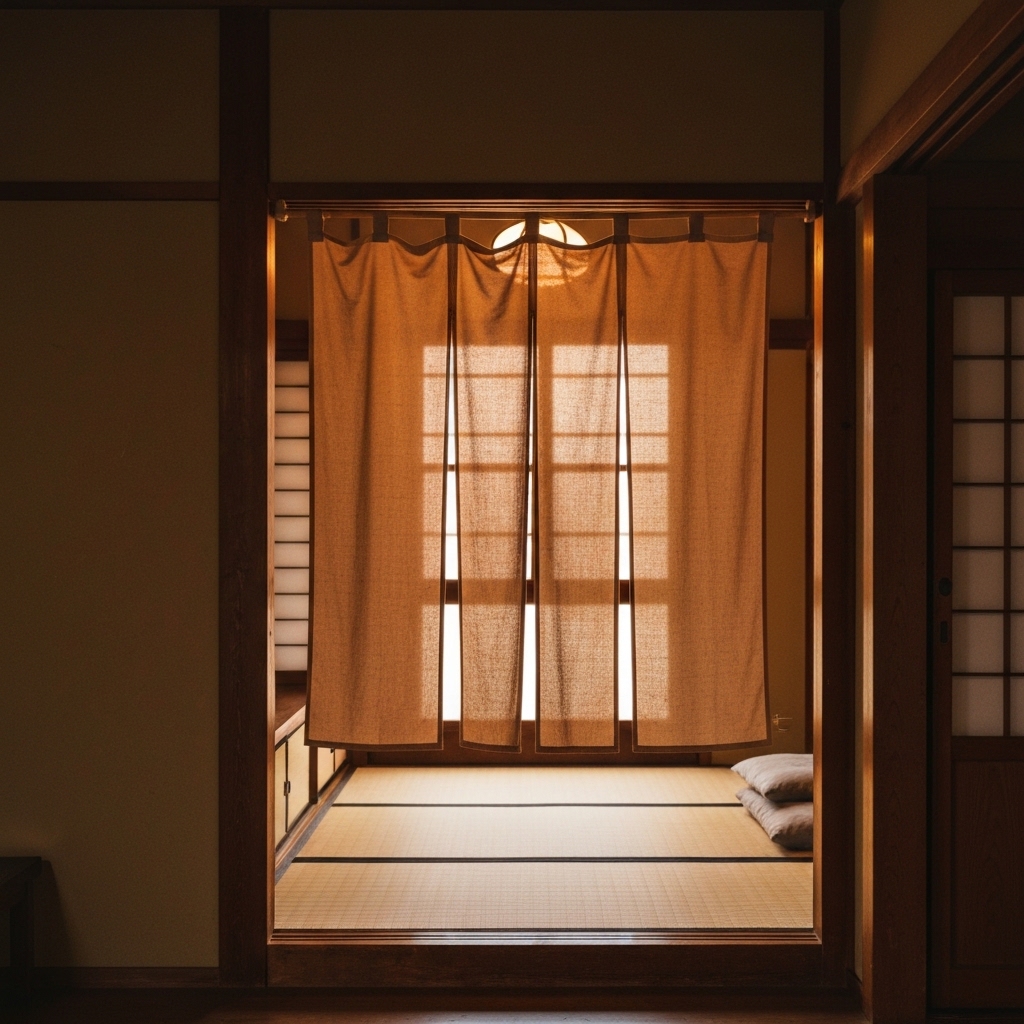
Window Treatments: Use vintage noren as unique window coverings. Their semi-translucent nature allows light to filter through while providing a degree of privacy. Mount them on a standard curtain rod or use clips to attach them directly to the window frame. This is a particularly effective way to showcase noren with intricate 藍染め (aizome - indigo dye) patterns, as the sunlight will highlight the details. Avoid using valuable or fragile noren in direct sunlight for extended periods, as this can cause fading. Consider rotating your displayed noren periodically to minimize light exposure.
The History of Noren: Contextualizing Your Vintage Piece
The Evolution of Noren from Practical Protection to Decorative Art
The 暖簾 (noren) began life far removed from the art form some vintage examples represent — for a broader overview of how noren evolved culturally, see our guide on the meaning and history of noren. Initially, they were purely utilitarian. Imagine a dusty merchant shop in Kyoto during a scorching summer. The noren’s primary purpose was to shield the interior from sun, wind, and dust, safeguarding goods and creating a more comfortable environment for customers. Think of them as heavy canvas covers, rather than the delicately printed panels we often associate with them today. Rough 麻 (asa – hemp/linen) was the common material, chosen for its durability and breathability. Over time, the simple act of marking one's shop with a piece of cloth evolved. Merchants started incorporating their family crests (家紋, kamon) or shop names, turning a functional item into a subtle advertisement. This was the seed of noren's decorative journey.
As the Edo period progressed, 木綿 (momen – cotton) became more accessible, and dyeing techniques improved. This opened up possibilities for more elaborate designs. Noren transitioned from purely practical coverings to important identifiers, showcasing not only the business but also the owner's taste and status. By the Meiji era, the noren had become a canvas for artistry. Motifs became more complex, incorporating scenes from nature, historical figures, and even calligraphy. While functionality remained important, the aesthetic value of the noren took on a new level of significance, cementing its place as a unique and cherished aspect of Japanese visual culture. This period saw a shift towards lighter fabrics and more refined designs, reflecting a changing social and economic landscape.
Regional Variations in Noren Design and Construction Across Japan
The Japanese archipelago’s diverse geography and cultural influences are reflected in the distinct regional variations of 暖簾 (noren) design. Consider the bold, graphic designs prevalent in areas with strong merchant traditions, such as Osaka. These noren often feature large, easily readable characters advertising the shop's wares – think of a vibrant indigo-dyed noren boldly proclaiming "酒" (sake). Contrast this with the more subtle, refined aesthetic found in Kyoto, where noren often boast delicate floral patterns or understated calligraphy, reflecting the city's history as a center of art and culture.
The construction of noren also varied regionally. In colder regions, thicker, heavier fabrics were favored for increased insulation. Coastal areas might feature noren made from materials more resistant to salt air and moisture. For example, areas famous for indigo dying, such as Tokushima, often created noren primarily using the 藍染め (aizome) technique, resulting in a deep, rich blue color that permeated the fabric. Examining the weave, weight, and finish of a vintage noren can provide valuable clues to its geographical origin. The length of the slits cut in the noren also varies. Generally, the more slits, the better the airflow; expect to see more slits in a warmer climate.
- Kyoto: Refined patterns, subtle colors, delicate craftsmanship.
- Osaka: Bold graphics, large characters, emphasis on shop name.
- Tokushima: Deep indigo hues achieved through traditional aizome.
Expert Insight: When assessing a vintage noren, pay close attention to the selvedge (finished edge). A tightly woven selvedge, particularly if it's a color other than the background of the noren, often indicates higher quality craftsmanship and can assist in determining the age and origin.
The Social and Economic Role of Noren in Edo and Meiji Era Japan
During the Edo and Meiji eras, the 暖簾 (noren) served as much more than just a shop sign. They were visual representations of a business's reputation and social standing within the community. A clean, well-maintained noren signaled pride in one's work and a commitment to customer satisfaction. A tattered or faded noren, on the other hand, could be interpreted as a sign of neglect or financial instability.
The noren also played a crucial role in establishing and maintaining social hierarchies. Certain colors, patterns, and materials were associated with specific trades or social classes. For instance, a noren made of 絹 (kinu – silk) would be a sign of considerable wealth and status, likely belonging to a high-end merchant or artisan. The act of "raising the noren" each morning symbolized the start of the business day, while "taking down the noren" marked its conclusion. This daily ritual reinforced the cyclical nature of commerce and the importance of maintaining a consistent presence in the community. Apprentices would be entrusted with the daily ritual of putting up or taking down the noren, signifying a transition in their role as learners. It was a signal to the community that the shop was open for business, providing a sense of stability and predictability. The design of the noren, passed down through generations, became a symbol of continuity and tradition within a family-run business.
Assessing the Value of Vintage Noren: Factors Affecting Collectibility
Like any antique, the value of a vintage 暖簾 (noren) is not solely based on aesthetics. Several objective factors contribute to its desirability among collectors and enthusiasts. Understanding these elements allows you to better appreciate and potentially assess the worth of your own pieces.
Rarity: Identifying Unique Designs and Limited-Edition Noren
Rarity significantly influences value. A common design, mass-produced even decades ago, will naturally be less valuable than a truly unique or limited-edition piece. Identifying rarity requires a discerning eye and some historical context.
One key indicator is the complexity of the design. Hand-painted 暖簾 (noren) , particularly those featuring intricate scenes or calligraphy, are inherently rarer than those created using simpler methods. Look for minute details, variations in brushstrokes, and evidence of hand-dyeing techniques. These elements suggest a higher level of craftsmanship and, consequently, a lower production volume.
Furthermore, consider the intended purpose of the 暖簾 (noren). Pieces designed for specific businesses or events, especially those no longer in existence, tend to be scarcer. For example, a 暖簾 (noren) advertising a long-closed sake brewery or a defunct traditional confectionary shop might hold considerable collector appeal. Check for business names, family crests (家紋, kamon), or dates woven or dyed into the fabric. These details can help pinpoint the 暖簾 (noren)'s original context and potentially uncover its rarity. Limited edition 暖簾 (noren) made to commemorate a specific festival (祭り, matsuri) might also be more valuable.
The presence of artist signatures or seals (印, in) is another indicator of potential rarity and increased value. While not all signed pieces are automatically valuable, a signature can provide clues about the artist's reputation and the 暖簾 (noren)'s provenance. Researching the artist can be time-consuming, but it may reveal valuable information about the piece's history and artistic significance.
Expert Insight: Take detailed photos of your 暖簾 (noren), focusing on unique design elements, signatures, or any unusual features. These photos can be invaluable when researching its history and rarity.
Condition: Evaluating Damage, Repairs, and Stains on Vintage Noren
The condition of a vintage 暖簾 (noren) significantly impacts its value. While some wear and tear is to be expected in older textiles, excessive damage can detract from its desirability.
Carefully inspect the 暖簾 (noren) for tears, holes, fading, and stains. Small, unobtrusive imperfections may be acceptable, particularly if they are consistent with the piece's age and use. However, large or multiple damages will likely reduce its value. Pay close attention to the edges and seams, as these areas are particularly vulnerable to wear. Check the 竿通し (saotooshi=rod pocket) carefully, as this area often bears the brunt of daily use.
Repairs can be a double-edged sword. Well-executed, historically accurate repairs can sometimes enhance a 暖簾 (noren)'s value, especially if they stabilize existing damage and prevent further deterioration. However, poorly done or inappropriate repairs can detract from its value. Look for repairs that blend seamlessly with the original fabric and dyeing techniques. If possible, determine whether the repairs were done professionally and whether archival-quality materials were used.
Stains are another common issue with vintage 暖簾 (noren). While some stains may be removable with careful cleaning, others may be permanent. The type of stain, its size, and its location all influence its impact on value. Large, prominent stains are generally more detrimental than small, discreet ones. Stains that affect the design or obscure important details will also have a greater negative impact.
Ultimately, the acceptable level of damage and repairs depends on the rarity and desirability of the 暖簾 (noren). A truly rare and historically significant piece may still be valuable despite some imperfections, while a more common piece in poor condition may have little value.
Provenance: Researching the History and Origin of Your Noren to Increase Its Value
Provenance refers to the documented history and origin of an antique. A well-documented provenance can significantly enhance a vintage 暖簾 (noren)'s value by establishing its authenticity, tracing its ownership, and providing context for its design and use.
Start by gathering any information you already have about the 暖簾 (noren). Do you know where it came from? Who owned it previously? Are there any accompanying documents, such as receipts, letters, or photographs? Even seemingly insignificant details can be valuable clues.
Research the design and motifs featured on the 暖簾 (noren). Understanding the symbolism and cultural significance of these elements can shed light on its intended purpose and potential origin. For example, the presence of specific 家紋 (kamon, family crests) can help identify the family or business that originally owned it. If there's a business name, research old business directories (電話帳, denwa-cho) or historical society archives to find out more about its history.
Contacting local historical societies, museums, and textile experts can also be helpful. These resources may be able to provide information about the 暖簾 (noren)'s origin, age, and potential value. They may also be able to connect you with other collectors or enthusiasts who have knowledge about similar pieces.
Consider the geographic origin of the 暖簾 (noren). Certain regions of Japan are known for specific textile traditions and designs. If you can determine the 暖簾 (noren)'s region of origin, you may be able to research the local textile industry and identify potential makers or businesses.
Even if you cannot definitively trace the 暖簾 (noren)'s entire history, any information you can gather about its provenance will enhance its value and appeal to collectors. Document your findings carefully, and keep any accompanying documents in a safe place. The more you know about your 暖簾 (noren)'s history, the more valuable it becomes.
Repairing and Restoring Vintage Noren: A Guide to Preservation
The allure of a vintage 暖簾 (noren) lies not just in its aesthetic charm, but also in its tangible connection to the past. Age, however, inevitably takes its toll. Before embarking on any repair work, remember that preservation should be the guiding principle. The goal isn't to make it look brand new, but to stabilize its current condition and prevent further deterioration.
Simple Repair Techniques: Patching Small Holes and Securing Loose Threads
For minor imperfections, a gentle approach is always best. Before starting, carefully examine the piece under good lighting to identify all areas needing attention. Consider using a magnifying glass for a more detailed view.
- Loose Threads: Secure stray threads with a fine needle and matching thread. Use a simple catch stitch (also called a tacking stitch) to prevent unraveling. Avoid tying knots that could create bulk or distort the fabric.
- Small Holes (less than 1 cm/0.4 inch): For tiny holes, consider a barely-visible mend. Using thread as close as possible in color and weight to the original fabric, carefully weave the threads back together. This requires patience and a delicate touch. Another option is a discreet patch. Select a patch fabric that closely matches the original in texture and color; ideally, use fabric salvaged from another damaged vintage textile. Trim the patch slightly larger than the hole. Use a running stitch around the edge to secure it to the 暖簾 (noren).
- Reinforcing Weak Areas: Where the fabric is simply weak but not torn, reinforce it from the back with a lightweight, breathable fabric like fine cotton voile. Use a running stitch along the damaged area, and avoid stretching the original fabric.
Expert Insight: When mending vintage textiles, always use natural fiber threads (cotton, silk, or linen) that are similar to the original fabric. Synthetic threads can be too strong and may damage the weaker, aged fibers over time.
When to Seek Professional Restoration: Addressing Complex Damage or Significant Fabric Loss
While simple repairs can be tackled at home, significant damage warrants the expertise of a textile conservator. This might include:
- Large Tears or Holes (greater than 2 cm/0.8 inch): Extensive damage requires more than a simple patch; it often involves reweaving sections of the fabric, a skill best left to professionals.
- Color Fading or Dye Bleeding: Attempting to re-dye a vintage 暖簾 (noren) yourself can be disastrous, potentially ruining the original design. A conservator can assess the dyes and recommend appropriate treatments to stabilize the colors.
- Structurally Unsound Fabric: If the fabric is severely weakened or brittle, it may require professional stabilization before any other repairs are attempted.
- Significant Fabric Loss: If substantial portions of the 暖簾 (noren) are missing, a professional conservator can ethically reintegrate new material that matches the original. They might even source compatible material from a similar era.
- Warping or Distorted Shape: Over time, 暖簾 (noren) can become misshapen due to uneven stretching or improper storage. A conservator can address these distortions using specialized techniques.
Engaging a professional restorer experienced with Japanese textiles ensures the long-term preservation of your 暖簾 (noren). They will document all treatments performed, maintaining a record of the conservation process.
Ethical Considerations: Balancing Preservation with Maintaining Original Character
The question of how much restoration is appropriate often arises when dealing with vintage items. The goal should be to preserve the 暖簾 (noren)’s historical integrity while making it presentable and stable.
- Embrace Imperfection: Minor imperfections tell a story. Resist the urge to erase every sign of age. Patches, slight fading, and subtle wear can add to the charm and authenticity of the piece.
- Minimize Intervention: Avoid altering the original fabric or design whenever possible. Focus on stabilization rather than complete restoration.
- Use Reversible Techniques: Choose repair methods that can be undone if necessary. This ensures that future conservators can access and treat the original fabric without damaging previous repairs.
- Document All Work: Keep detailed records of all repairs and treatments performed, including materials used and techniques employed. This information is invaluable for future preservation efforts and helps maintain the 暖簾 (noren)’s provenance.
- Consider the Purpose: How will the 暖簾 (noren) be used? If it’s intended for display only, minimal intervention might be sufficient. If it will be used in a doorway, more robust repairs may be necessary to withstand daily wear and tear.
Ultimately, restoring a vintage 暖簾 (noren) is about respecting its history and ensuring its survival for future generations. By carefully considering the ethical implications of each repair decision, you can preserve its unique character and beauty.