Linen Noren Curtains: Elevate Your Space with Japanese Elegance
The Allure of Linen: Material Benefits for Noren Curtains
Ah, the noren (暖簾). These fabric dividers, often seen gracing the entrances of shops, restaurants, and even homes throughout Japan, are far more than mere decorations. They’re subtle invitations, visual indicators of a business's character, and a touch of functional art. And when it comes to choosing the right material for a noren, asa (麻), or linen, stands out for a multitude of reasons. For many centuries, linen has been a favored material in Japan for its durability, breathability, and natural beauty. It embodies a sense of refined simplicity – wabi-sabi (侘寂) at its finest.
Breathability and Airflow: Why Linen Excels
One of the most compelling reasons to choose linen for your noren is its exceptional breathability. Japan, especially during the humid summer months, demands fabrics that allow air to circulate freely. Linen fibers, unlike tightly woven synthetics, have a naturally loose weave that facilitates airflow. Think about stepping into a traditional ryokan (旅館, Japanese inn) on a sweltering day. The noren at the entrance, often crafted from linen, act as a natural air conditioner, gently ushering in a breeze and offering a moment of respite from the heat.
The breathability of linen is due to its unique structure. The flax fibers are hollow, allowing air and moisture to pass through easily. This also prevents the buildup of humidity and reduces the risk of mold or mildew, which is particularly important in Japan's climate. A cotton (momen, 木綿) noren, while comfortable, can feel noticeably warmer and retain more moisture than its linen counterpart. For a full comparison of cotton, hemp, silk, and linen, see our noren materials guide. This breathability translates to a more comfortable environment inside, whether it's a bustling ramen shop or a quiet tatami room. Imagine a noren hanging in the doorway of a machiya (町屋, traditional wooden townhouse) in Kyoto; the gentle breeze flowing through it, carrying the scent of incense and freshly brewed tea. That's the essence of linen's breathability at work.
Expert Insight: When choosing a linen noren, consider the weight of the fabric. A lighter weight linen will maximize airflow, while a heavier weight linen will offer more privacy and durability, though with slightly less breathability.
Durability and Longevity of Linen Noren
Beyond its breathability, linen is known for its remarkable durability. In Japan, where longevity and sustainability are deeply valued, this is a significant advantage. A well-cared-for linen noren can last for decades, becoming a treasured heirloom. The fibers are incredibly strong, even stronger than cotton. This means a linen noren can withstand the daily wear and tear of being hung in a doorway, exposed to sunlight, and potentially brushed against by customers or family members.
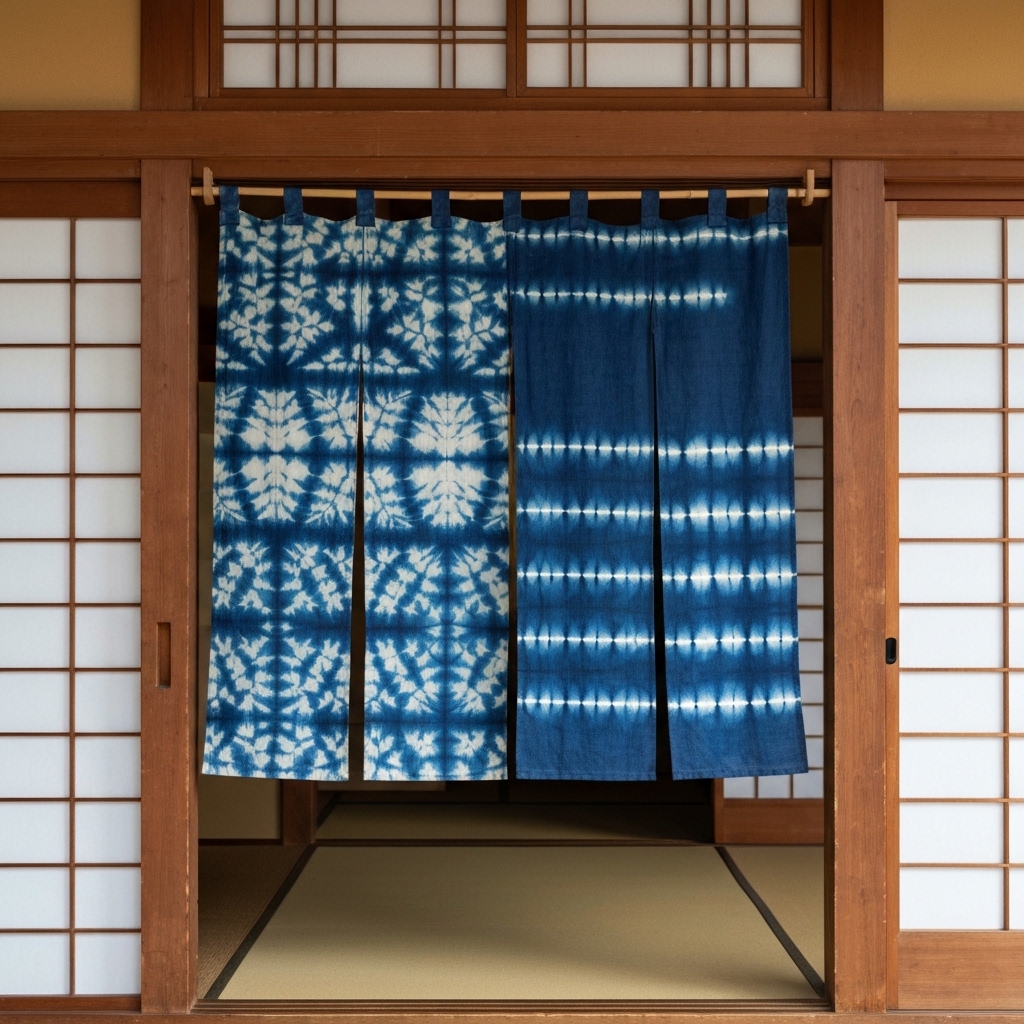
Unlike some delicate fabrics like kinu (絹, silk), linen actually becomes softer and more supple with each wash. The fabric will "relax" and develop a unique texture over time. This aging process, far from being a detriment, adds character and charm to the noren, reflecting its history and the passage of time. Think of an old aizome (藍染め, indigo-dyed) linen noren hanging in front of a traditional soba (蕎麦, buckwheat noodle) shop. The color may have faded slightly over the years, but the fabric remains strong and full of character, a testament to its inherent durability. When considering the saotooshi (竿通し, rod pocket) at the top, a durable linen will also prevent tearing when hung from a tsuppari-bou (突っ張り棒, tension rod).
Linen's Unique Texture and Aesthetic Appeal
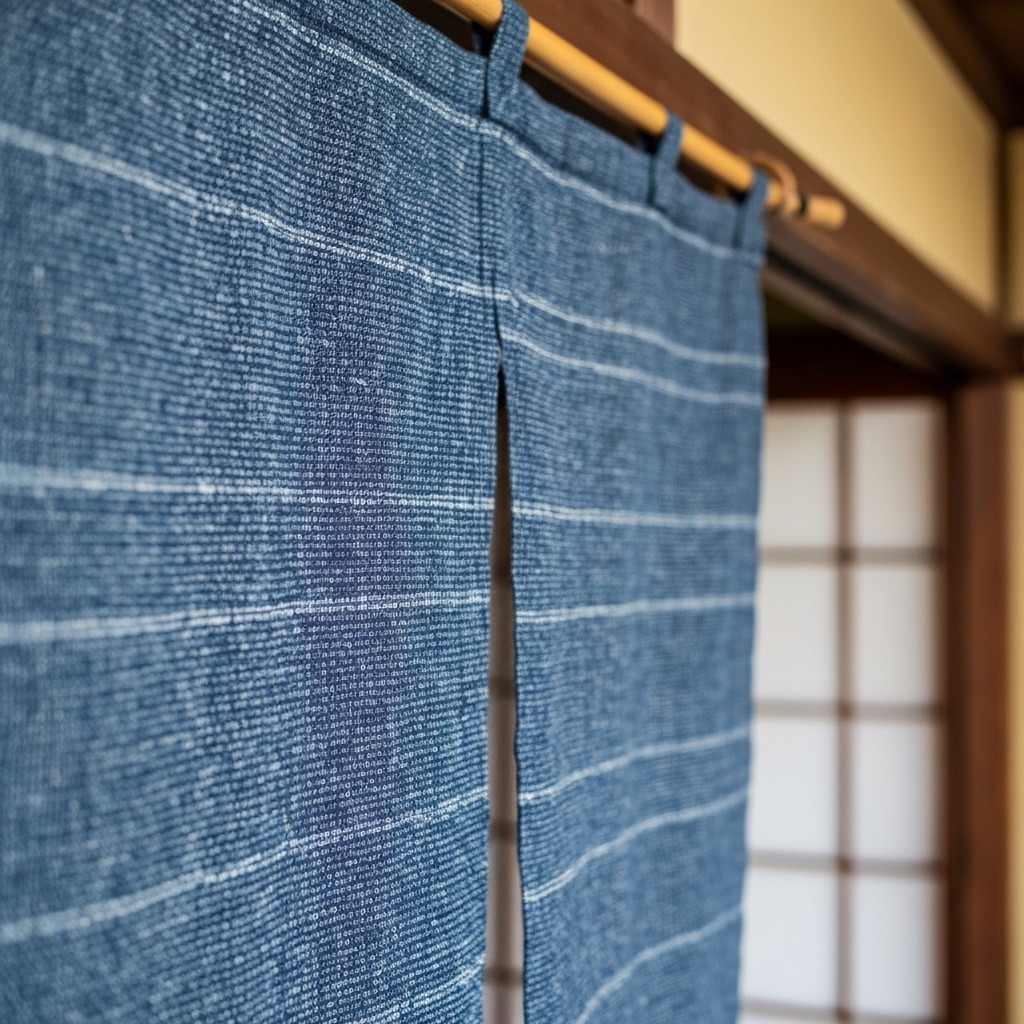
Finally, linen possesses a unique texture and aesthetic appeal that sets it apart from other materials. It has a natural, slightly irregular texture that adds depth and visual interest. This "slubby" texture, as it's sometimes called, is a result of the natural variations in the flax fibers. This texture absorbs dye beautifully, creating rich and nuanced colors. Whether it's a simple, unbleached linen or a richly patterned katazome (型染め, stencil-dyed) design, the texture adds to the overall visual impact.
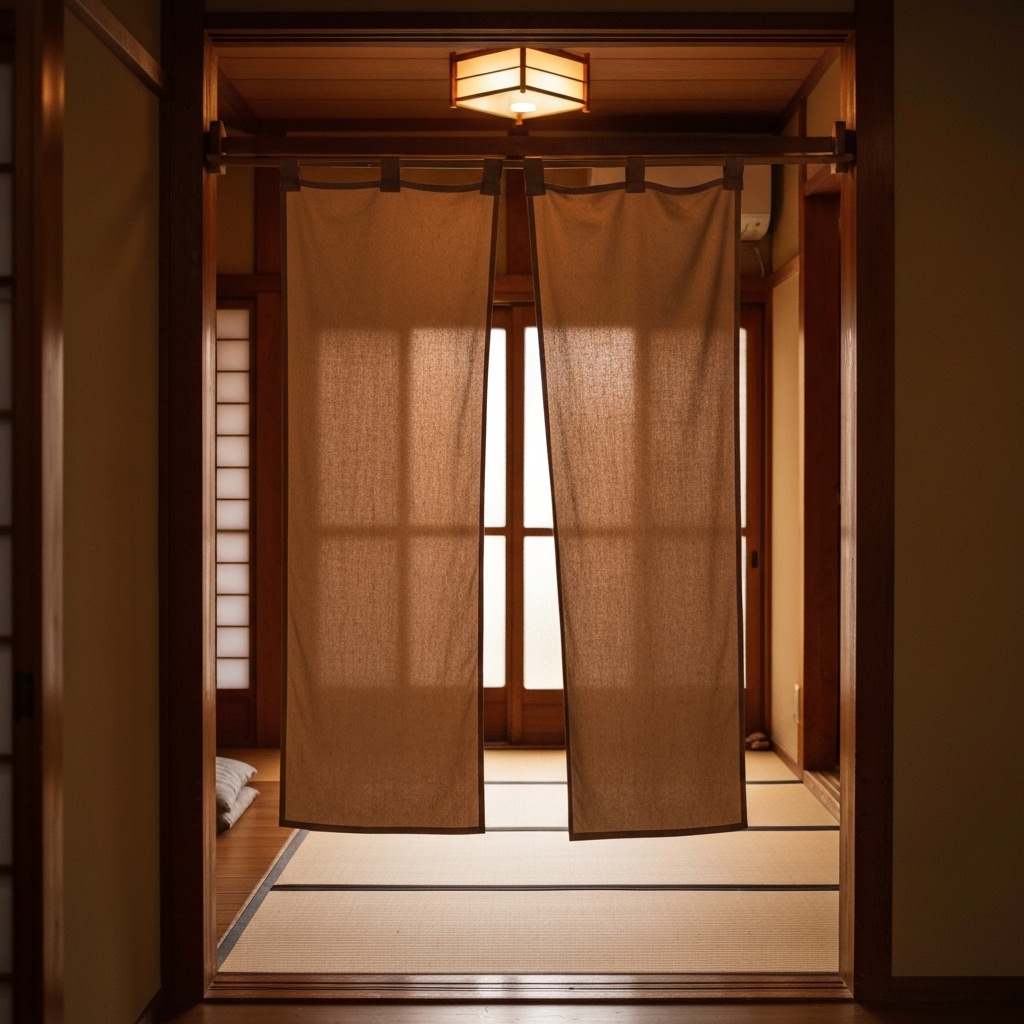
Furthermore, linen drapes beautifully, creating soft folds and a sense of understated elegance. This is particularly important for noren, which are designed to hang gracefully and invite people to enter. The way the light filters through the linen fabric, creating subtle shadows and highlights, adds to its visual appeal. Imagine a linen noren with a hand-painted design of cherry blossoms, gently swaying in the breeze. The combination of the natural texture, the delicate design, and the soft light creates a truly captivating visual experience. The dimensions are often a rectangle with a length between 90 cm (35 inches) and 150 cm (59 inches) and a width around 85 cm (33 inches). These measurements create a subtle barrier while still allowing visibility and passage.
Style and Design: Integrating a Linen Noren Curtain into Your Space
Matching Linen Noren Curtains to Different Interior Styles
Linen noren aren't just decorative; they're functional art that can dramatically enhance a room's ambiance. The key is understanding how linen's inherent qualities—its texture, drape, and permeability—interact with different design philosophies.
For minimalist spaces, consider a plain, undyed linen noren. Its subtle texture adds warmth without visual clutter. Browse our noren design ideas for more style inspiration. A slightly sheer fabric allows diffused light to pass through, maintaining the clean, airy feel characteristic of minimalism. Think natural linen, close to its original ecru color. A simple saotooshi (竿通し) at the top for rod insertion ensures a streamlined appearance. Length is also crucial; aim for a length that hangs just below the doorway or opening, typically leaving a 10-15cm (4-6 inch) gap at the bottom for ease of movement.
Rustic or wabi-sabi inspired interiors thrive with the imperfections that linen naturally possesses. Opt for heavier weight linen with a visible weave. Indigo dyeing, or aizome (藍染め), particularly using traditional techniques, can introduce depth and character. Hand-stitched details, like visible seams or reinforced edges, further emphasize the handcrafted aesthetic. In these settings, a longer noren, almost reaching the floor, can create a sense of groundedness and tranquility.
In more modern, eclectic settings, don't shy away from bold contrasts. A brightly colored linen noren—perhaps a vibrant ochre or deep teal—can provide a striking focal point. The key is to choose colors that complement, rather than clash with, existing furniture and artwork.
Exploring Color Palettes and Patterns for Linen Noren
While simple, solid-colored linen noren offer a classic appeal, the possibilities for incorporating color and pattern are vast. The open weave of linen readily accepts various dyes, allowing for a spectrum of options.
Consider the overall function of the noren. If its primary purpose is to provide privacy, darker colors and denser weaves are preferable. Lighter shades and more transparent fabrics are ideal for spaces where you want to maintain a sense of openness and light flow.
Patterns can be introduced through weaving techniques, creating subtle textures and visual interest without relying on applied decoration. Stripes, checks, and geometric patterns can add a contemporary touch, while floral or botanical motifs can evoke a more traditional Japanese aesthetic.
The scale of the pattern is also important. Larger patterns can overwhelm small spaces, while smaller patterns might get lost in larger rooms. A good rule of thumb is to choose a pattern that is proportionate to the size of the noren and the surrounding space.
Customization Options: Prints, Dyes, and Appliqués on Linen
One of the great advantages of linen noren is their versatility for customization. Beyond simply choosing a pre-made design, you can create a truly unique piece that reflects your personal style and preferences.
Printing on linen opens up endless possibilities. Digital printing allows for intricate, full-color designs, while traditional techniques like block printing or screen printing offer a more artisanal feel. Consider incorporating family crests (kamon) or meaningful symbols into your design.
For those interested in dyeing, natural dyes offer a range of beautiful, subtle colors. Experiment with plant-based dyes like indigo, madder, or turmeric to create unique shades and patterns. Shibori dyeing techniques, which involve resist-dyeing by folding, twisting, and binding the fabric, can produce stunning geometric patterns.
Appliqués, or decorative fabric patches, can add texture and dimension to a linen noren. Consider using vintage fabrics, repurposed textiles, or even handcrafted embellishments like beads or embroidery.
Expert Insight: When customizing your linen noren, always test your chosen dyes or techniques on a small scrap of fabric first. This will allow you to adjust your methods and ensure that you achieve the desired result before committing to the entire piece.
Sizing and Placement: Optimizing Your Linen Noren Curtain Display
Determining the Ideal Width and Length for Various Doorways
The charm of a noren lies not only in its design but also in its proper fit. While standardization isn't rigid, a few guiding principles ensure the noren hangs attractively and serves its purpose effectively. For a complete breakdown of standard dimensions, see our noren size guide. Forget strict "rules"; think about the desired visual effect. For a standard doorway (around 80-85 cm / 31.5-33.5 inches wide), a noren width of approximately 85-90 cm (33.5-35.5 inches) is common, creating a slight gathering when hung. This gives the fabric a gentle drape.
Wider openings, particularly those leading to washitsu (和室, traditional Japanese rooms) or serving as a partition between larger spaces, benefit from a wider noren. Consider using two noren side-by-side, hung on separate rods, or a single, wider panel (120-150 cm / 47-59 inches). This prevents the fabric from appearing stretched and thin.
Length is equally crucial. Traditionally, a noren doesn't reach the floor. The length is measured from the rod down to the desired hemline. A common guideline is to allow the noren to hang approximately two-thirds of the doorway's height. This allows easy passage and prevents tripping. However, consider the function. For privacy, a longer noren is preferable. In a shop setting, a shorter noren is often chosen to invite customers to enter.
Expert Insight: When hanging a noren in a restaurant or shop, consider the average height of your clientele. A noren that obscures the faces of people entering can feel unwelcoming. Adjust the length accordingly.
Hanging Methods: Rods, Tension Rods, and Creative Alternatives
The most traditional method for hanging a noren involves a wooden or bamboo rod inserted through the 竿通し (saotooshi, rod pocket). These pockets are usually sewn along the top edge of the noren. While specialized noren rods are available, any suitable dowel rod will work.
Tsuppari-bou (突っ張り棒, tension rods) offer a simpler, damage-free alternative, especially suitable for renters. Measure the width of the doorway precisely before purchasing to ensure a snug fit. Opt for sturdy rods that can support the weight of the linen, especially for wider noren.
Beyond these standard methods, consider more creative approaches:
- Branch from a Tree: For a rustic, natural aesthetic, a sanded and varnished branch can serve as a unique rod. Secure the noren to the branch using twine or small clips.
- Wire or String: Suspend the noren using a length of strong wire or decorative string. This creates a lighter, more ethereal look, especially suitable for thinner linen noren. Consider looping the wire/string through reinforced eyelets sewn along the top edge.
- Clothespins or Clips: Small decorative clothespins or curtain clips can be used to attach the noren to a metal rod or wire. This allows for easy adjustments and swapping out different noren designs.
Using Linen Noren Curtains as Room Dividers and Privacy Screens
Linen noren extend beyond doorways; they excel as versatile room dividers and privacy screens. Their light and airy quality allows them to delineate space without feeling heavy or constricting.
Consider using a noren to separate a living area from a dining space in a small apartment, or hanging one in a kitchen doorway to add warmth and character. A wider noren, hung from the ceiling using a track system or multiple points of suspension, can create a flexible barrier that can be easily opened or closed as needed. This allows for both open-concept living and the option for greater privacy.
In bedrooms, a noren can be used to create a dressing area or to screen off a closet. Choose a longer noren for full visual blockage, or a shorter one for a more suggestive separation.
For washitsu, noren are frequently employed to define alcoves or entrances. The choice of design is often coordinated with the season or a specific event, such as a tea ceremony.
When used as privacy screens, consider the weight and weave of the linen. A tighter weave and heavier weight provide greater opacity. Double-layered noren, or those with a lining, offer even more privacy. Remember that linen, by its nature, is not completely opaque, so consider the degree of privacy required when making your selection.
Washing and Care: Preserving the Quality of Your Linen Noren Curtain
Best Washing Practices: Hand Washing vs. Machine Washing Linen
The durability of your asa 暖簾 (linen noren) hinges on proper cleaning. While linen is inherently strong, agitation and harsh detergents can prematurely age the fibers. Both hand washing and machine washing are viable options, but each requires consideration.
Hand washing remains the gentlest method, preferred by many Japanese households for prized noren, particularly those featuring delicate katazome 型染め or intricate embroidery. For comprehensive cleaning advice that covers all fabrics, see our noren care and washing guide. Fill a basin with lukewarm (never hot!) water, adding a small amount of pH-neutral detergent designed for delicate fabrics. Gently agitate the noren, paying attention to heavily soiled areas. Avoid wringing or twisting, which can distort the shape. Rinse thoroughly multiple times with clean, lukewarm water until all traces of soap are gone.
Machine washing offers convenience, but demands caution. If your linen noren isn’t heavily soiled, a machine's delicate cycle is acceptable, though hand washing is always the gold standard. Place the noren inside a mesh laundry bag to minimize friction. Use the same mild, pH-neutral detergent recommended for hand washing. Select the coldest water setting and the shortest spin cycle available. Remember that even with precautions, machine washing may lead to slightly faster fading of vibrant colors, especially those achieved with natural dyes.
Drying Techniques: Preventing Shrinkage and Maintaining Shape
Correct drying is arguably more crucial than the washing process itself. High heat is the enemy of linen, causing shrinkage and weakening the fibers. The best approach is to air dry your asa 暖簾.
After washing, gently squeeze out excess water—avoid wringing!—or roll the noren in a clean, absorbent towel to remove moisture. Hang the noren on a padded hanger or a drying rack in a well-ventilated area, away from direct sunlight. Direct sun can fade colors, particularly naturally dyed ones. Ensure the noren is hanging straight to minimize creasing.
Tumble drying is generally discouraged, but if absolutely necessary, use the lowest heat setting for a very short duration (no more than 5-10 minutes) and remove the noren while it is still slightly damp. This method risks shrinkage and is not recommended for valuable or antique pieces. Japanese families often prefer drying noren indoors, particularly during humid months, to avoid pollen and airborne particles that can settle on the fabric.
Ironing and Storage Tips for Linen Noren Curtains
Linen naturally wrinkles, contributing to its characteristic charm. However, for a crisper appearance, ironing may be desired. Iron your linen noren while it is still slightly damp, using a medium heat setting. A steam iron is ideal. Always iron on the reverse side, especially if the noren features printed designs.
Expert Insight: To prevent shine when ironing dark linens, place a thin cotton cloth (like a tenugui 手拭い) between the iron and the fabric.
When not in use, proper storage is essential to protect your linen noren. Fold the noren neatly along its seams and store it in a cool, dry place away from direct sunlight. Avoid storing linen in plastic bags, as this can trap moisture and lead to mildew. Instead, use a breathable cotton bag or wrap the noren in acid-free tissue paper. To deter moths and other pests, consider placing cedar chips or lavender sachets in the storage area. Regular airing out of your stored noren every few months helps to prevent mustiness and maintains its fresh appearance. If your noren features a saotooshi 竿通し (rod pocket), it’s best to avoid storing it folded along this seam, as it can create a permanent crease.
Beyond Functionality: Exploring the Symbolic Significance of Noren
Noren in Japanese Culture: Historical Context and Modern Usage
The noren (暖簾) is more than just a doorway curtain; it's a silent ambassador, carrying layers of meaning woven into its very threads. Emerging from the Edo period, the noren initially served a purely functional purpose, protecting shops from dust and sunlight, while subtly indicating whether a business was open or closed. A crisp, clean noren meant "welcome," while one drawn back or removed entirely signaled that the day's business was concluded.
Over time, the noren evolved into a visual identifier. Family crests (kamon, 家紋), shop names, or the type of merchandise sold were prominently displayed, acting as a readily recognizable symbol for even the illiterate. Think of it as the pre-digital equivalent of a neon sign. Beyond commercial establishments, noren also found their place in private homes, often separating living spaces or indicating the entrance to a bath area.
In modern Japan, while digital signage and automated doors are prevalent, the noren maintains its relevance. It represents a sense of tradition and hospitality, a visual cue signaling quality and care. You’ll find it gracing the entrances of ramen shops, izakaya (居酒屋, Japanese pubs), and even traditional ryokan (旅館, Japanese inns). Furthermore, contemporary homes often use noren as room dividers, decorative accents, and even privacy screens. It is also a popular gift, symbolizing good luck and prosperity for a new business or home.
The Subtle Art of Using Motifs and Colors to Convey Meaning
While seemingly simple, the motifs and colors adorning a noren can subtly convey a world of information about the establishment or home it graces. A carp (鯉, koi) design, for example, often seen at restaurants, symbolizes perseverance and success, drawn from the legend of the carp swimming upstream to become a dragon. Bamboo (竹, take) represents resilience and flexibility, while plum blossoms (梅, ume) herald the arrival of spring and symbolize perseverance in the face of adversity.
The placement of these motifs is equally significant. A single, bold design might signify confidence, while a repeating pattern could suggest abundance and prosperity. The length and cut of the noren itself also play a role. A longer noren extending closer to the ground can imply a more formal or established business, while a shorter one might suggest a more casual atmosphere.
The number of slits in a noren can also hold meaning. Generally, one or three slits are common, although this is more about aesthetics and ease of passage than any strict symbolic rule.
Expert Insight: When commissioning or purchasing a noren, consider the overall message you want to convey. While a specific family crest might be less relevant outside of Japan, choosing motifs and colors that reflect your personal style or the purpose of the space will enhance the noren's impact.
Adapting Traditional Designs for a Contemporary Linen Noren
The beauty of the linen noren lies in its adaptability. While traditional designs hold a deep cultural significance, modern adaptations allow for seamless integration into diverse interior styles. One approach involves reinterpreting classic motifs with a minimalist aesthetic. Instead of intricate, detailed renderings, consider simplified, abstract versions of traditional symbols. A stylized wave pattern, for instance, can evoke the same sense of tranquility as a full-scale ocean scene but with a more contemporary feel.
Another avenue for adaptation is exploring unconventional color palettes. While traditional noren often feature earthy tones and indigo blues, a linen noren can embrace a broader spectrum of colors, reflecting current design trends. Pastel hues, muted greys, or even bold, contrasting colors can create a striking visual statement while retaining the essence of the noren form.
Typography is another area ripe for innovation. Instead of traditional Japanese calligraphy, consider incorporating modern fonts or even Roman characters to spell out a meaningful word or phrase. This is especially effective for businesses seeking to create a unique brand identity. You can commission a local artist to create unique stencil.
The key is to strike a balance between respecting the noren's rich heritage and embracing contemporary design principles. By carefully considering the motifs, colors, and typography, you can create a linen noren that is both visually stunning and culturally resonant.
DIY Linen Noren Curtain Projects: Sewing and Customization Ideas
Ready to unleash your creativity? A linen noren offers a fantastic blank canvas for personalized expression. Whether you're a seasoned seamstress or a beginner, transforming simple linen into a unique entryway accent is a rewarding experience.
Simple Sewing Projects: Creating Your Own Basic Linen Noren Curtain
Don't be intimidated by sewing! A basic linen noren is surprisingly easy to create. Start with a rectangular piece of linen fabric. Consider a width that's slightly wider than your doorway opening (allowing for gathering or pleating) and a length that suits your desired drop. A standard starting point might be 85cm (33.5 inches) wide and 150cm (59 inches) long.
- Hemming: Begin by hemming all four edges of the linen. A simple folded hem, about 1.5cm (0.6 inches) wide, secured with a straight stitch will prevent fraying and provide a clean finish.
- Creating the Saotooshi (竿通し): The saotooshi, or rod pocket, is essential for hanging your noren. On the top edge, fold over the fabric 5-7cm (2-2.75 inches), depending on the diameter of your tsuppari-bou (突っ張り棒, tension rod) or chosen rod. Stitch across, creating a channel for the rod to slide through. Ensure the opening is wide enough for easy insertion.
Expert Insight: For a rustic touch, consider leaving the bottom hem raw, allowing a slight fraying to occur over time. This can enhance the natural character of the linen. To control the fraying, you can stitch a line just above where you want the fraying to stop.
Adding Embellishments: Embroidery, Stencils, and Fabric Paint Techniques
Once you've mastered the basic noren, the possibilities for embellishment are endless.
- Embroidery: Hand-embroidered details can add a touch of elegance or whimsy. Consider simple floral motifs, geometric patterns, or even monograms. Use embroidery floss in contrasting colors to make your designs pop. Think about incorporating traditional Japanese motifs like sakura (cherry blossoms) or kiku (chrysanthemums).
- Stencils: Stenciling provides a quick and easy way to add patterns or designs. Use fabric paint and stencils to create repeating motifs, borders, or even larger images. Geometric designs or stylized depictions of nature are popular choices.
- Fabric Paint: Fabric paint allows for more free-form designs. You can create abstract patterns, paint landscapes, or even write personalized messages. Practice on a scrap piece of linen first to get a feel for how the paint behaves on the fabric. Consider using textile markers for finer details.
When adding embellishments, remember the principle of wabi-sabi, embracing imperfections and celebrating the beauty of the handmade.
Upcycling Linen: Transforming Old Linens into Unique Noren Designs
Give new life to old linens by transforming them into unique noren. This is a sustainable and creative way to repurpose old tablecloths, sheets, or even linen clothing.
- Patchwork Noren: Cut your old linens into squares or rectangles and stitch them together to create a patchwork noren. Vary the colors and textures for visual interest. You can even incorporate pieces of vintage fabric for a truly unique look.
- Appliqué Designs: Cut out shapes from other fabrics and appliqué them onto your linen noren. This technique is perfect for creating bold and graphic designs. Consider using contrasting colors or textures to make your appliqué stand out.
- Lace or Crochet Inserts: Add delicate details by inserting lace or crochet panels into your linen noren. This can create a beautiful and ethereal effect. You can find vintage lace at antique shops or craft stores.
Upcycling linen offers a chance to create a truly one-of-a-kind noren while reducing textile waste. Embrace the imperfections and celebrate the history of the materials you're using.