Minimalist Noren: Simple Elegance for Your Home (Japanese Curtains)
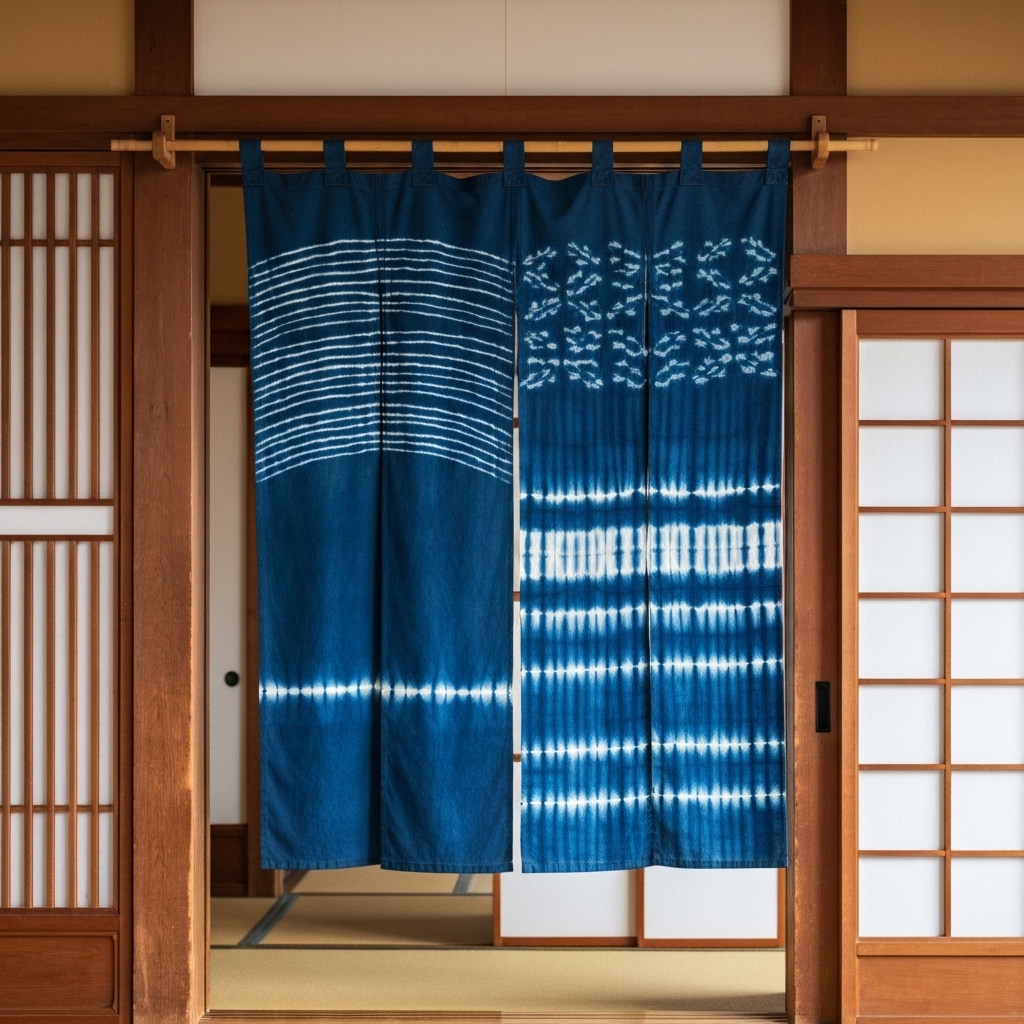
Defining the Essence of Minimalist Noren
The Philosophy Behind Minimalist Design in Japanese Culture
Minimalism isn’t just a design trend in Japan; it’s woven into the very fabric of the culture. It stems from philosophies like Zen Buddhism, which emphasizes simplicity and the appreciation of emptiness (空, kū). This concept permeates art, architecture, and daily life. Think of the serene rock gardens of Kyoto temples, the uncluttered tatami rooms, or the carefully curated display of a single flower in a vase (一輪挿し, ichirinsashi). This aesthetic sensibility emphasizes finding beauty in what is essential, stripping away the superfluous to reveal the inherent quality of an object or space.
This approach is also reflected in the concept of wabi-sabi (侘寂), an acceptance of transience and imperfection. Wabi-sabi finds beauty in the natural aging process, the irregularities of hand-crafted objects, and the understated elegance of natural materials. It appreciates the unpretentious and the authentic. This philosophy directly informs the minimalist aesthetic, favoring quality over quantity and embracing the unique character of natural imperfections. A minimalist noren embodies this by using natural fibers, perhaps slightly uneven dyeing, and a straightforward, unembellished design.
In practical terms, minimalist design serves the Japanese emphasis on efficient use of space. Homes, particularly in urban areas, are often compact, necessitating a focus on functionality and decluttering. Every object must earn its place, contributing to the overall harmony and purpose of the environment. A minimalist noren, therefore, is not merely decorative; it is a practical element that simultaneously defines space, provides privacy, and subtly enhances the aesthetic of the room.
Key Characteristics: Simplicity, Functionality, and Subtlety
When considering a minimalist noren (暖簾), three characteristics stand out: simplicity, functionality, and subtlety.
Simplicity, in this context, refers to the reduction of elements to their most essential form. A minimalist noren will typically feature clean lines, a limited color palette, and a lack of elaborate embellishments. Patterns, if present at all, are usually geometric or abstract and executed with restraint. The focus is on the quality of the material and the precision of the craftsmanship, rather than on ornate decoration. Think of a plain indigo-dyed (aizome, 藍染め) noren in solid momen (木綿, cotton) with a simple vertical slit down the middle, or one in natural asa (麻, hemp/linen) without any dye at all.
Functionality is paramount. A noren serves a purpose, whether it's to divide a room, conceal a doorway, or signal that a business is open. A minimalist design enhances this practicality by avoiding fussy details that could obstruct movement or detract from the noren's intended use. The height is often carefully considered, typically falling somewhere between 90 cm (35 inches) and 150 cm (59 inches), with the slit strategically placed for easy passage. The saotooshi (竿通し, rod pocket) at the top is cleanly sewn and sized appropriately for a standard tsuppari-bou (突っ張り棒, tension rod), making installation quick and uncomplicated.
Subtlety is perhaps the most elusive, yet crucial, characteristic. A minimalist noren doesn't shout for attention; it quietly enhances the space around it. Its beauty lies in its understated elegance and its ability to blend seamlessly into the overall aesthetic. This can be achieved through the use of natural materials, such as asa (hemp) or momen (cotton), and by choosing colors that complement the existing décor. A noren made using the katazome (型染め, stencil dyeing) technique can feature subtle, repeating patterns that are only noticeable upon closer inspection, adding depth without overwhelming the eye.
Expert Insight: When choosing a minimalist noren, consider the texture of the fabric. A slightly slubbed linen or a subtly textured cotton will add visual interest without compromising the overall simplicity of the design.
Distinguishing Minimalist Noren from Other Noren Styles
While all noren share the basic function of dividing space, minimalist noren are distinguished from other styles by their deliberate lack of ornamentation and their emphasis on understated elegance.
Traditional noren, particularly those used in businesses, often feature bold colors, elaborate patterns, and prominent lettering to attract attention. For an overview of the many noren design styles, see our dedicated guide. For example, a noren hanging outside a ramen shop might display the shop's name in large characters, along with images of ramen bowls and ingredients. These noren serve as a form of advertising and are designed to be eye-catching.
Similarly, festival noren (matsuri noren) are typically vibrant and colorful, reflecting the festive atmosphere of the event. These may feature depictions of mythical creatures, traditional symbols, or the crests of participating families or organizations. They're intended to be celebratory and visually stimulating.
In contrast, a minimalist noren deliberately avoids such overt displays. Its purpose is not to grab attention but to create a sense of calm and order. It favors natural materials, muted colors, and simple designs that complement the surrounding environment. The absence of excessive decoration allows the quality of the fabric and the craftsmanship to take center stage. While a traditional noren might be considered a statement piece, a minimalist noren is designed to be a subtle and harmonious addition to the space.
Material Choices for a Minimalist Noren Aesthetic
Natural Fibers: Linen, Cotton, and Hemp – Their Textural Appeal
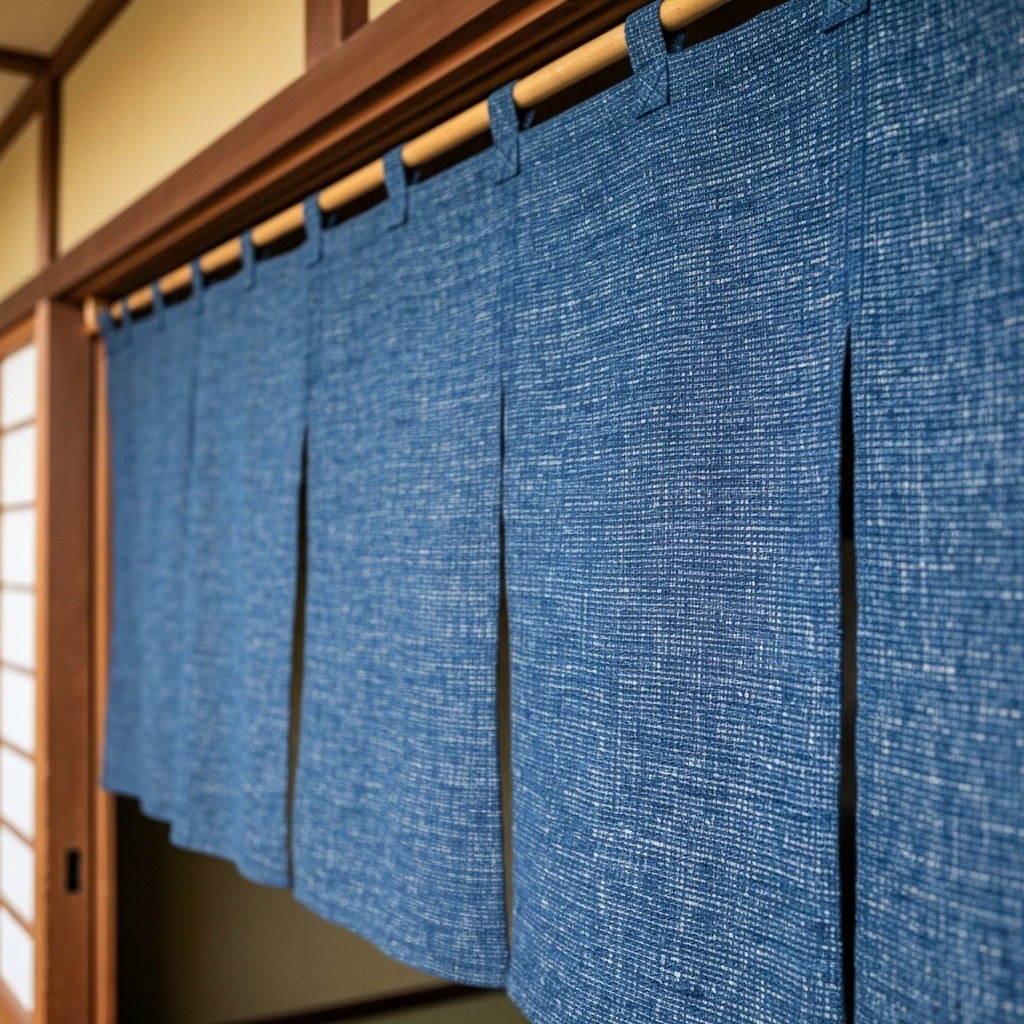
The choice of material profoundly impacts the final aesthetic of a minimalist noren (暖簾). While synthetics offer certain advantages, natural fibers like linen, cotton (momen / 木綿 or men / 綿), and hemp (asa / 麻) bring an inherent organic quality that complements the minimalist ethos. Our noren materials guide covers each fabric in greater detail. The subtle imperfections and nuanced textures of these materials introduce visual interest without disrupting the overall sense of calm and order.
Linen, with its characteristic slubs and slightly coarse weave, offers a refined rusticity. A linen noren, especially in its natural, undyed state, provides a beautiful interplay of light and shadow. Consider a medium-weight linen, around 185-200 gsm (5.5-6 oz/yd²), for a balance of privacy and light diffusion. The slightly stiff drape of linen lends a structured form, making it well-suited for doorways that see moderate traffic.
Cotton, specifically a high-quality momen, presents a softer alternative. While less textured than linen, its smooth surface showcases subtle color variations and the gentle undulations created by air currents. Lighter-weight cottons, like voile or lawn, produce a more ethereal and flowing effect, while heavier cottons offer greater opacity and a more substantial presence. Historically, momen was the dominant choice for noren in merchant establishments, signifying durability and practicality.
Hemp possesses a unique ruggedness, somewhere between linen and jute. Its strength and durability are unmatched, and its distinctive texture adds a tactile dimension to the minimalist space. Hemp noren are often left undyed or minimally treated, allowing the natural color variations of the fibers to shine through. A heavier hemp fabric, around 270-340 gsm (8-10 oz/yd²), can create a bold, architectural statement, particularly effective in larger openings.
Synthetic Options: Polyester and Rayon – Durability and Drape Considerations
Polyester and rayon offer appealing alternatives to natural fibers, particularly where durability and ease of care are paramount. While they may lack the inherent organic charm of linen or hemp, careful selection can still align with a minimalist aesthetic.
Polyester, known for its resilience and resistance to wrinkles and fading, is an excellent choice for high-traffic areas or environments where frequent cleaning is required. The key to employing polyester in a minimalist context lies in choosing fabrics with a subtle, matte finish. Avoid overly shiny or synthetic-looking polyesters, as these can detract from the desired understated elegance. Look for microfibers or textured polyesters that mimic the appearance and feel of natural fibers, while retaining the practical benefits of synthetics. These often have a softer drape than standard polyester.
Rayon (including its variations like viscose and modal) offers a silk-like drape and a smooth, almost fluid texture. This can create a graceful and flowing noren, adding a touch of understated luxury to the minimalist space. However, rayon is generally less durable than polyester and more prone to wrinkles, requiring careful handling and maintenance. Blends of rayon and polyester can offer a compromise, combining the desirable drape of rayon with the increased durability of polyester.
For either synthetic option, the weight of the fabric greatly impacts the drape. Lighter weights create a more airy and translucent effect, while heavier weights provide greater opacity and a more defined form.
Color Palettes: Exploring Neutral Tones and Subtle Variations
Color choice is crucial to achieving a minimalist noren aesthetic. While bold colors can be visually striking, they often clash with the principles of simplicity and restraint. Neutral tones – whites, creams, grays, and beiges – form the foundation of a minimalist palette, promoting a sense of calm and spaciousness.
Within the neutral spectrum, subtle variations can add depth and visual interest without overwhelming the space. Consider off-whites with warm undertones, such as ivory or ecru, which create a softer and more inviting atmosphere. Grays, ranging from light dove gray to deep charcoal, offer a sophisticated and contemporary feel. Explore natural dyes derived from plants, offering nuanced and calming color tones.
Expert Insight: When selecting a neutral color, consider the existing lighting in the space. A cooler gray may work well in a room with ample natural light, while a warmer beige may be more suitable for a space with limited sunlight.
Incorporating Minimalist Noren into Your Home Decor
Dividing Spaces: Entryways, Kitchens, and Living Areas
The beauty of a minimalist noren (暖簾) lies in its ability to define spaces without creating a solid, visual barrier. Unlike a door, which completely seals off a room, a noren offers a gentle suggestion of separation, maintaining a sense of openness and flow within your home. In the genkan (玄関, entryway), a simple, unadorned noren can mark the transition from outside to inside, subtly shielding the interior from direct view while still welcoming guests. Consider a noren approximately 85 cm (33.5 inches) wide – a standard size – to frame a typical doorway effectively.
In kitchens, minimalist noren can delineate the cooking area from the dining space or living room. This is especially useful in smaller apartments or open-plan living arrangements where clear boundaries are desired without sacrificing light or visual connection. Instead of a complete curtain, opting for a noren with a shorter drop – perhaps only covering the top half of the doorway – can offer a peek into the kitchen while containing cooking smells and visual clutter.
For living areas, a noren can soften the harsh lines of an open archway or create a more intimate reading nook within a larger room. The translucent nature of certain materials, such as a loosely woven asa (麻, hemp/linen), allows natural light to filter through, maintaining a bright and airy atmosphere. Another common use is to hang a noren in front of open shelving to create a softer, less cluttered appearance. Instead of bulky cabinet doors, a simple noren provides both visual appeal and discreet storage.
Creating Visual Interest: Using Light and Shadow with Minimalist Noren
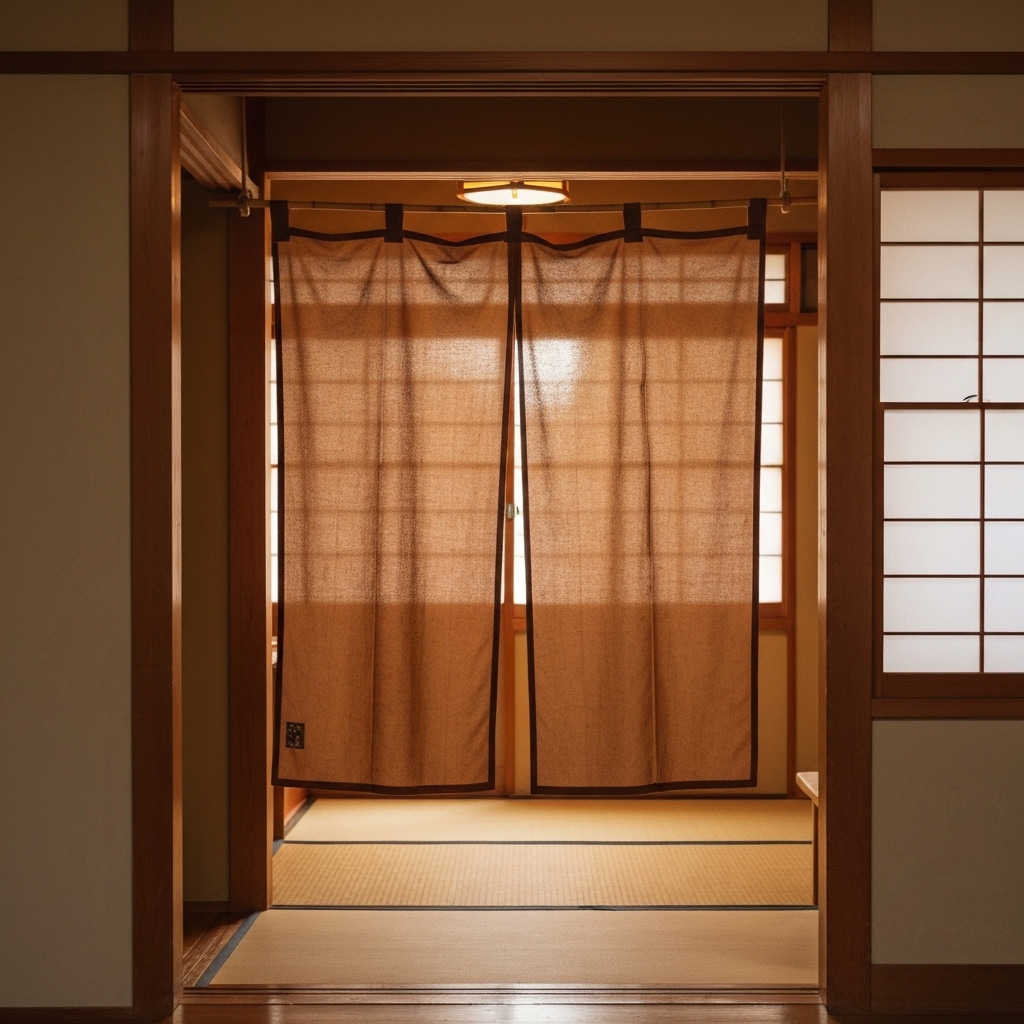
Minimalist design thrives on subtle details. Instead of relying on elaborate patterns or bold colors, the interplay of light and shadow becomes a crucial element. A carefully chosen noren can transform a mundane space into a dynamic environment simply by the way it interacts with light.
The texture and weave of the material play a significant role in this interaction. A loosely woven momen (木綿, cotton) noren, for instance, will cast softer, more diffuse shadows than a tightly woven one. The time of day and the direction of sunlight will also influence the patterns created on the walls and floor. Observe how the light changes throughout the day and consider the positioning of your noren accordingly.
Experiment with different levels of transparency. A semi-sheer noren allows more light to pass through, creating a brighter and more open feel. A more opaque noren, on the other hand, will block more light, creating a more intimate and secluded space. Consider the existing lighting in the room and choose a noren that complements it.
Expert Insight: If your noren features any texture, such as subtle vertical ribs, position a lamp to shine across the fabric's surface to enhance the dimensionality and create a more dramatic play of light and shadow.
Complementary Decor: Pairing with other Minimalist Elements
A minimalist noren should not exist in isolation. To achieve a cohesive and harmonious aesthetic, it's essential to consider how it interacts with the surrounding decor. The key is to maintain simplicity and avoid clutter.
Pair your noren with other minimalist elements such as clean-lined furniture, natural materials like wood and stone, and a neutral color palette. Avoid overly ornate or decorative items that might clash with the understated elegance of the noren. A simple ikebana (生け花, flower arrangement) or a single piece of artwork can provide a touch of visual interest without overwhelming the space.
Consider the saotooshi (竿通し, rod pocket) itself. If your aesthetic leans ultra-minimalist, opt for a simple, unadorned wooden tsuppari-bou (突っ張り棒, tension rod) for hanging. Avoid decorative finials or elaborate brackets that might detract from the overall simplicity. Our guide on how to hang a noren covers rod options and installation in detail.
Ultimately, the goal is to create a space that is both functional and aesthetically pleasing. The noren should seamlessly integrate into the overall design, enhancing the sense of calm and serenity that is characteristic of minimalist interiors. For more ideas on blending noren with your decor, see our guide to noren in Japanese home decor.
Sizing and Dimensions: Achieving the Right Fit for Your Space
Choosing the right size noren is paramount, transforming it from a mere fabric divider into a harmonious design element. Accuracy in measurement and consideration of proportions are key to achieving the intended minimalist aesthetic. Japanese homes, often characterized by smaller spaces, demand careful attention to detail in this respect.
Measuring Your Doorway or Opening Accurately
The first step is, naturally, precise measurement. In Japan, we typically use centimeters (cm), but understanding inches is helpful when dealing with internationally produced fabrics. Instead of using a flexible tape measure that can sag, I recommend a rigid metal measuring tape for the most accurate results.
Measure the width of the doorway or opening at the top, middle, and bottom. Use the widest measurement to determine the ideal noren width. This ensures adequate coverage and prevents unsightly gaps. Similarly, measure the height from where you plan to hang the rod to the floor or desired drop point. It’s crucial to account for any unevenness in the floor. Take several height measurements at different points across the width of the opening. If there is a significant difference, you may need a custom-made noren to achieve a clean, level bottom edge.
Consider the 'walk-through' clearance. A noren that grazes the floor can quickly become soiled and hinder smooth passage.
Standard Noren Sizes and Customization Options
While noren are available in a wide array of dimensions, certain sizes are more common. Standard widths often range from 85cm (approximately 33.5 inches) to 90cm (about 35.4 inches). Standard lengths can vary from 90cm to 150cm (roughly 35.4 inches to 59 inches). These measurements are frequently found in ready-made noren, especially those designed for standard doorway sizes.
However, don't feel constrained by these standard options. One of the beauties of noren is the ease of customization. Many artisans and shops specializing in textiles are happy to create a bespoke noren to your exact specifications. Consider the noren's intended purpose. Is it purely decorative, or does it need to provide privacy or block light? This will inform your sizing decisions. A shorter noren, for example, might be suitable for a pantry or closet, while a longer one could be used to partition a room.
When commissioning a custom noren, it is often a good idea to communicate in centimeters to ensure that the measurements are understood without translation errors. Specify the finished size, including any allowance for the saotooshi (竿通し) or rod pocket.
Rod Placement and Noren Length: Proportions and Visual Balance
The placement of the rod significantly impacts the overall visual effect. Mounting the rod higher can make a room feel taller, while a lower placement can create a more intimate and cozy atmosphere. In traditional Japanese architecture, noren are often hung at a height that corresponds to the human eye level, typically around 160cm to 170cm (approximately 63 inches to 67 inches) from the floor.
The length of the noren relative to the doorway height is equally important. A general guideline is to choose a length that leaves approximately 10-20cm (4-8 inches) of space between the bottom of the noren and the floor. This prevents dragging and allows for easy passage.
However, minimalist design often embraces asymmetry and unexpected proportions. Experimenting with a slightly shorter or longer noren can create a more dynamic and visually interesting effect. A noren that is deliberately shorter, revealing more of the doorway above, can be a bold design statement. Conversely, a noren that nearly touches the floor can create a sense of groundedness and tranquility. Consider how the noren interacts with the surrounding space and choose a length that complements the overall design.
Expert Insight: Before committing to a specific noren length, temporarily hang a piece of fabric or paper cut to the desired size to visualize how it will look in the space. This simple trick can help you avoid costly mistakes and ensure you are happy with the final result.
Caring for Your Minimalist Noren: Washing and Maintenance
The longevity of your minimalist noren depends not only on the initial material quality, but also on diligent care and maintenance. Even the simplest design deserves proper handling to preserve its integrity and aesthetic appeal. Understanding the nuances of washing, drying, ironing, and storage will ensure your noren remains a subtle, yet impactful, element of your home for years to come.
Washing Instructions: Hand Washing vs. Machine Washing
While a seemingly straightforward task, washing a noren requires careful consideration of the fabric and its unique characteristics. Hand washing is almost always the gentlest option, particularly for delicate or hand-dyed pieces. For example, a noren featuring shibori (絞り) techniques, where the fabric is tied and dyed to create intricate patterns, should always be hand washed to prevent damage to the delicate threads and potential color bleeding.
To hand wash, fill a basin with lukewarm water (approximately 30°C or 86°F) and a mild, pH-neutral detergent. Submerge the noren and gently agitate the water with your hands. Avoid harsh scrubbing or twisting, which can distort the fabric. Let it soak for about 15-20 minutes, then rinse thoroughly with cool water until all traces of detergent are gone.
Machine washing, while convenient, carries a higher risk. If you choose this method, use a delicate cycle with cold water and a mild detergent. Place the noren inside a mesh laundry bag to protect it from excessive friction. For a momen (木綿) noren, pre-soaking in cold water before machine washing can minimize shrinkage. Never use bleach or fabric softeners, as these can damage the fibers and fade the colors.
Drying and Ironing Techniques to Maintain Fabric Quality
The way you dry your noren significantly impacts its shape and texture. Avoid using a machine dryer, as the high heat can cause shrinkage, warping, and damage to delicate fibers. Instead, air drying is the preferred method.
The best way to air dry is to lay the noren flat on a clean, dry towel, reshaping it gently as it dries. Alternatively, you can hang it on a padded hanger or clothesline, away from direct sunlight, which can fade the colors, especially for aizome (藍染め) pieces. When hanging, ensure the weight is evenly distributed to prevent stretching. A slightly damp noren is easier to iron.
Ironing is crucial for restoring the crispness of your minimalist noren. Use the appropriate heat setting for the fabric type. For example, linen (asa 麻) can tolerate higher heat than silk (kinu 絹). Always iron on the reverse side to protect any delicate embellishments or printed designs. Using a pressing cloth between the iron and the noren is also a good practice, particularly for darker colors, to prevent scorching. Use steam sparingly, as excessive moisture can also cause distortion.
Expert Insight: Use distilled water in your iron to prevent mineral deposits that can stain light-colored fabrics.
Storage Tips to Prevent Damage and Fading
Proper storage is paramount for preserving your noren's condition when it's not in use. Begin by ensuring the noren is completely clean and dry. Even trace amounts of moisture can lead to mold or mildew growth during storage.
Fold the noren neatly along its natural creases, avoiding tight folds that can create permanent wrinkles. Wrap it in acid-free tissue paper or a breathable cotton cloth to protect it from dust and light. Store it in a cool, dry, and dark place, such as a linen closet or a drawer dedicated to textiles.
Avoid storing your noren in plastic bags, as these can trap moisture and lead to mildew. Cedarwood chips or sachets of dried lavender can be placed nearby to deter moths and other pests, ensuring your minimalist noren remains a cherished part of your home decor for years to come. Periodically check your stored noren to ensure no damage from insects or moisture has occurred.
Beyond Decoration: Functional Uses of Minimalist Noren
While the aesthetic appeal of minimalist 暖簾 (noren) is undeniable, their practicality extends far beyond mere decoration. In traditional Japanese homes, these fabric dividers serve crucial functions related to privacy, air quality, and even pest control. Minimalist designs enhance these inherent qualities, offering subtle yet effective solutions for modern living.
Providing Privacy and Filtering Light
A minimalist 暖簾 offers a nuanced approach to privacy, avoiding the starkness of closed doors or heavy curtains. The key lies in the weave and density of the material. Even a sheer 麻 (asa – linen) 暖簾, while allowing light to permeate, can obscure details sufficiently to create a sense of separation between spaces.
Consider the placement. A shorter 暖簾 (e.g., 90cm or 35 inches long) hung at the entrance to a kitchen provides a visual barrier, concealing clutter from view while still allowing conversation. A longer 暖簾 (e.g., 150cm or 59 inches long) across a doorway to a bedroom, especially when combined with a slightly heavier 綿 (men – cotton) or 木綿 (momen – cotton fabric), offers a greater degree of visual and acoustic privacy. The light-filtering effect is particularly beneficial in rooms that receive direct sunlight, softening the glare and creating a more serene atmosphere. The degree of light filtration depends greatly on the weight of the chosen material. A loosely woven hemp (麻 – asa) will diffuse light differently than a tightly woven cotton.
Expert Insight: When choosing a 暖簾 for privacy, hold the fabric up to a light source to gauge its opacity. This quick test helps determine whether it provides the level of concealment you desire.
Improving Air Circulation and Ventilation
Unlike solid doors, a 暖簾 allows for continuous airflow, contributing to better ventilation, particularly important in Japan's humid climate. This is especially beneficial in smaller apartments or homes where cross-ventilation may be limited. The gentle sway of the fabric also creates a subtle air current, promoting a more comfortable environment.
During the sweltering summer months, a light-colored 暖簾 made of 麻 (asa – linen) can help reduce the feeling of stuffiness in a room. Its breathability allows air to circulate freely, while the light color reflects some of the sun's rays. In winter, a heavier 木綿 (momen – cotton fabric) 暖簾 can act as a draft excluder, helping to retain heat within a room without completely blocking airflow. Even a partially drawn 暖簾 over a doorway can make a measurable difference to the temperature.
Consider spaces that often experience stagnant air, such as laundry rooms or bathrooms. Hanging a minimalist 暖簾 in these areas can significantly improve ventilation and reduce moisture buildup, helping to prevent mold and mildew growth. The 竿通し (saotooshi – rod pocket) design allows for easy adjustment, enabling you to control the amount of airflow as needed.
Acting as a Dust Barrier and Insect Deterrent
While not airtight, a 暖簾 can act as a surprisingly effective dust barrier. The fabric catches airborne particles, preventing them from spreading throughout the house. This is particularly useful in homes with pets or in areas prone to dust accumulation. Regularly shaking or washing the 暖簾 removes the trapped dust, maintaining cleaner air quality.
Moreover, a 暖簾 can offer a degree of insect deterrence. Although not a foolproof solution, the physical barrier it provides can deter flying insects from entering a room, especially when combined with other pest control measures. This is particularly relevant for kitchen entrances or doorways leading to outdoor spaces. The choice of fabric may also play a role, with some natural fibers like hemp or linen having subtle insect-repelling properties. Furthermore, adding a small amount of peppermint or eucalyptus essential oil to a 暖簾 made of natural fiber could further discourage insects from entering the space.
Japanese homes often utilize mosquito netting in combination with 暖簾 during the summer months, particularly in rural areas. The 暖簾 acts as an initial barrier, while the netting provides additional protection, showcasing how traditional and modern elements can work together.