Noren Feng Shui: Harmonize Your Home with Japanese Curtains
Understanding the Power of Noren in Feng Shui
The Symbolic Meaning of Noren Colors and Patterns
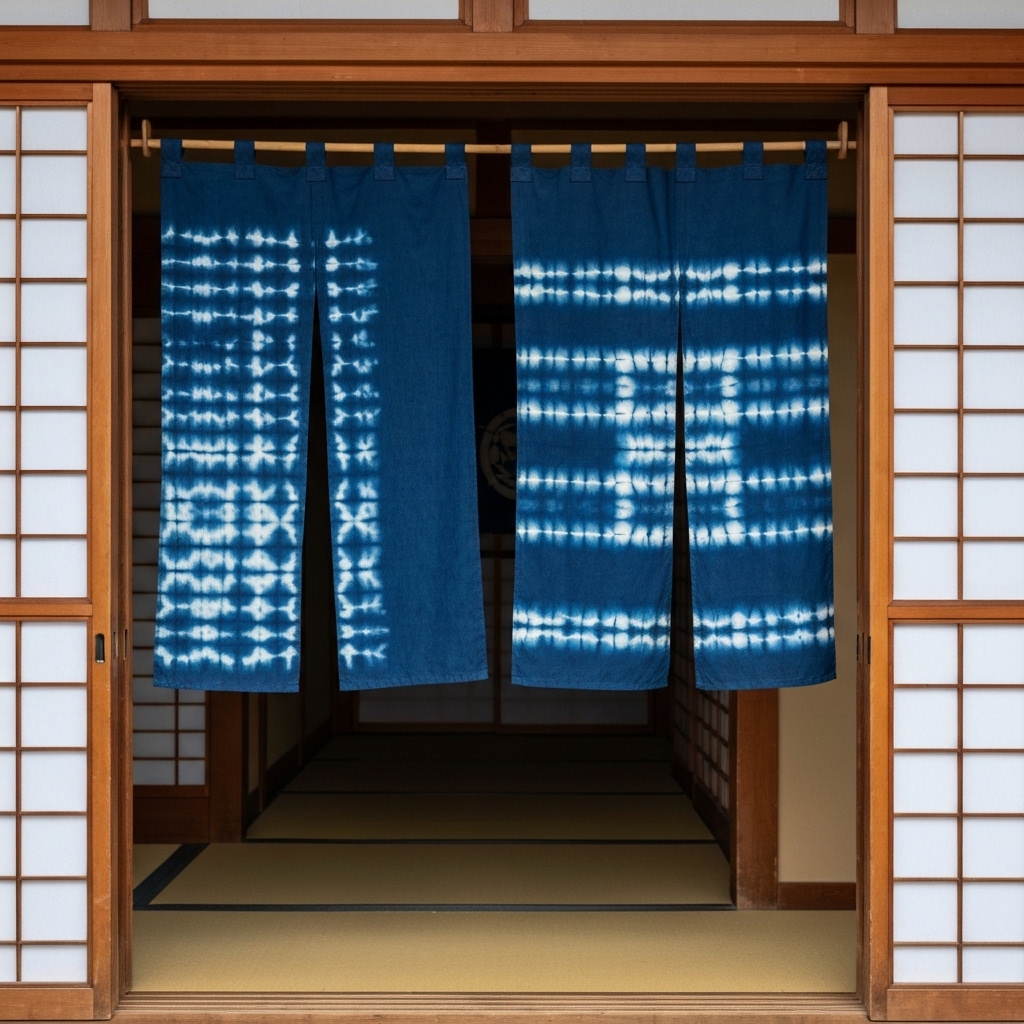
The humble noren (暖簾), a ubiquitous sight across Japan, from bustling city streets to quiet temple towns, holds more than just a decorative purpose. In Feng Shui, the colors and patterns adorning a noren act as powerful symbols, influencing the energy, or chi, of a space. Traditionally, a noren acts as a shop's signboard, but beyond its commercial function, it subtly communicates the establishment’s essence and intentions.
Colors are paramount. Red, for instance, is often seen in restaurants, particularly those serving heartier fare like yakitori (焼き鳥), because it is believed to stimulate appetite and bring good fortune. Blue, especially in the indigo dye known as aizome (藍染め), brings calmness and serenity. Learn more about the meaning of indigo noren and its cultural significance. You'll often find aizome noren hanging at the entrance of onsen (温泉) hot springs, inviting relaxation. Green signifies growth, renewal, and harmony with nature, making it a suitable choice for businesses emphasizing organic products or health. Yellow represents joy, optimism, and prosperity and can be used to uplift the atmosphere of a home. Black, while sometimes perceived negatively in Western cultures, in Japan can represent strength, authority, and sophistication, often used in high-end establishments. The choice of color should align with the desired energy for the space.
Patterns, too, tell a story. Geometric patterns like circles (representing wholeness and continuity) or waves (symbolizing resilience and adaptability) can be found. Natural motifs, such as bamboo (representing strength and flexibility) or plum blossoms (signifying perseverance and renewal), are also popular. For a deeper dive into pattern symbolism, see our guide to traditional Japanese noren motifs. Often, a simple, elegant design is preferred over something overly ornate, embodying the Japanese aesthetic of wabi-sabi (侘寂), finding beauty in imperfection and simplicity. For example, a noren with a maneki-neko (招き猫), the beckoning cat, is a common sight in shops to invite good luck and customers.
Consider a restaurant specializing in soba (蕎麦) noodles. They might choose a noren in a natural hemp or linen fabric, called asa (麻), dyed in a deep indigo with a simple white circle design. The aizome promotes calm, while the natural fiber connects to the earth element, grounding the space. The simple circle represents the wholeness of the dining experience.
Noren as a Chi Flow Regulator: Directing Energy
The noren's placement and design play a vital role in directing the flow of chi within a space. Think of it as a subtle yet effective tool for guiding energy. A noren acts as a visual barrier, softening the transition between spaces and preventing chi from rushing in or out too quickly.
Too much direct sunlight streaming into a room can create an imbalance. A noren, particularly one made of a thicker material like momen (木綿) cotton, can diffuse the light and create a more balanced and comfortable atmosphere. Conversely, in a dark hallway, a noren in a lighter color can brighten the space and encourage the circulation of chi.
The length of the noren is also a crucial factor. Traditionally, noren are typically hung from a rod pocket, saotooshi (竿通し), and can vary in length depending on the purpose. Shorter noren, approximately 70-90 cm (27-35 inches), are common in shops to allow customers to easily enter, while longer noren, around 120-150 cm (47-59 inches), might be used to separate a kitchen from a dining area, creating a greater sense of privacy and subtly redirecting energy flow. If a doorway is directly aligned with a window, causing chi to flow straight through the room, a strategically placed noren can disrupt this flow, encouraging the energy to circulate more harmoniously.
Expert Insight: If you live in a small apartment and the front door opens directly into the living area, hanging a noren can create a visual buffer, defining the entrance and preventing the feeling of being immediately exposed upon entering.
Cultural Significance: How Japanese Traditions Influence Noren Feng Shui
Understanding the cultural context of the noren is crucial to grasping its role in Feng Shui. The noren is deeply embedded in Japanese traditions and reflects the values of harmony, balance, and respect for nature.
The practice of hanging a noren is a long-standing custom. Historically, they were used to protect shops from dust and sunlight, but over time, they evolved into symbolic representations of the business itself. A well-maintained noren is seen as a sign of respect for the craft and the customers it serves. A tattered or faded noren could be interpreted as a sign of neglect, potentially impacting the business's reputation and, according to Feng Shui principles, its flow of positive energy.
The materials used in noren production also have cultural significance. Kinu (絹) silk, for example, is associated with luxury and elegance, while momen (木綿) cotton, which has been used since the Edo period, represents practicality and durability. Katazome (型染め), a traditional stencil dyeing technique, is highly valued for its artistry and craftsmanship. Each element contributes to the overall energy and aesthetic of the noren.
The noren is more than just a decorative item; it is a reflection of Japanese values and a powerful tool for influencing the flow of energy within a space. To explore the full history and meaning of noren, see our in-depth guide. It represents welcome, serves as a subtle boundary, and conveys meaning beyond words, contributing to a harmonious environment, be it a bustling shop or a tranquil home.
Noren Feng Shui: Placement and Direction for Optimal Harmony
Entrance Noren: Welcoming Positive Energy and Blocking Negativity
The entrance to your home is the primary gateway for qi (気), and the noren at your genkan (玄関, entrance area) plays a crucial role in its quality. Think of it as a subtle filter, moderating the influx of energy. In feng shui, the placement and design of the entrance noren can significantly impact the atmosphere within.
A noren placed just inside the exterior door is often seen as more effective than one hung outside, especially if facing a busy street or neighboring building. The inner noren acts as a buffer, allowing the qi to gently permeate the home instead of rushing in too quickly. The length is also a factor; a longer noren that reaches closer to the floor, approximately 150cm (59 inches) or more, is believed to offer more robust protection, particularly against negative energies associated with outside distractions or anxieties.
Consider the direction your entrance faces. In Japanese homes, the north-facing entrance can be particularly challenging due to its association with coldness and stagnation. A noren featuring warm-toned imagery, such as stylized depictions of persimmons (kaki, 柿) or autumn leaves (momiji, 紅葉), can help to balance this. Conversely, a south-facing entrance might benefit from a noren with cooler tones, perhaps incorporating patterns inspired by flowing water (mizu, 水) or bamboo (take, 竹). The intention is never to completely block qi but to harmonize and temper its flow.
Expert Insight: Pay attention to the sounds emanating from beyond your entrance. If you hear loud noises or distressing sounds, a thicker, multi-layered noren can act as a sound dampener, creating a more peaceful entryway.
Interior Noren: Dividing Spaces and Enhancing Privacy
Within the home, noren are frequently used to delineate spaces without the commitment of a solid wall. This is especially valuable in smaller Japanese homes where flexible layouts are prized. In feng shui, interior noren can subtly redirect the flow of energy and enhance privacy in key areas.
A common application is between the living room and the kitchen. Hanging a noren here, even a relatively short one (around 90cm or 35 inches), can subtly contain the energy of the kitchen, preventing it from overwhelming the more relaxed atmosphere of the living room. Choose a design that reflects the function of each space. The kitchen noren might feature images of fruits or vegetables, while the living room noren could showcase tranquil landscapes or abstract patterns.
Another effective use is in hallways. Long, narrow hallways can feel stagnant and constricting. A noren hung at the entrance to a hallway can break up the monotony and encourage qi to circulate more freely. The design should be light and airy, avoiding anything too heavy or imposing. Sheer fabrics or those with vertical stripes can visually elongate the hallway, creating a more spacious feel. The important thing is to make sure people can pass through without ducking under the fabric or having to manipulate it in an awkward way. Aim for about 20-30 cm (8-12 inches) of clearance from the floor.
Bedroom Noren: Promoting Restful Sleep and Harmonious Relationships
The bedroom is a sanctuary, and its feng shui is paramount for promoting restful sleep and fostering healthy relationships. A noren in the bedroom can be a powerful tool for enhancing these aspects.
Using a noren to create a dressing area or partition off a workspace within the bedroom is a common practice. Separating the sleeping area from other activities helps to preserve its tranquility. For example, if you have a desk in your bedroom, hanging a noren between the bed and the desk can visually signal a transition from work mode to relaxation mode. This is especially important in smaller apartments where dedicated office space is not available.
Consider using a noren as a headboard alternative. Hanging a noren behind the bed can create a sense of security and visual interest, particularly if the wall is bare. Choose a design that is calming and supportive, avoiding anything overly stimulating or aggressive. Natural motifs, such as mountains or forests, are excellent choices. Avoid metallic colors. Ensure the noren is securely mounted and does not pose a safety hazard. A length of around 70-80 cm (28-31 inches) above the mattress top typically works well.
Selecting the Right Noren Material for Your Feng Shui Needs
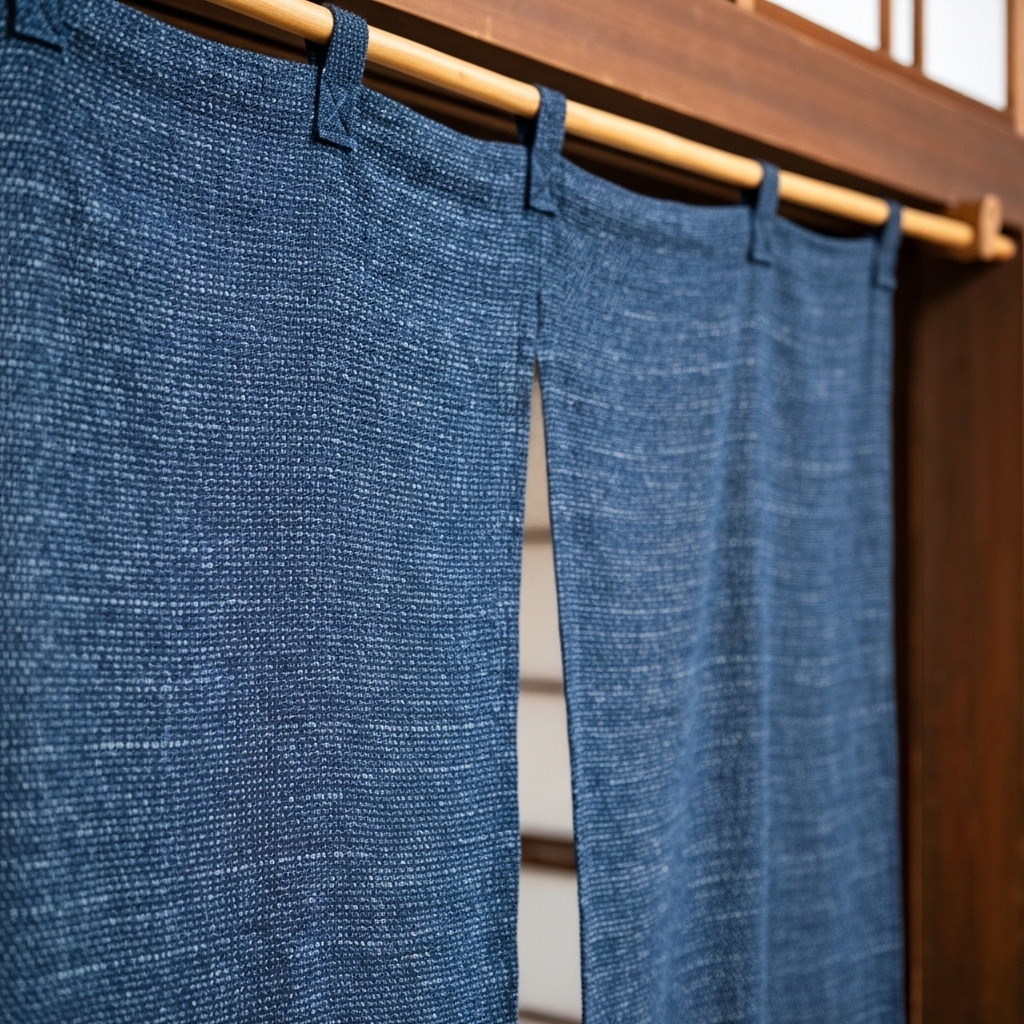
Choosing the correct material for your 暖簾 (noren) is pivotal in harnessing its potential to influence the flow of qi within your space. The fabric's inherent properties resonate with different elements, impacting the energy it invites and cultivates. Beyond aesthetics, consider the energetic qualities and how they align with your desired Feng Shui outcome.
Fabric Properties and Elemental Associations (Earth, Wood, Fire, Water, Metal)
Different fabrics, from the humblest 木綿 (momen, cotton) to the most luxurious 絹 (kinu, silk), carry unique energetic imprints, each aligning with one or more of the Five Elements. Understanding this relationship allows you to consciously introduce specific elemental energies into your environment. For a comprehensive comparison of fabrics, see our noren materials guide.
- Earth: Heavier, textured fabrics often resonate with the Earth element. Consider thick, undyed 綿 (men, cotton fabric) or linen blends. Think of a sturdy, earthy-toned noren separating a pantry from a kitchen – grounding and stabilizing the energies associated with nourishment. The weight evokes a sense of stability.
- Wood: Natural plant fibers like 麻 (asa, hemp/linen) strongly embody the Wood element, symbolizing growth, flexibility, and new beginnings. A light, breezy linen noren in a doorway can gently encourage qi to flow, much like a gentle breeze through a bamboo forest.
- Fire: Fabrics with a sheen or those incorporating synthetic threads might subtly introduce Fire energy. Note, however, that Fire should be introduced carefully to avoid imbalances. Silk with vibrant embroidery could act as a small point of Fire, igniting passion and creativity in a study.
- Water: While no fabric is purely Water, consider how a fabric moves and its ability to drape. Silky fabrics that flow easily evoke a sense of Water. Also, the color impacts elemental association. Avoid overly dense materials. A sheer, dark blue noren could add a calming, reflective Water element to a bathroom.
- Metal: Crisp, structured fabrics, especially those with metallic threads (although rare in traditional noren), can represent the Metal element. Geometric patterns and a feeling of precision will also enhance this association. This could be used sparingly to enhance focus in a workspace.
Natural vs. Synthetic Fibers: Weighing Energetic Qualities
The debate between natural and synthetic fibers isn't just about sustainability; it's also about energetic resonance. Natural fibers, born from the earth, carry a vibrant qi that synthetics often lack. Natural fibers like 木綿 (momen) and 麻 (asa) feel more "alive" and connected to the natural world. Synthetics, while offering durability and stain resistance, can feel energetically "flat."
However, the choice isn't always clear-cut. The intention behind the noren is crucial. A carefully chosen synthetic blend, imbued with positive energy through mindful use and placement, can still contribute to a harmonious environment. Prioritize breathability and a pleasant tactile experience, even when opting for synthetics. Consider how the manufacturing process impacts the overall energetic profile of the material.
Considering Transparency and Light Diffusion in Material Choice
Transparency plays a critical role in how a noren modulates the flow of qi and light. Opaque fabrics create clear divisions, offering privacy and blocking light, whereas sheer fabrics allow light and energy to filter through, creating a softer transition between spaces.
-
Opaque: Suitable for areas where privacy is paramount, such as dressing rooms or bathrooms. An opaque noren made of thick cotton will create a stronger barrier.
-
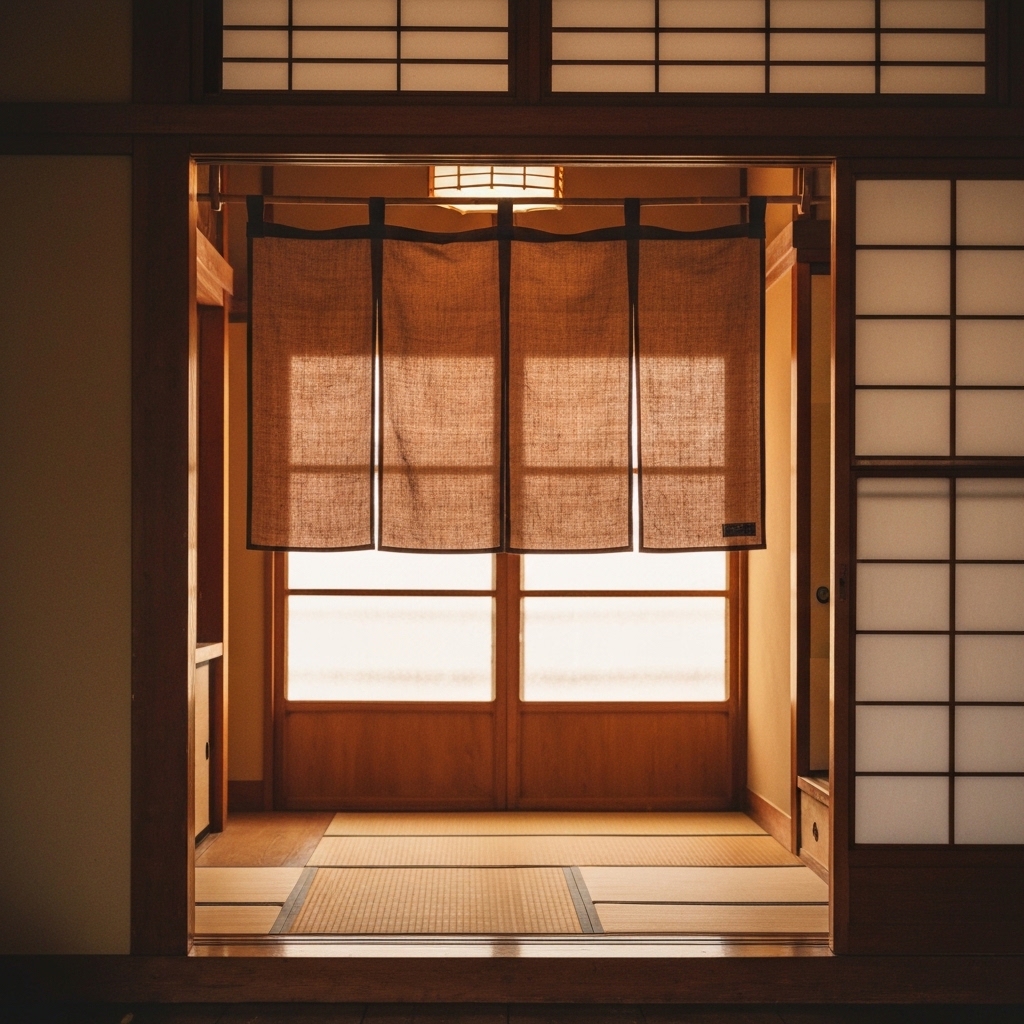
Semi-Opaque: These allow light to pass through, creating a gentle diffusion. Linen and medium-weight cotton blends often fall into this category. Great for kitchens or entryways where you want to define a space without completely blocking light.
-
Sheer: Delicate and airy, sheer fabrics maximize light and energy flow. These are best used in areas where you want to subtly define a space while maintaining a sense of openness. Silk and very lightweight linen are excellent choices for creating a sense of fluidity.
Expert Insight: Consider the season when choosing your noren material. Lighter, breathable fabrics like linen are ideal for summer months to encourage airflow, while heavier cotton or hemp can provide a sense of warmth and enclosure during the colder months. Adjusting your noren seasonally is a simple way to harmonize with the changing qi of your environment.
Noren Design and Imagery: Manifesting Intentions Through Symbolism
Incorporating Lucky Symbols and Auspicious Motifs
The imagery emblazoned upon a noren (暖簾) is far more than simple decoration; it's a visual language capable of attracting specific energies and blessings into your space. In Japanese culture, certain motifs are deeply associated with good fortune, longevity, and prosperity. When selecting a noren, consider these carefully to amplify the desired feng shui effect.
For example, the crane (鶴, tsuru) is a potent symbol of longevity and happiness, often depicted in pairs to represent marital harmony. A noren featuring cranes soaring amongst pine trees (松, matsu) – itself a symbol of resilience and steadfastness – creates a powerful image of enduring health and a long, fulfilling life. Carp (鯉, koi) swimming upstream symbolize perseverance and success in overcoming obstacles, making them especially suitable for entrances to studies or businesses. Depictions of Mount Fuji (富士山, Fujisan) invoke stability, peace, and national pride.
The use of geometric patterns also carries significance. The seigaiha (青海波) pattern, representing endless waves, symbolizes peace, tranquility, and never-ending good fortune. The shippo (七宝) pattern, an overlapping circles design, symbolizes harmony and perfect relationships. These less overt, yet equally potent designs, can subtly influence the energy of a space.
When dealing with businesses, consider the maneki-neko (招き猫), the beckoning cat, which invites customers and ensures thriving trade. Displaying it on a noren can act as a constant silent salesperson. Other auspicious motifs include:
- Daruma dolls (達磨): Perseverance, good luck in achieving goals.
- Bamboo (竹, take): Flexibility, resilience, and prosperity.
- Peonies (牡丹, botan): Wealth, honor, and beauty.
- Treasure ship (宝船, takara-bune): Good fortune arriving by sea.
Careful selection of symbolic imagery transforms a simple noren into a powerful tool for manifesting your desired intentions. Browse our noren design ideas for more inspiration on choosing the right style.
Using Color Theory to Enhance the Desired Feng Shui Effect
Beyond basic color psychology, understanding the nuanced application of color in Japanese aesthetics can further enhance the feng shui benefits of your noren. While a prior section already touched on general color correspondences, we'll now explore how specific shades and combinations are perceived in Japan.
Consider the weight of colors. A solid block of deep crimson (beni, 紅) may feel intense, even oppressive, in a small space. Conversely, a delicate wash of sakura-iro (桜色), cherry blossom pink, can feel ethereal and transient if not grounded by stronger supporting colors. The same applies to murasaki (紫), shades of purple. Too saturated can feel ostentatious.
Japanese color palettes often incorporate subtle gradations and layering effects to achieve harmony. Think of the term kasane no irome (襲の色目), the practice of layering silks to create nuanced colors through the subtle interplay of semi-transparent fabrics. This can be reflected in noren designs by using different thread thicknesses or varying the density of dyed areas.
- White (白, shiro): Purity, cleanliness, new beginnings, also associated with mourning, so its use should be carefully considered.
- Red (赤, aka): Vitality, passion, protection from evil. However, excessive red can create restlessness.
- Black (黒, kuro): Strength, stability, mystery. Too much black can feel isolating and cold.
- Gold (金, kin): Wealth, prosperity, power. Often used sparingly as an accent to avoid appearing gaudy.
- Silver (銀, gin): Calmness, intuition, modernity. A sophisticated alternative to gold.
- Indigo (藍, ai): Calmness, serenity, stability. A classic Japanese color often seen in aizome (藍染め) noren.
Expert Insight: To balance the energy of a room with a noren, consider the existing colors and textures. If a room feels too "yang" (active and bright), choose a noren with cooler, more subdued colors to introduce "yin" (calm and receptive) energy.
Personalizing Your Noren with Family Crests or Affirmations
While traditional motifs are powerful, personalizing your noren amplifies its feng shui effect, making it a uniquely tailored tool for your specific needs and intentions.
Incorporating your family crest, known as a kamon (家紋), onto a noren anchors it to your lineage, history, and sense of belonging. A kamon represents the identity and heritage of your family, drawing on ancestral strength and protection. These designs, typically circular and stylized depictions of plants, animals, or objects, can be subtly integrated into the overall noren design, either prominently displayed in the center or subtly repeated as a background pattern. Ensure accuracy when reproducing your kamon, as even slight deviations can alter its meaning.
Consider adding personal affirmations or inspirational messages in Japanese calligraphy (shodo, 書道). These messages, carefully chosen to align with your aspirations, can subtly influence your subconscious mind and create a positive atmosphere. For example, a business owner might incorporate the phrase "商売繁盛" (shobai hanjo), meaning "prosperity in business," while a family might choose "家内安全" (kanai anzen), "safety and well-being of the family." These affirmations are typically written vertically, following traditional Japanese calligraphy conventions. When choosing an affirmation, consider the overall design aesthetic and ensure the calligraphy style complements the chosen imagery and colors. The size of the characters should be proportionate to the noren dimensions, generally ranging from 5-10cm (2-4 inches) per character for a standard-sized noren (85cm width x 150cm length).
Practical Applications: Noren Feng Shui for Specific Areas of Your Life
Attracting Wealth and Prosperity with Noren in the Living Room
The living room, or ima (居間), is a vital space for gathering positive energy. To subtly enhance the flow of abundance, consider employing a noren at the entrance to this communal area. Instead of focusing solely on literal depictions of wealth, shift your gaze toward imagery that represents growth and stability. For example, a noren featuring a depiction of Mount Fuji (富士山, Fujisan) in a serene landscape can be incredibly powerful. Fuji represents ambition realized and solid foundations. Look for scenes that depict the mountain bathed in golden light, suggesting prosperity shining upon your household. The dimensions also matter; a noren that extends roughly two-thirds of the doorway height (approximately 120cm or 47 inches for a standard 210cm or 82 inch doorframe) is considered balanced.
Alternatively, stylized depictions of rice plants (稲, ine) can symbolize plentiful harvests and sustained income. These aren't always literal; geometric patterns inspired by woven rice mats or stylized depictions of rice grains also work beautifully. The key is to choose imagery that resonates with your personal concept of prosperity. Think beyond simply "money" and consider what wealth truly means to you: security, stability, growth. Choose imagery that embodies those concepts.
Another option is to consider a noren that visually opens the space to greater possibilities. For instance, a noren depicting a winding path leading toward a distant horizon can represent opportunities unfolding and a journey toward greater success.
Expert Insight: Place a small, smooth river stone (representing stability and grounding) near the base of the noren, on either side of the doorway. This subtle addition acts as an anchor, solidifying the intention of attracting prosperity.
Boosting Creativity and Focus with Noren in the Home Office
In the home office, or shosai (書斎), focus is paramount. The right noren can subtly shield you from distractions and enhance your mental clarity. Simplicity is key here. Overly elaborate designs can be visually stimulating, which is the opposite of what you want. Consider a plain noren in a calming, neutral tone. A noren made of natural asa (麻, hemp/linen) in an undyed or lightly dyed shade of beige or light grey can be incredibly effective. Its textural quality provides visual interest without being overwhelming.
Alternatively, consider geometric patterns. A simple repeating pattern of triangles, representing clarity of thought and forward momentum, can be subtly energizing without being distracting. In Japanese design, geometric patterns, like asanoha (麻の葉, hemp leaf pattern) are timeless and evoke a sense of order.
The length of the noren is also important in this context. A longer noren, nearly reaching the floor, can create a sense of enclosure and privacy, fostering deeper concentration. For example, a noren that is 150cm (approximately 59 inches) long would be suitable for a standard height doorway, creating a visual barrier that invites focused work. Just be sure that the lower edge doesn't create a tripping hazard.
Avoid noren with overly vibrant colors or chaotic patterns. The goal is to create a serene and uncluttered environment conducive to deep work.
Enhancing Relationships and Romance with Noren in Shared Spaces
Shared spaces, like hallways or the entrance to a bedroom, are prime locations to foster harmony and connection. For couples, consider a noren at the bedroom entrance that embodies the spirit of partnership and mutual respect. Imagery of paired elements is particularly effective here. For instance, two cranes (鶴, tsuru) facing each other symbolize longevity and a harmonious relationship. The image doesn't need to be literal. Two stylized floral motifs, representing each partner, can also carry this symbolism.
A noren used in this way should be visually inviting and welcoming. A slightly shorter noren, allowing more light to pass through, can create a sense of openness and connection. A noren that is approximately half the height of the doorway (around 105cm or 41 inches for a standard doorframe) strikes a good balance between privacy and accessibility.
Consider a noren crafted from soft, flowing fabric. Lightweight momen (木綿, cotton) or even kinu (絹, silk) can evoke a sense of intimacy and tenderness. Avoid stiff or heavy materials. Also consider the saotooshi (竿通し, rod pocket). Make sure it is large enough for easy install.
For family areas, consider a noren that represents unity and shared values. A design featuring interlocking circles or a stylized family crest (家紋, kamon) can subtly reinforce a sense of belonging and connection.
Maintaining and Cleansing Your Noren to Maximize its Feng Shui Benefits
A 暖簾 (noren) isn't just a decorative item; it's a subtle energetic tool. Maintaining its cleanliness and integrity ensures the continued flow of positive ki (気) in your space. Think of it like tending a small garden – regular care yields a bountiful harvest of good fortune.
Regular Cleaning Rituals for Energetic Hygiene
Just as dust accumulates physically, negative energy can subtly cling to fabrics. Regular "energetic hygiene" helps prevent stagnation. A simple but effective practice is airing your 暖簾 (noren) outdoors on a sunny day. Choose a day with a gentle breeze to allow the fabric to breathe and release any trapped energy. This is especially important after periods of stress or negativity within the household.
Another technique, used for centuries in Shinto purification rituals, is to lightly mist the 暖簾 (noren) with water infused with a few drops of essential oil. Yuzu (柚子) or Hinoki (檜, Japanese cypress) are excellent choices, as their scents are believed to ward off negative influences and promote clarity. Be sure to mist lightly and evenly, avoiding saturation, to protect the fabric's integrity.
For 絹 (kinu, silk) noren, or those with delicate embellishments, consider a gentler approach. Regularly vacuuming with a soft brush attachment can remove dust and debris without causing damage. You can also use a lint roller to remove loose fibers or pet hair. The key is mindful maintenance, treating the 暖簾 (noren) with respect as a valuable energetic object.
Expert Insight: Add a pinch of sea salt to the water you use for misting. Salt is believed to absorb negative energy. Dispose of the remaining salted water outside, away from your home's entrance.
Repairing Damaged Noren: Mending vs. Replacing
A torn or faded 暖簾 (noren) represents weakened energy. The question then becomes: is it better to mend or replace?
In Japanese culture, visible mending, or boro (襤褸), is an art form that embraces imperfection and celebrates the history of an object. A carefully patched or darned 暖簾 (noren) can actually gain character and strength, becoming a testament to resilience and resourcefulness. However, the mending should be done with intention and care, using complementary fabrics and thread that enhance the overall design. Haphazard or careless repairs will only further detract from the energy of the 暖簾 (noren).
If the damage is extensive, or if the fabric is significantly faded or stained, it might be more beneficial to replace the 暖簾 (noren) entirely. A heavily damaged noren can symbolize decay and stagnation. This is especially true if the original design carries significant meaning for you. Consider repurposing the old 暖簾 (noren). Could the fabric be transformed into smaller items like coasters or pouches, retaining its essence without compromising the overall feng shui of your space?
Seasonal Adjustments: Adapting Your Noren Display Throughout the Year
Just as the seasons change, so too should the energy within your home. Seasonal adjustments to your 暖簾 (noren) display can help you align with the natural rhythms of the year and maximize ki (気) flow.
- Spring (春, haru): Opt for lighter fabrics like 綿 (men, cotton) or 麻 (asa, hemp/linen) in vibrant colors like light green or soft pink to promote growth and renewal. Floral motifs or images of cherry blossoms (桜, sakura) are excellent choices.
- Summer (夏, natsu): Choose breathable materials like 麻 (asa, hemp/linen) in cool colors like blue or white to evoke a sense of calm and relaxation during the hot months. Designs featuring water, such as waves or fish, can help to balance the fire element of summer.
- Autumn (秋, aki): Select warmer colors like orange, red, or gold to represent the harvest and prepare for the introspective energy of winter. Fabrics like heavier 綿 (men, cotton) or even light wool can provide a sense of warmth and comfort. Designs incorporating autumn leaves, such as maple (momiji) or ginkgo (icho), are seasonally appropriate.
- Winter (冬, fuyu): During the colder months, consider using thicker fabrics in deep, rich colors like navy blue, burgundy, or forest green to create a cozy and inviting atmosphere. Choose designs that symbolize stillness and introspection, such as snow scenes or abstract patterns.
Beyond seasonal colors and materials, consider changing the placement of your 暖簾 (noren) throughout the year. Perhaps moving it to a different doorway or hanging it in a location that receives more sunlight during the winter months. These simple adjustments can have a profound impact on the flow of energy in your home, helping you to create a harmonious and balanced living space that aligns with the natural rhythms of the year.