Noren Goth: Blending Japanese Curtains with Dark Aesthetic
Deconstructing 'Noren Goth': Aesthetics and Symbolism
Defining Goth Subculture: Core Visual Elements
The goth subculture, born from the post-punk era, has always been defined by a striking visual language. While music is undoubtedly a core component, the aesthetic presentation is crucial for understanding its identity. This aesthetic is characterized by romanticism intertwined with morbidity, often drawing inspiration from Victorian mourning attire, dark literature, and religious iconography— albeit often used subversively.
Key elements include:
-
Color Palette: Predominantly black, often accented with deep reds, purples, or even the stark contrast of white. This evokes a sense of mystery, elegance, and a rejection of mainstream vibrancy.
-
Fabrics and Textures: Velvet, lace, leather, and fishnet are commonly used, adding a layer of tactile richness and a touch of the theatrical. These materials contribute to the overall feeling of opulence and decay.
-
Symbolism: Ankhs (Egyptian symbol of life), crosses (often inverted or stylized), bats, skulls, and roses are frequently incorporated into clothing, jewelry, and accessories. These symbols can represent a fascination with mortality, spirituality, or rebellion against societal norms.
-
Silhouettes: Flowing garments, corsets, and dramatic sleeves create elongated and often ethereal silhouettes. There is a deliberate move away from casual, everyday wear towards something more dramatic and visually impactful.
Goth is not a monolithic entity; it contains many subgenres, each with its own specific nuances in style. However, these core elements remain largely consistent across the spectrum, providing a foundation upon which individual expression can flourish.
The Juxtaposition: Japanese Aesthetics and Goth Sensibilities
At first glance, traditional Japanese aesthetics and goth sensibilities might seem diametrically opposed. Japanese design principles often emphasize minimalism (省略 shōryaku), natural materials, and a sense of serene simplicity (静寂 seijaku). However, a closer examination reveals surprising points of intersection.
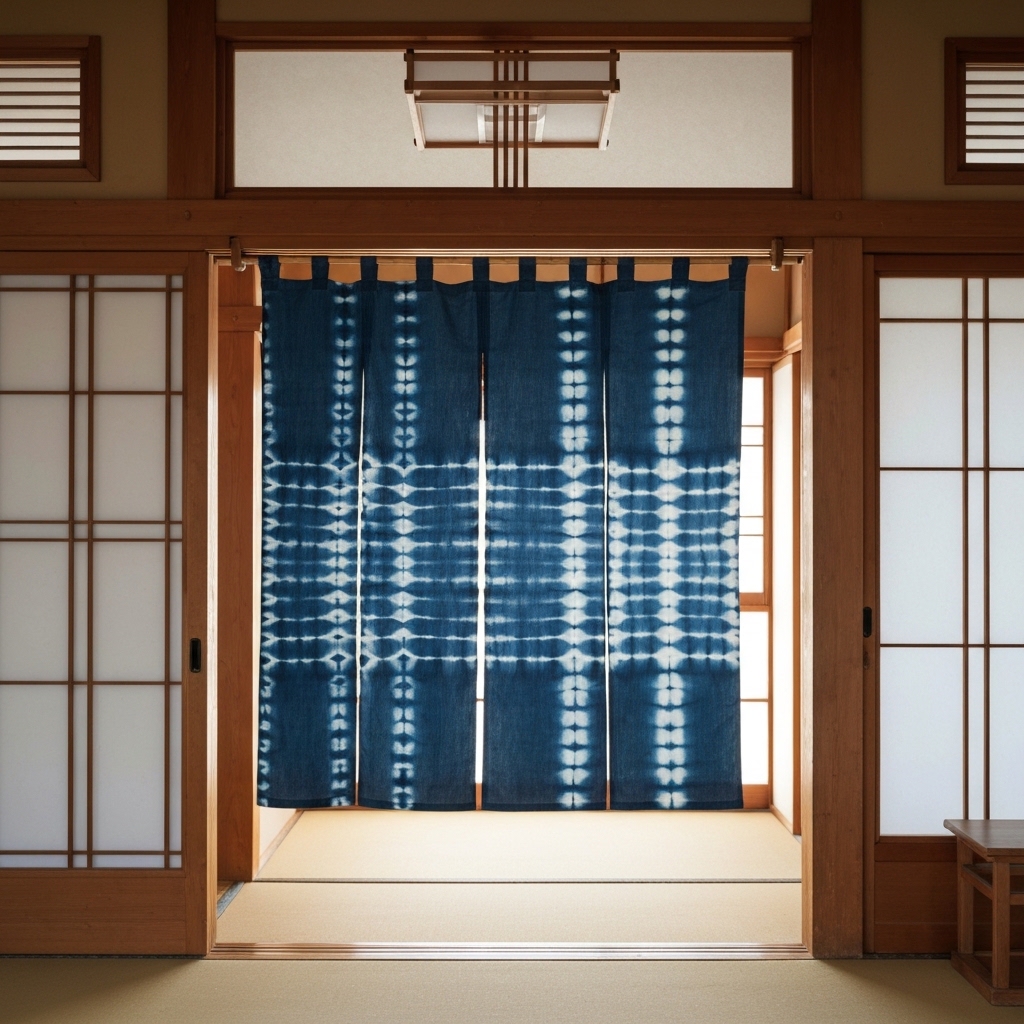
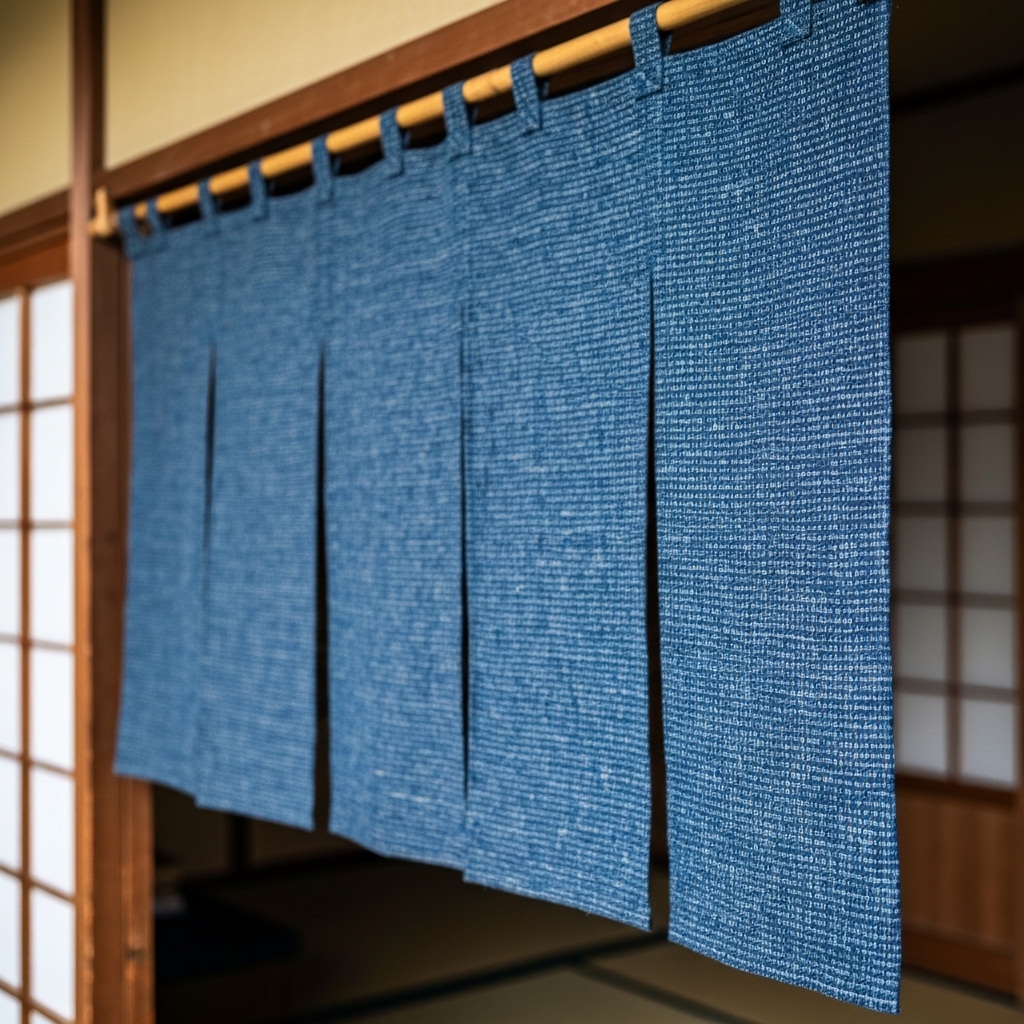
The Japanese concept of wabi-sabi (侘寂) for instance, finds beauty in imperfection and transience. The acceptance of the ephemeral nature of things, the appreciation of aged textures, and the embrace of asymmetry are all elements that resonate with the goth fascination with decay and the darker aspects of life. An old, indigo-dyed (藍染め aizome) noren, faded with age and bearing the marks of time, can embody this principle perfectly.
Furthermore, the meticulous craftsmanship and attention to detail found in traditional Japanese arts like katazome (型染め=stencil dyeing) and shibori (絞り=tie-dyeing) can be adapted to create intricate and visually arresting goth-inspired designs. The precise lines and patterns of a skillfully dyed noren, even when featuring gothic motifs, retain a sense of refined elegance.
Consider the traditional Japanese color palette. While vibrant hues are present, there is also a deep appreciation for muted tones, including subtle shades of black and grey (墨色 sumi-iro), that harmonize well with the goth aesthetic. The indigo dye used in many noren can range from light, sky blue to almost black, providing a versatile base for creating gothic designs. Imagine a deep indigo noren (approximately 85cm or 33 inches wide and 150cm or 59 inches long, a standard size) adorned with a subtle, repeating pattern of bats or crows.
Symbolic Integration: Incorporating Gothic Motifs on Noren
The noren, traditionally used to denote shop entrances or to divide interior spaces, offers a unique canvas for incorporating gothic motifs. Its rectangular shape and flowing fabric provide an ideal backdrop for displaying symbolism and patterns that align with the goth aesthetic. The saotooshi (竿通し rod pocket) allows them to hang easily from a tsuppari-bou (突っ張り棒 tension rod).
Here are some ideas for integrating gothic elements into noren designs:
-
Stylized Skulls and Skeletons: Instead of literal depictions, consider using abstract or stylized skull motifs. A repeating pattern of subtly rendered skulls, perhaps incorporating delicate linework, could add a touch of gothic darkness without being overly macabre.
-
Botanical Motifs with a Dark Twist: Roses, lilies, and other flowers are common in goth imagery. Instead of depicting them in full bloom, consider showcasing withered or decaying flowers. Imagine a noren made of asa (麻 hemp/linen) with a design of black roses, their petals starting to fall.
-
Architectural Elements: Gothic architecture is characterized by pointed arches, stained glass windows, and intricate tracery. These elements can be abstracted and incorporated into noren designs, creating a sense of grandeur and mystery.
-
Calligraphic Elements: Incorporate gothic lettering or handwritten text into the noren design. Quotes from dark literature or song lyrics can add a personal and meaningful touch.
Expert Insight: When designing a noren, think about the balance between the gothic elements and the overall aesthetic. A few carefully placed motifs can be more impactful than an overwhelming display of imagery. Consider using techniques like katazome (型染め=stencil dyeing) to achieve precise and intricate designs that reflect the artistry of traditional Japanese dyeing methods. For more placement and styling ideas, browse our noren design ideas guide.
Fabrics & Techniques: Creating an Authentic Noren Goth Feel
Drape and Weight: Selecting Fabrics for Dark Aesthetics
The difference between a simple curtain and a noren goth statement lies in the careful selection of fabric. While traditionally, noren are often crafted from momen (木綿, cotton), branching out into heavier, more luxurious materials elevates the aesthetic into the desired darkness. Consider the desired drape – the way the fabric falls – as crucial as color.
For a dramatic, heavy drape, velvet offers an unmatched richness. The pile absorbs light, creating deep shadows and a sense of opulence. However, velvet can be challenging to work with, requiring specialized needles and techniques. A velvet noren (暖簾) is undeniably bold. For a deeper look at fabric properties, consult our noren materials guide.
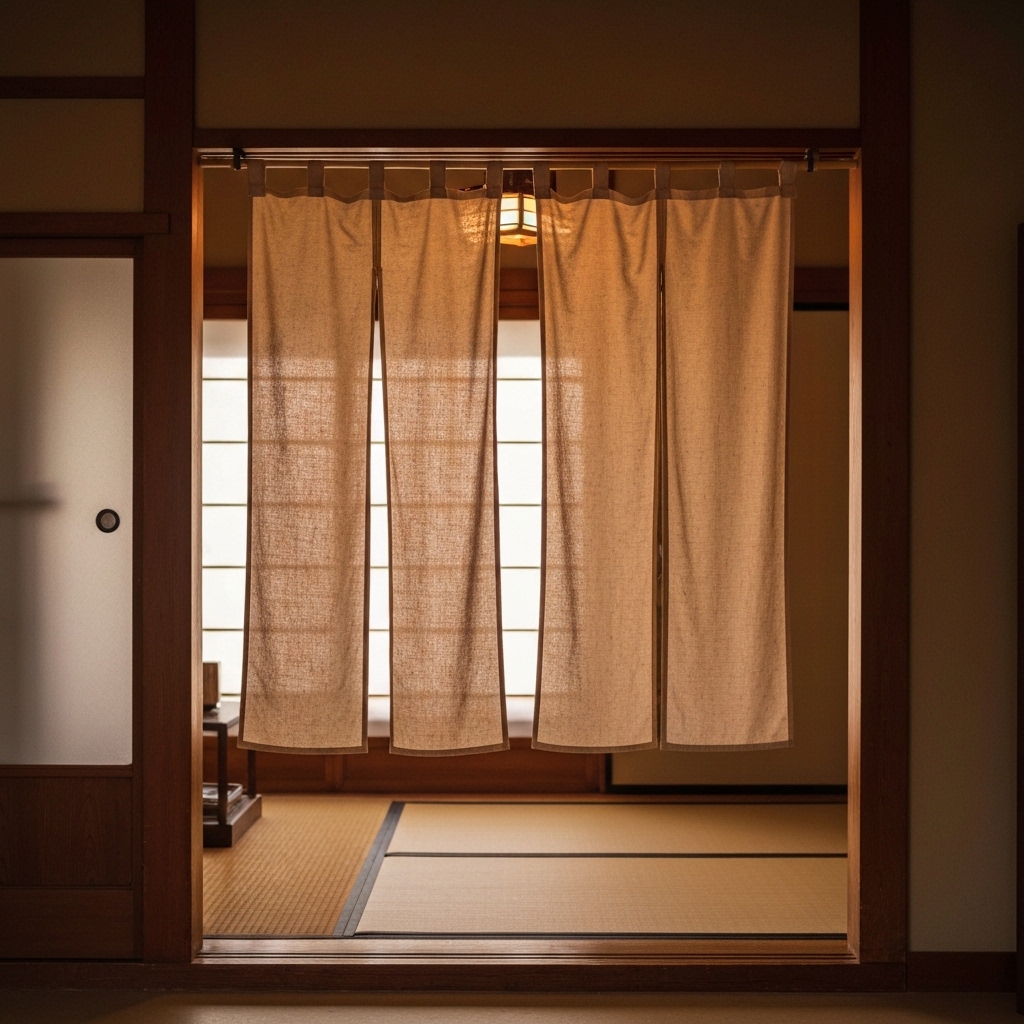
Alternatively, consider heavier-weight linen, particularly varieties with a slightly slubbed or textured surface. Unlike smooth, fine linen, a coarser weave adds visual depth and aligns with a more raw, gothic sensibility. Heavier linen will still allow some light to filter through, creating interesting shadow play if hung in a doorway or window.
Think about the omosa (重さ, weight) of the fabric. A lighter noren might flutter dramatically with a breeze, while a heavier one will hang more stoically. This choice impacts the overall atmosphere. Don't overlook durability. A noren goth piece should withstand time and repeated use.
Dyeing & Painting Techniques: Achieving Deep, Rich Colors & Distressed Effects
While a single, uniform dark color is an option, techniques that create depth and variation can dramatically enhance the noren goth aesthetic. Consider techniques beyond simple immersion dyeing.
One compelling approach is layering dyes. Start with a deep base color and then selectively apply darker shades to create shadows and highlights. Resist dyeing (蝋纈染め, rōketsuzome) techniques, such as batik, can also be adapted to create intricate, dark patterns. These involve using wax or other resists to block dye from certain areas, allowing for complex designs.
Painting directly onto the fabric with specialized textile paints offers another avenue for customization. Consider using metallic paints – such as bronze or aged silver – to highlight certain areas or create the impression of tarnished metal. This can add a subtle, almost ethereal touch to the darkness.
For a distressed, aged effect, consider techniques that subtly damage or alter the fabric's surface. This could involve lightly sanding certain areas to create a faded look or using specialized paints that crackle or peel over time. Think of the wabi-sabi (侘寂) aesthetic, finding beauty in imperfection, and apply it to your noren design. This embracing of the flawed adds depth and character.
Embellishments: Lace, Appliqués, and Hardware Choices
Beyond fabric and dye, the embellishments chosen can further define a noren goth piece. Carefully consider the weight and texture of additions.
Lace, particularly black or deep charcoal-grey, can be strategically incorporated. Rather than covering the entire noren, consider using lace as accents – perhaps along the bottom edge or as appliqué details. Look for lace with gothic-inspired motifs like spiderwebs, bats, or stylized floral patterns. Heavier, more substantial lace will feel more luxurious.
Appliqués, carefully chosen and applied, can add significant visual interest. Consider using leather or faux leather scraps to create geometric patterns or stylized representations of gothic symbols. Metal studs or grommets can also be used to add a touch of industrial edge. Experiment with different sizes and placements to find the perfect balance.
Hardware matters, too. While a simple tsuppari-bou (突っ張り棒, tension rod) can suffice, consider more elaborate options for a noren goth piece. Wrought iron rods or even repurposed antique curtain rods can add a touch of gravitas. Look for rods with dark finishes, such as matte black or oil-rubbed bronze. The small details significantly elevate the overall feeling. For installation methods and rod options, see our guide on how to hang a noren.
Expert Insight: Before committing to a dyeing or painting technique on your main fabric, always test it on a scrap piece first. This will help you avoid costly mistakes and ensure you achieve the desired effect. Document your process – what dye you used, how long you let it sit, etc. – so you can replicate the results if needed.
Design Principles: Adapting Traditional Noren for Noren Goth Style
The essence of adapting traditional 暖簾 (noren) for a Noren Goth aesthetic lies in striking a compelling balance between familiar Japanese artistry and the distinctive, often subversive, elements of Gothic design. This section explores how to achieve this harmony, focusing on layout, typography, and color.
Layout and Composition: Balancing Negative Space and Bold Imagery
Traditional noren often feature simple, centered designs or repeating patterns that utilize the entire fabric panel. Noren Goth, however, can benefit from a more considered approach to layout. Think of the canvas not just as a surface to fill, but as a stage for visual storytelling. Strategic use of negative space (余白, yohaku) becomes critical.
Consider this: Instead of a dense, all-over design, perhaps a single, arresting motif – a stylized raven skull, a decaying rose rendered in an ukiyo-e style, or a fractured kanji character – occupies a significant portion of the noren, surrounded by swathes of unadorned fabric. This creates a sense of drama and visual weight.
Think of how traditional Japanese gardens often incorporate empty gravel spaces to accentuate the placement of rocks and plants. The same principle applies here. The negative space allows the bolder elements to truly resonate. Experiment with asymmetrical compositions. For example, a design element might be heavily concentrated on the lower portion of the noren, gradually fading out towards the top. This creates a sense of movement and visual intrigue. Also consider using multiple slits that are of varying lengths for an unexpected silhouette. Standard noren slits range from 1/3 to 1/2 of the overall height of the curtain. Play with unconventional ratios to skew the standard rules.
Expert Insight: Before committing to a final design, create several paper mockups in the actual dimensions you intend for your noren (e.g., 85cm x 150cm or 33.5 inches x 59 inches). Pin these mockups to a doorway to visually assess how the design interacts with the surrounding space and how the negative space affects the overall impact.
Typography and Lettering: Gothic Fonts and Japanese Calligraphy Fusion
Incorporating text is a potent way to inject Gothic sensibilities into your noren design. However, avoid simply slapping a Western Gothic font onto a traditionally styled noren. The key is finding a harmonious fusion.
One approach involves subtly integrating elements of Gothic lettering into existing Japanese calligraphy (書道, shodō) styles. For example, the sharp angles and elaborate serifs characteristic of many Gothic fonts can be subtly woven into the brushstrokes of a kanji character. Imagine the "羽" (hane - feather) kanji, where the flicks and strokes are elongated and stylized to mimic the flourish of a blackletter font.
Another avenue to explore is the use of katakana to visually resemble a Western alphabet when viewed from afar. This is where the artist plays with creating an impression of familiarity while retaining the unique character of the Japanese writing system.
Consider the placement and size of the lettering. A small, deliberately obscure phrase rendered in a barely legible font can add an element of mystery, whereas a large, boldly rendered statement can create a more confrontational impact. Furthermore, explore the use of texture within the lettering itself. Perhaps create the appearance of cracked or eroded letters to enhance an aged aesthetic.
Color Palette Optimization: Beyond Black - Exploring Shades and Textures
While black is undeniably a cornerstone of Gothic aesthetics, limiting your Noren Goth palette solely to black risks creating a flat and uninspired design. The key is to explore the depth of darkness and utilize other colors as accents to provide visual interest and prevent monotony.
Consider the use of deep charcoal grays, shades of indigo so dark they appear almost black, or even a very deep brown, reminiscent of aged leather. These subtle variations in hue can add a layer of complexity and visual richness. Metallic accents, such as gold or silver leaf, or even the subtle sheen of a dark, iridescent thread, can provide striking contrast against darker backgrounds.
Think about the concept of kage, or shadow, in Japanese art. Instead of merely applying black, consider how you can use tonal gradations to create the illusion of depth and shadow, even in a monochromatic design.
Explore the interplay of textures. A smooth, matte black linen contrasted with a section of heavily embroidered black silk creates a subtle but powerful visual distinction. Different weave structures or surface treatments can also add textural dimension to a predominantly dark color scheme.
Finally, don't be afraid to introduce controlled pops of color. A single blood-red rose, a sliver of emerald green, or a flash of antique gold can serve as a focal point, drawing the eye and preventing the design from becoming visually stagnant. Restraint is paramount; the accent color should enhance, not overpower, the overall dark aesthetic.
Noren Goth in Interior Design: Application and Context
Room Placement: Utilizing Noren Goth for Entryways, Room Dividers, and Windows
While traditional 暖簾 (noren) serve practical purposes like shielding shop interiors or signaling business hours, noren goth installations transcend mere function. Think of them as theatrical backdrops, subtly reshaping spatial perception.
For entryways, consider the psychological impact. A heavier fabric, perhaps with a deep pile or strategically placed weights along the bottom hem, creates a tangible sense of transition – stepping from the mundane world into a more curated, gothic space. A wider noren, exceeding the standard 85cm (approximately 33.5 inches), can visually broaden a narrow hallway, while its gothic patterns establish immediate atmosphere.
As room dividers, noren goth offer an alternative to solid screens or sliding doors. They permit light and air circulation while still defining zones within a larger room. Imagine using a series of narrower noren, perhaps 30-40cm (12-16 inches) each, hung slightly overlapping to create a layered, almost ethereal effect. This is especially effective in studios or lofts where flexible boundaries are desired. Think of them as acting as a vertical partition, but with far more personality than a standard screen.
Window treatments provide another avenue for noren goth. Rather than the opaque blackout curtains one might initially associate with gothic style, consider a semi-sheer fabric adorned with dark, intricate patterns. This allows diffused light to enter, casting eerie shadows and adding depth to the interior. The key is to find the balance between privacy and creating an atmosphere.
Lighting Considerations: How Noren Goth Affects Light and Shadow in a Space
The interplay of light and shadow is fundamental to gothic aesthetics, and noren goth installations offer considerable control over this element. The density of the fabric, the complexity of the pattern, and the light source all play critical roles.
Consider the impact of backlighting. A noren hung in front of a window illuminated by the setting sun can transform a simple pattern into a dramatic silhouette. Conversely, a noren placed in front of an internal light source, like a strategically placed lamp, will project the pattern onto surrounding surfaces, creating a dynamic and immersive environment.
Darker colors and heavier fabrics, like brocade or velvet-textured materials (even faux velvet!), will obviously reduce the amount of light that passes through. This creates a moodier, more intimate atmosphere. Lighter fabrics, even in dark shades, allow more light to filter through, resulting in softer shadows.
It's worth experimenting with different types of lighting: candles (safely placed, of course!), dimmable LED strips, or even colored bulbs can dramatically alter the look and feel of your noren goth installation.
Expert Insight: Use a small, clip-on spotlight directed at your noren goth to highlight intricate details in the fabric and pattern, creating a focal point even in dimly lit spaces.
Complementary Decor: Integrating Noren Goth with Existing Gothic or Japanese Decor
The success of noren goth relies on its harmonious integration with existing elements. Avoid simply adding a gothic noren to an otherwise bland or conflicting space. The goal is a cohesive aesthetic.
If your space leans towards traditional Japanese decor, consider how noren goth can introduce a touch of darkness without overwhelming the existing serenity. Imagine a noren in dark indigo (藍色, aiiro) with subtle, gothic-inspired embroidery displayed within a room furnished with tatami mats and shoji screens. The contrast creates a compelling visual tension.
For spaces already embracing gothic themes, noren goth can add another layer of depth and complexity. Perhaps a noren incorporating traditional Japanese motifs, such as cherry blossoms or koi fish, rendered in a gothic style, or executed with sumi-e (墨絵) ink wash painting techniques can offer a unique cross-cultural perspective. This blending prevents the gothic elements from feeling generic.
Consider texture and scale. Pair a noren goth with dark wood furniture, wrought iron accents, and velvet upholstery. Introduce elements of Japanese craftsmanship, like ceramic vases or lacquerware boxes, to further blend the two aesthetics. The interplay of textures—smooth lacquer, rough wood, soft velvet, and the unique texture of your chosen noren fabric—creates a rich and engaging sensory experience.
DIY Noren Goth: A Step-by-Step Guide to Customization
So, you're ready to embrace the craft and make your own noren goth. Excellent! The beauty of noren lies in its simplicity and potential for personalization. This section dives into the specifics of creating a custom piece that speaks to your unique style.
Pattern Creation: Designing Your Own Gothic-Inspired Noren Template
Forget off-the-shelf patterns; let's get creative! A custom template is crucial for realizing your vision. Start by measuring the intended space. A standard doorway noren in Japan often hangs about 120-150cm (47-59 inches) in length and 70-90cm (28-35 inches) in width, but adapt this to fit your needs.
Sketch out your design on paper. Think about negative space. Often, a design that allows light to filter through in interesting shapes creates a more dramatic effect than a heavily detailed pattern. Consider incorporating classic Gothic motifs such as:
- Fleur-de-lis
- Crescent moons and stars
- Stylized roses or thorns
- Gothic arches
- Inscriptions in Old English script (exercise caution – make sure the phrases are accurate!)
Transfer your sketch to a sturdy material like cardboard or thick paper to create the actual template. For repeating patterns, create one module and trace it multiple times. Remember to leave seam allowances, typically 1-2 cm (approximately 0.4-0.8 inches) all around. Account for the saotooshi (竿通し, rod pocket). This is vital. If you intend to use a wider tsuppari-bou (突っ張り棒, tension rod), allow more room. 5-7 cm (2-3 inches) is a reasonable starting point for a standard rod.
Expert Insight: Before cutting your main fabric, create a mockup using inexpensive muslin. This allows you to test the scale of your design and the placement of splits without risking your chosen fabric.
Construction Methods: Sewing Techniques for Durability and Aesthetic Appeal
With your pattern and fabric chosen, the sewing begins. A robust stitch is key for a noren that will last. A simple straight stitch, reinforced with backstitching at the beginning and end, is suitable for most seams. For heavier fabrics or intricate designs, consider a zig-zag stitch for added durability.
If you're incorporating appliques, secure them with either hand-stitching or a machine applique stitch. Blanket stitch can also be used. Ensure the thread color complements or contrasts your design intentionally. Don't just grab whatever thread you have.
Pay close attention to the splits, the defining feature of noren. Reinforce the top of each split with a small triangular stitch or a bar tack to prevent fraying. The depth of the splits is a matter of personal preference, but traditionally they extend about two-thirds of the way up the noren’s length.
For a truly authentic touch, consider hand-sewing certain elements, particularly hems and seam finishes. While machine sewing is faster, hand-sewing lends a unique character and allows for greater precision, especially with delicate fabrics. In Japan, perfectly imperfect hand stitching has a recognized aesthetic value.
Finishing Touches: Adding Personal Touches and Unique Embellishments
This is where your noren goth truly becomes yours. Think beyond the basic construction. Consider incorporating:
- Embroidery: Add subtle details or bold statements with embroidery. Cross-stitch, satin stitch, or free-motion embroidery can all create stunning effects. Metallic threads can catch the light and create a sense of depth.
- Beading: Carefully placed beads can add a touch of shimmer and texture. Glass beads, faceted crystals, or even small metal charms can be sewn onto the fabric for a unique effect.
- Lace or Trim: Adding lace along the edges or as an overlay can soften the harsh lines of the Gothic aesthetic. Black lace on a dark background can create a subtle, almost hidden detail.
- Patches: Vintage band patches or custom-designed patches can personalize your noren. Secure them with stitching or fabric glue, depending on the material.
- Fringe: Adding fringe to the bottom can add movement and a sense of drama. Silk or rayon fringe in black or deep jewel tones can complement the Gothic aesthetic.
Experiment with different textures and layers to create a noren that is both visually striking and tactilely pleasing. Most importantly, don't be afraid to break the rules and create something truly original. The goal is to express your personal style and create a space that reflects your unique sensibility. If you want to bring your vision to life from scratch, our custom noren guide walks through the full design process.
Beyond the Cloth: The Cultural Significance of Noren Goth
Goth as a Global Phenomenon: Finding Common Ground with Japanese Culture
Goth, born in the United Kingdom, found fertile ground globally because it tapped into universal human experiences: a fascination with mortality, a yearning for individuality, and a desire to challenge mainstream norms. While seemingly disparate, these threads resonate strongly within aspects of Japanese culture, often expressed through different avenues. For example, the concept of mono no aware (物の哀れ), the pathos of things, a sensitivity to the ephemeral nature of beauty and life, finds an echo in the melancholic heart of Goth subculture. Similarly, the Japanese emphasis on aesthetics, even in the face of decay (wabi-sabi 侘寂), offers a unique lens through which to interpret the Goth appreciation for the macabre.
The visual language of Goth – think stark contrasts and dramatic silhouettes – also connects with aspects of Japanese art and design. Calligraphy, with its dynamic brushstrokes and stark black ink on white paper, mirrors the dramatic use of color and line often seen in Goth aesthetics. Moreover, the Japanese emphasis on finding beauty in imperfection, rather than striving for flawless symmetry, provides leeway for creative experimentation in the 'noren goth' realm. What might be considered a flaw in mass-produced textiles, like slight irregularities in weave or printing, becomes a unique feature, highlighting the handcrafted nature of the piece. The Japanese appreciation for kintsugi (金継ぎ), the art of repairing broken pottery with gold, reinforces this acceptance and even celebration of imperfection.
Personal Expression: Using Noren Goth to Define Identity and Space
More than mere decoration, noren goth becomes a statement of personal identity. The act of choosing (or creating) a specific noren for a doorway or window is an assertion of one's inner world. It functions as a visual shorthand, communicating values and preferences to visitors, and perhaps more importantly, to the inhabitant themselves. In a society that sometimes prioritizes conformity, expressing individuality through home decor can be a powerful act.
Unlike mass-produced alternatives, crafting one's own noren goth ensures true uniqueness. The dimensions alone can be customized to fit unconventional spaces - perhaps a narrow hallway entrance at 70 cm (27.5 inches) or a wide living room divider at 180 cm (71 inches). The selection of design motifs, choice of embellishments, and the overall aesthetic creates a personalized portal into the individual's world. It goes beyond simple interior decoration and becomes a physical manifestation of self-expression. Imagine using a noren to subtly divide a shared living space in a traditional Japanese house, offering privacy while also reflecting unique aesthetic tastes. The possibilities extend to using noren in non-traditional ways – as wall hangings, room dividers, or even repurposed as unique clothing accessories.
Inspiration from Traditional Arts: Adapting Ideas from Kimono and Kabuki Costumes
Traditional Japanese arts offer a rich source of inspiration for pushing the boundaries of noren goth. Kimono, with their elaborate patterns, layered construction, and symbolic motifs, provide countless ideas for texture and design. For example, the technique of shibori (絞り染め), a form of tie-dyeing used extensively in kimono making, could be adapted to create intricate and subtly textured noren. The layers of fabric in a kimono can inspire similar layered construction within the noren design.
Kabuki costumes, known for their dramatic colors, bold patterns, and exaggerated silhouettes, offer another avenue for creative exploration. The use of striking geometric patterns and stylized representations of nature, commonly found in Kabuki costumes, could be incorporated into noren designs. Consider the kumadori (隈取) makeup of Kabuki actors – the bold lines and colors represent specific character traits. This visual language could be translated into abstracted patterns on a noren, creating a striking and theatrical effect. If mythical creatures appeal to you, a dragon noren can also bring dramatic flair to a gothic-inspired space.
Expert Insight: Don't be afraid to mix and match elements from different Japanese art forms. A noren featuring a shibori-inspired background combined with a kumadori-esque geometric design can create a truly unique and captivating piece.