Noren Apartment Rental: Elevate Your Space with Japanese Curtains
Styling Your Noren Apartment Rental: Aesthetics and Practicality
Noren as a Space Divider: Creating Zones in Open Floor Plans
Many modern apartment rentals, even in Japan, feature open floor plans. While this offers a sense of spaciousness, it can also lack definition, making it difficult to delineate living areas. A noren (暖簾), traditionally used to indicate a shop's entrance or to partition rooms, offers a beautiful and practical solution. Instead of bulky furniture or permanent walls, a strategically placed noren can create distinct zones within your apartment.
Consider using a noren to separate your kitchen area from your living room. This is especially effective in smaller apartments where the kitchen might be directly visible from the entrance. A noren here subtly obscures the cooking space, creating a more relaxing and inviting atmosphere in your living area. The fabric allows light to pass through, preventing the space from feeling closed in.
Alternatively, a noren can be used to create a more private workspace. If you're working from home and lack a dedicated office, hanging a noren can help mentally separate your work zone from your living space. When you're "at work," the noren is down, signaling focus; when you're finished, you can tie it back, visually and mentally transitioning to relaxation.
The standard noren width is often around 85 cm (approximately 33.5 inches), making it suitable for standard noren door curtain applications. However, you can find wider or narrower options depending on the space you want to divide. The length is also a crucial factor. A longer noren provides more visual separation, while a shorter one lets more light through and maintains a sense of connection between the spaces. Pay attention to the split (割れ, ware) at the bottom of the noren. A deep split allows for easier passage, while a shorter split offers more visual separation.
Choosing the Right Fabric: Balancing Light, Privacy, and Durability
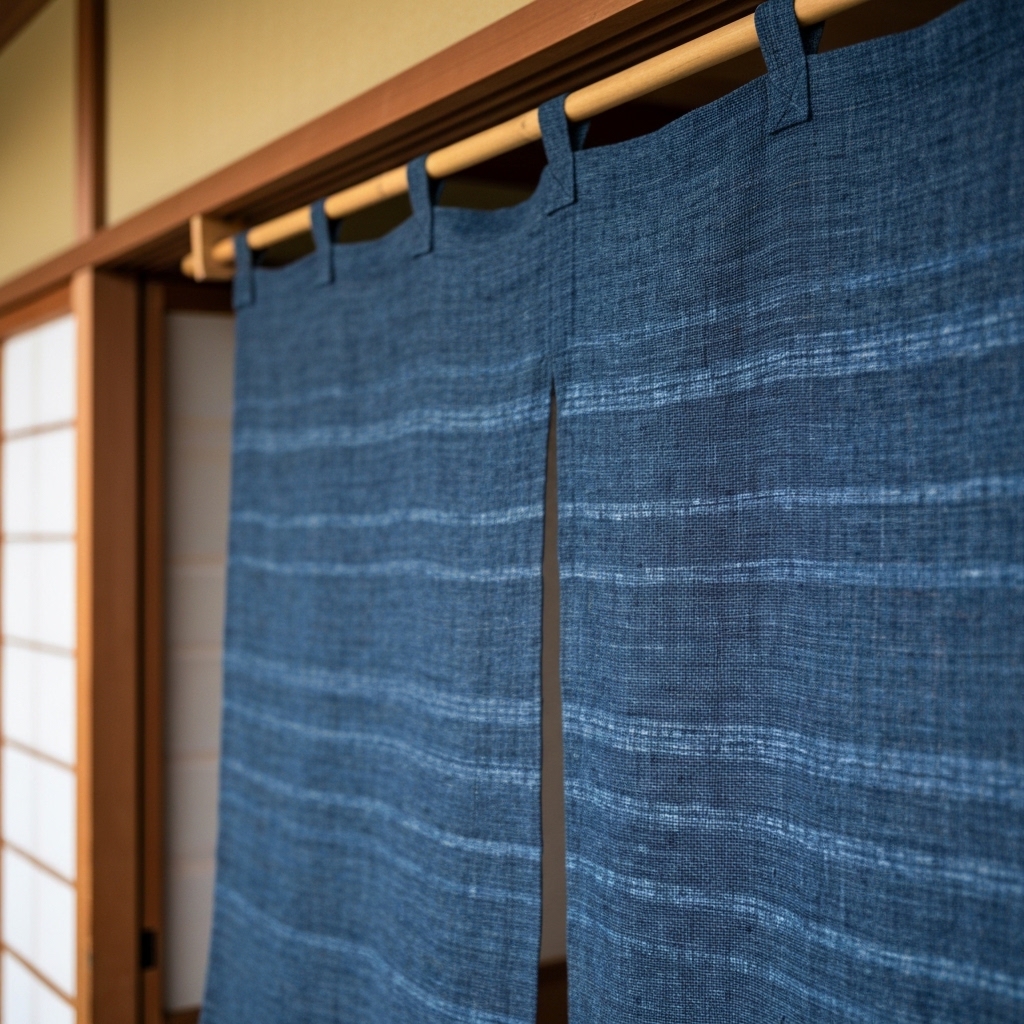
The fabric you choose for your noren profoundly impacts its aesthetic and practical function. For a light and airy feel, consider linen or hemp (麻, asa). These natural fibers allow ample light to pass through, creating a bright and welcoming atmosphere. They are also breathable and durable, perfect for everyday use.
If you desire more privacy, opt for thicker cotton (木綿, momen). A tightly woven cotton noren will obscure the view more effectively, providing a greater sense of seclusion. Keep in mind that thicker fabrics will also block more light.
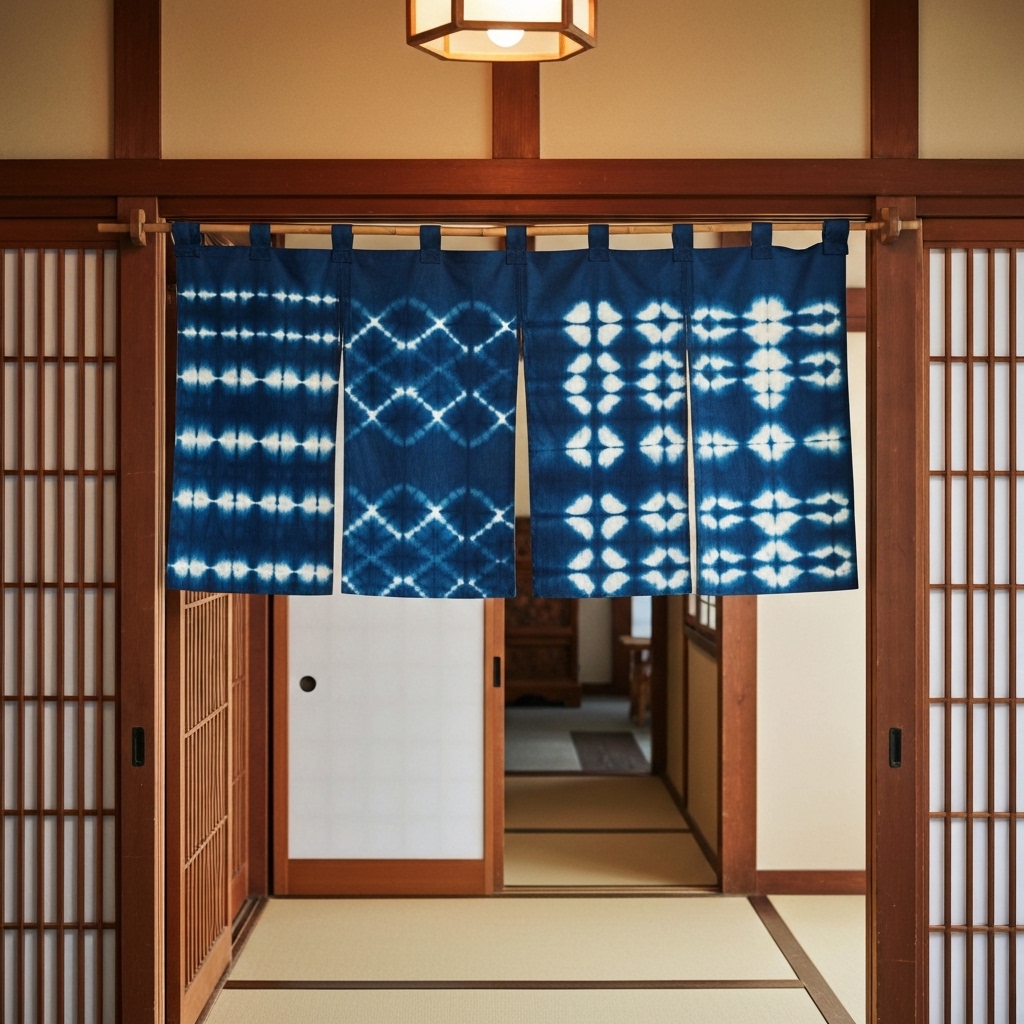
Traditional indigo-dyed noren (藍染め, aizome) are a classic choice, adding a touch of Japanese heritage to your space. However, consider the color scheme of your apartment when choosing a dye. A bright or patterned noren can be a focal point, while a more subdued color will blend seamlessly with your existing decor.
Silk (絹, kinu) noren, while luxurious and beautiful, are generally less practical for high-traffic areas due to their delicate nature. They are better suited for purely decorative purposes or in less-used spaces like a bedroom or study.
For rental apartments, durability is key. Choose a fabric that can withstand regular washing and ironing, as needed — see our noren care and washing guide for fabric-specific tips. Also, consider the ease of installation. Most noren are designed to be hung using a tension rod (突っ張り棒, tsuppari-bou) through the rod pocket (竿通し, saotooshi) at the top, which is easy to install and remove without damaging walls. For step-by-step instructions, check our guide on how to hang a noren curtain.
Expert Insight: Before committing to a specific fabric, order a small sample. Hold it up to a window in your apartment at different times of the day to see how it filters the light and affects the overall ambiance.
Beyond the Doorway: Alternative Noren Placement for Visual Interest
While noren are traditionally associated with doorways, their versatility extends far beyond this conventional placement. Get creative and explore alternative ways to incorporate noren into your apartment decor for added visual interest and functionality.
Consider using a shorter noren as a window treatment. Instead of blinds or curtains, hang a noren across a window to filter light and add a unique decorative element. This works particularly well in kitchens or bathrooms where complete privacy isn't a primary concern.
Another option is to use a noren as a wall hanging. A beautifully patterned or dyed noren can serve as a striking piece of art, adding texture and color to a blank wall. This is an excellent way to personalize your space without making any permanent changes. For example, a katazome (型染め) noren with a traditional pattern can be a conversation starter and a beautiful accent piece.
You can also use a noren to conceal storage areas. If you have open shelving or a closet without doors, a noren can effectively hide clutter and create a more organized appearance. Choose a noren that complements the overall aesthetic of the room, turning a functional element into a decorative feature. Ensure the noren is wide enough to fully conceal the area behind it. Hanging multiple noren side-by-side can create a wider screen or partition. Remember to use a secure hanging method, especially if the noren is covering a heavier load.
Noren Apartment Rental: Making it Work with Temporary Spaces
Addressing Rental Restrictions: Damage-Free Hanging Solutions
Rental agreements often restrict alterations like drilling holes, a common hurdle for traditional noren installations. Fortunately, adaptable solutions allow you to enjoy the charm of 暖簾 (noren) without jeopardizing your deposit. The key is understanding the load-bearing capacity of different methods and matching it to your noren’s weight.
Consider 突っ張り棒 (tsuppari-bou), tension rods. These are readily available in various lengths and diameters. Measure the width of the doorway where you intend to hang your noren — our noren size guide can help with getting the right dimensions. Choose a rod slightly longer, allowing it to compress securely against the frame. For lighter 綿 (momen) or 麻 (asa) noren, a standard rod (approximately 2.5cm/1 inch in diameter) should suffice. For heavier pieces, explore thicker, reinforced rods.
Command Strips offer another avenue, particularly for lighter-weight noren. These adhesive strips come in various sizes and weight ratings. Select strips designed for smooth, painted surfaces. Clean the doorframe thoroughly with isopropyl alcohol before application. Attach the strips according to package instructions and allow the adhesive to cure fully before hanging your noren. Double-check the weight limit listed on the Command Strip packaging, and err on the side of caution, using more strips than you think necessary to distribute the weight evenly. Consider clear plastic clips designed to hold lightweight curtains. These clips can adhere to the doorframe with Command Strips, then the noren can be clipped directly to the plastic, providing a less visible solution.
Another option is to use existing hardware. Can you loop the noren over an existing curtain rod? Or can you use adjustable picture hanging hooks that attach to the doorframe without nails? Think creatively about what's already in place.
Expert Insight: Take a photo of the doorway area both before and after installing your noren. This provides a clear record of the original condition for your landlord, preventing any disputes upon move-out.
Packability and Portability: Noren as a Travel-Friendly Decor Element
One of the great advantages of 暖簾 (noren) is their ease of transport. Unlike bulky furniture or fragile decorations, they fold compactly, making them ideal for renters who move frequently or enjoy changing their living spaces.
Consider the fabric when packing. Thin linen or cotton noren are the easiest to fold and store. Silk, while beautiful, requires more careful handling to avoid wrinkles. Roll, rather than fold, delicate fabrics to minimize creases. Secure rolled noren with elastic bands or ribbon to prevent unfurling during transport.
When moving, designate a specific container for your textiles. A garment bag or a large, flat storage box works well. This protects your noren from dust, moisture, and potential damage during the move. Include a small sachet of desiccant to absorb any moisture that might accumulate during transit.
If you're traveling abroad, a noren can add a touch of home to even the most impersonal hotel room. Pack it in your suitcase alongside your clothes, using it as a soft barrier between different items. When you arrive, it can instantly transform your space, adding color and personality.
Adaptability: Repurposing Your Noren in Different Apartments
Noren are incredibly versatile, adapting to various spaces and purposes beyond a simple doorway divider. Their rectangular shape lends itself to multiple creative applications.
If your new apartment lacks closet doors, a noren can serve as a stylish and affordable alternative. Simply hang it across the closet opening using a tension rod, concealing clutter and adding a touch of visual interest.
Consider using a smaller noren as a wall hanging. This is particularly effective for covering unsightly electrical panels or damaged paint. Secure it to the wall with adhesive hooks or by framing it like a piece of artwork.
Noren can also function as table runners or makeshift headboards. Drape a long noren across a dining table for a unique tablecloth, or attach it to the wall behind your bed to create a soft and textured headboard.
In apartments with open floor plans, a strategically placed noren can subtly define different zones, creating a sense of separation without completely blocking the flow of light and air. Use it to visually divide a living room from a dining area, or to create a cozy reading nook in a corner of a larger room. The 竿通し (saotooshi) on your noren can also be used to thread string, creating a banner or unique window treatment.
Cultural Considerations for Your Noren
Understanding Noren Symbolism: Motifs, Colors, and Their Meanings
Beyond their utility, noren hold layers of cultural significance deeply rooted in Japanese history and tradition. The imagery adorning a noren is rarely arbitrary; often, it's a carefully chosen visual language communicating subtle messages about the establishment or the home it graces. When choosing a noren for your apartment, understanding these symbols can add a profound dimension to your decor and demonstrate respect for their heritage.
Consider, for instance, the enduring popularity of the circle, or en (円). A simple circle can represent enlightenment in Zen Buddhism, but more commonly, it symbolizes harmony (和, wa) and good fortune. You might see variations like the seven treasures (shippo, 七宝), an overlapping circle pattern signifying endless prosperity and familial connections.
Depictions of nature are also prevalent. Cranes (鶴, tsuru), often paired with pine trees (松, matsu), embody longevity and marital happiness. Bamboo (竹, take) represents resilience and flexibility, while plum blossoms (梅, ume) herald spring and perseverance. Koi fish (鯉, koi), especially ascending waterfalls, exemplify determination and success. Select these motifs thoughtfully, considering the sentiments they evoke.
The placement of motifs is also important. A single, bold crest (家紋, kamon) centered on a noren carries a vastly different weight than a repeating pattern of smaller, more whimsical designs. Large, singular motifs generally convey formality, while smaller, repeating elements feel more casual.
Beyond direct imagery, the negative space within a noren's design is equally meaningful. Empty areas allow the eye to rest, contributing to the overall balance and harmony. Overly busy designs can feel cluttered and disruptive, while a minimalist approach underscores elegance and restraint.
Respecting Traditional Usage: Avoiding Cultural Appropriation
Integrating a noren into your apartment requires sensitivity and a commitment to avoiding cultural appropriation. While appreciation is welcome, it's crucial to understand the historical context and respect the intended function of this cultural artifact. A key principle is to prioritize authentic designs and support artisans who maintain traditional techniques.
One common mistake is misinterpreting the original purpose of a noren. Traditionally, noren served as shop signs and privacy screens, distinguishing establishments and subtly conveying their character. Consider how a noren reading "sake" (酒) might appear in a non-traditional setting. While visually appealing, using it solely as decoration without any connection to its intended function can feel superficial.
Furthermore, be mindful of imagery that holds specific religious or cultural significance. Certain symbols are exclusively associated with temples (寺, tera) or shrines (神社, jinja), and displaying them inappropriately could be viewed as disrespectful. If uncertain, err on the side of caution and choose designs with more universal appeal.
Expert Insight: When in doubt, research the origin and meaning of a specific noren design. If you discover it holds deep cultural or religious significance, consider choosing an alternative motif that aligns with your aesthetic preferences without risking cultural insensitivity. Consult Japanese cultural resources to ensure proper understanding.
Support traditional crafts by purchasing from reputable sources that prioritize ethical production. Choose noren made by artisans who use authentic techniques and materials. Avoid mass-produced items that mimic traditional designs without respecting their heritage.
Blending Japanese Aesthetics with Modern Apartment Decor
Integrating a noren seamlessly into your modern apartment requires a mindful approach to color, texture, and overall design harmony. While embracing Japanese aesthetics, consider how to complement your existing decor rather than imposing a jarring contrast.
Think of the noren as a piece of art. If your apartment features a minimalist, monochromatic color scheme, a noren with subtle textures and natural hues (beige, light gray, off-white) could add a touch of warmth and visual interest. Conversely, if your apartment is already filled with vibrant colors and patterns, a simpler noren with a single, elegant motif might provide a calming focal point.
Consider the wabi-sabi philosophy: embracing imperfection and finding beauty in simplicity. A slightly uneven weave or a hand-stitched hemline adds character and authenticity. Seek out noren that showcase the unique qualities of natural materials, such as hemp (麻, asa) or cotton (木綿, momen).
Pay attention to the scale of the noren in relation to its surroundings. In smaller apartments, avoid oversized noren that overwhelm the space. Opt for shorter lengths and narrower widths that create a sense of balance and proportion. You might also consider the height of your doorways and adjust the noren's length accordingly. A noren that grazes the floor can feel cluttered, while one that is too short might appear incomplete.
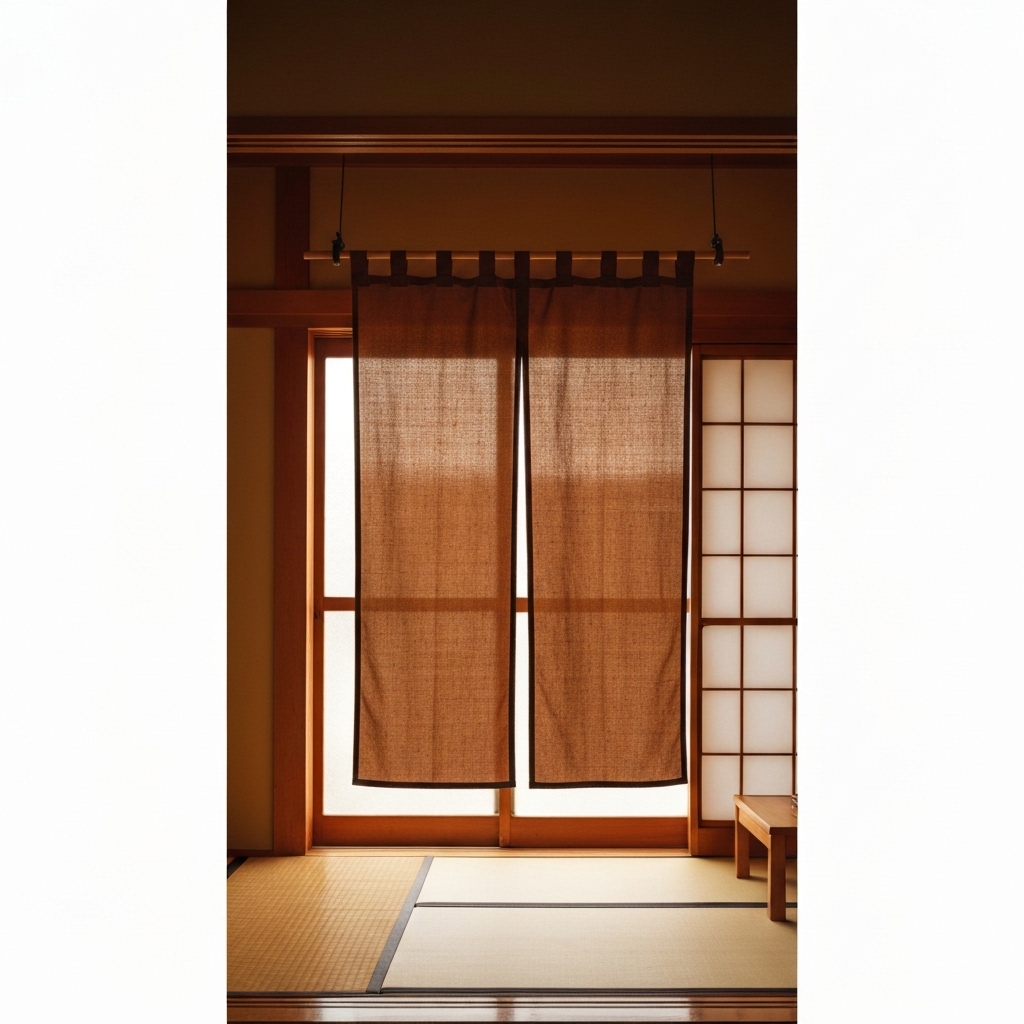
Lighting also plays a vital role. A noren positioned near a window will filter sunlight, creating a soft, diffused glow. The same noren might look drastically different under artificial light. Experiment with different lighting schemes to find the optimal balance that enhances the noren's beauty and complements your overall decor.
DIY Noren for your Apartment Rental: A Creative Project
Simple Noren Projects: From Fabric Selection to Basic Sewing Techniques
Creating your own 暖簾 (noren) offers a satisfying way to personalize your rental space. While complex designs require advanced skills, even a beginner can craft a beautiful and functional piece. A crucial first step is choosing the right fabric – a moderately weighted 木綿 (momen, cotton) is forgiving for beginners, holds its shape well, and is readily available. Avoid overly stretchy fabrics.
For a straightforward noren, consider a single panel design. Decide on the finished size you want. For a doorway 85cm wide and 150cm tall (approximately 33.5 inches wide x 59 inches tall), purchase a piece of fabric slightly larger to allow for seam allowances (e.g., 95cm wide x 160cm tall).
Basic sewing involves creating clean hems. Fold the top edge over 1.5 cm (0.6 inches), iron it flat, then fold it over again another 2.5 cm (1 inch) to create a reinforced hem for the 竿通し (saotooshi, rod pocket). Stitch this hem securely. Repeat this process for the bottom and side edges, but use a smaller hem (around 1 cm/0.4 inches). Consistent seam allowances will make your noren look professionally made. A simple straight stitch is all you need; decorative stitches can come later!
If you are nervous about sewing a straight line, use painter’s tape as a guide along the edge of your sewing machine. This provides a visual marker to follow. Alternatively, you can draw a faint line on the fabric using a tailor’s chalk.
Upcycling and Repurposing: Turning Old Fabrics into Unique Noren
Don't immediately buy new fabric; look around your home first. Old kimono, 麻 (asa, linen) tablecloths, or even sturdy curtains can be repurposed into striking 暖簾 (noren). The beauty of upcycling lies in the story already woven into the material. A worn area on an old kimono could become a focal point of the design, showcasing its history instead of being hidden.
Consider patchwork techniques to combine different fabrics. Squares, rectangles, or even freeform shapes can be sewn together to create a visually interesting noren. Think about the color palette and texture of the fabrics you choose – contrasting elements can add depth and personality.
For example, denim scraps could be combined with vintage floral prints for an eclectic style. Or, use different shades of blue linen to create an ombre effect. When using multiple types of fabric, pre-wash all materials before cutting and sewing to avoid uneven shrinkage later.
Expert Insight: Before cutting into a precious vintage textile, create a paper mockup of your noren design. This helps you visualize the final product and determine the best way to utilize the existing fabric.
Adding Personal Touches: Stencils, Embroidery, and Other Customizations
Beyond basic construction, personalizing your 暖簾 (noren) elevates it from a functional item to a work of art. Simple stencils can add geometric patterns or floral motifs. Purchase pre-made stencils or create your own using cardboard or plastic sheets. Fabric paint is ideal for stenciling, but experiment with different application techniques – a sponge brush creates a softer look than a paintbrush.
Embroidery offers another avenue for customization. Simple running stitches can outline shapes or create decorative borders. More advanced techniques, like satin stitch or French knots, can add texture and dimension. Consider using Japanese embroidery floss (刺繍糸, shishuu ito) for a traditional touch.
Another option is to add small details like buttons, beads, or tassels. These can be sewn onto the bottom edge of the noren or used to embellish specific areas. Think about incorporating natural elements like dried flowers or leaves (pressed flat and secured with fabric glue) for a rustic feel. Remember that less is often more – avoid overcrowding the design and maintain a sense of balance.
Another easy addition is fabric applique. Cut out shapes from a contrasting fabric and iron them onto the main fabric using fusible interfacing. Then, secure the edges with a simple zigzag stitch. This is a great way to add graphic elements to your noren without requiring extensive sewing skills.
Noren Maintenance and Care in a Rental Environment
Cleaning Techniques: Washing, Spot Cleaning, and Stain Removal
Maintaining your 暖簾 (noren) in a rental doesn't require advanced skills, but understanding the nuances of fabric care is key. While industrial cleaning isn't usually necessary, gentle methods preserve their beauty and prolong their life.
Washing, even hand washing, can alter the texture of some natural fibers. For materials like silk 絹, professional cleaning is always recommended. For more robust materials such as hemp 麻 or cotton 木綿, a lukewarm water bath with a very mild detergent formulated for delicates is best. Agitate gently, avoiding harsh scrubbing. Rinse thoroughly until no soap remains, then press out excess water. Never twist or wring. Drip-drying in a shaded area is preferred to prevent color fading.
Spot cleaning addresses localized stains without subjecting the entire noren to washing. For recent spills, immediately blot the area with a clean, absorbent cloth. Work from the outside of the stain inwards to prevent it from spreading. For stubborn spots, create a paste of baking soda and water and apply it to the stain. Let it sit for a short period (no more than 30 minutes), then gently blot away with a damp cloth. Always test any cleaning solution on an inconspicuous area of the noren first to ensure it doesn't damage the fabric. Avoid using harsh chemicals or bleach, as these can permanently discolor or weaken the fibers.
Specific stain types require specific approaches. For oil-based stains, a small amount of cornstarch can be applied to absorb the grease before blotting. For ink stains, a cotton swab dipped in rubbing alcohol, used with extreme caution, may lift the stain. With all stain removal, patience and gentleness are crucial.
Proper Storage: Preventing Wrinkling and Damage During Moves
Moving is a prime opportunity for noren to suffer damage if not properly handled. Rather than haphazardly folding them, invest in acid-free tissue paper. Lay the noren flat and carefully sandwich it between sheets of tissue paper, paying particular attention to areas with embroidery or delicate patterns. Roll the noren loosely around a cardboard tube (a repurposed wrapping paper tube works well). Secure the roll with twine or cotton ribbon, avoiding elastic bands which can leave indentations.
Store the rolled noren in a breathable cotton bag to protect it from dust and moisture. Avoid storing it in plastic bags, as they can trap humidity and lead to mold or mildew. Keep the bagged noren in a cool, dry place away from direct sunlight. During a move, transport the rolled noren in a sturdy box, ensuring it's well-protected from crushing or bending.
If you must fold the noren, avoid creating sharp creases. Instead, fold it loosely along natural lines and pad the folds with tissue paper. Place the folded noren in a garment bag or large zip-lock bag with the air pressed out before placing it in a moving box.
Expert Insight: To minimize wrinkles, hang your noren as soon as possible after unpacking. Even a temporary rod (突っ張り棒, tsuppari-bou) will help gravity do its work. A light steaming can also release wrinkles, but always test a hidden area first, and avoid direct contact between the iron and the fabric.
Addressing Common Issues: Fading, Shrinking, and Repairs
Even with the best care, noren can be susceptible to fading, shrinking, and minor damage. Understanding how to address these issues can extend their lifespan.
Fading, particularly with 藍染め (aizome) indigo-dyed noren, is a natural process, but accelerated fading is avoidable. Minimize exposure to direct sunlight, opting for shaded doorways or using UV-filtering window film. When washing, use pH-neutral detergents designed for delicate fabrics. Avoid harsh chemicals, which can strip the dye.
Shrinking is primarily a concern with natural fibers like cotton 綿 or linen 麻. Pre-shrinking fabrics before sewing a DIY noren can reduce this risk, but it doesn’t eliminate it. Avoid hot water washing and high-heat drying. If shrinkage does occur, gently stretching the noren while it's still damp can help restore some of its original shape.
Minor tears and fraying can often be repaired with hand stitching. Use a needle and thread that matches the color and weight of the original fabric. For larger tears, consider using fusible interfacing to reinforce the damaged area before stitching. If the damage is extensive or the noren is particularly valuable, consult a professional textile conservator or repair shop specializing in Japanese textiles.
Maximizing Your Noren Apartment Rental Experience
Combining Noren with Other Japanese-Inspired Decor
Creating a cohesive Japanese-inspired space goes beyond simply hanging a 暖簾 (noren) at your apartment rental. Think of it as layering textures and elements to evoke a specific feeling. For instance, a simple tatami mat in a reading nook instantly grounds the space and adds a natural, earthy aroma. Shoji screens, even faux ones, used as room dividers or decorative wall panels, can complement the noren beautifully, particularly if the noren features a geometric design inspired by 組子 (kumiko) latticework.
Consider incorporating traditional Japanese crafts that align with your noren's design. If your noren has a bold indigo 藍染め (aizome) pattern, pairing it with simple white ceramic vases displaying seasonal flowers, or perhaps a single sprig of pine, can create a striking visual contrast. Look for items that are relatively lightweight and easy to move – essential for rental living. A small, portable kotatsu table with a futon can add a cozy, communal feel to a living room.
Another subtle way to enhance the ambiance is by incorporating Japanese textiles. A simple 綿 (men) or 木綿 (momen) furoshiki cloth draped over a piece of furniture, or used as a small table runner, can introduce subtle patterns and colors that echo those found in your noren. Similarly, consider replacing standard throw pillows with zabuton cushions in complementary colors. Remember that less is often more; a few carefully selected items can have a greater impact than cluttering the space with too many decorations.
Creating a Relaxing Atmosphere: Noren and Sensory Design (Lighting, Scents)
A noren can play a crucial role in shaping the sensory experience of your apartment. Its texture and color affect how light filters through a space, which in turn influences mood. Avoid harsh overhead lighting; instead, opt for softer, indirect sources like paper lanterns or table lamps with warm-toned bulbs. In Japanese homes, light is often diffused and indirect, creating a calming atmosphere. Positioning a lamp behind your noren can back-light it, highlighting its design and creating a soft glow.
Scent is another powerful tool for creating a relaxing atmosphere. Incense, particularly natural scents like sandalwood or hinoki cypress, is often used in traditional Japanese settings. However, be mindful of your building's policies on burning incense. A safer and equally effective alternative is using essential oil diffusers with scents like yuzu or green tea. Be subtle; the goal is to create a gentle, unobtrusive fragrance that enhances the overall ambiance.
Expert Insight: Consider the soundscape. Play ambient sounds like rain falling on bamboo leaves, traditional koto music, or even recordings of temple bells at a low volume. These subtle auditory cues can reinforce the feeling of tranquility.
The texture of the noren itself can also contribute to the sensory experience. A 麻 (asa=hemp/linen) noren, for example, has a rougher, more natural feel than a smooth polyester one, and this difference can subconsciously affect your perception of the space.
Showcasing Your Noren: Photography Tips for Sharing Your Style
Sharing your noren-enhanced apartment rental online is a great way to inspire others and document your creative journey. Good photography is key.
- Natural Light is Your Friend: Whenever possible, photograph your noren and surrounding decor in natural light. Avoid direct sunlight, which can create harsh shadows. Cloudy days or shooting during the "golden hour" (shortly after sunrise or before sunset) will produce the best results.
- Composition Matters: Experiment with different angles and perspectives. Try shooting from a low angle to emphasize the height of the noren, or from a slightly offset angle to create a more dynamic composition. Pay attention to the background; remove any clutter or distracting elements that might detract from the noren.
- Focus on Details: Capture close-up shots of the noren's fabric, pattern, and texture. This will help viewers appreciate the craftsmanship and unique characteristics of your piece.
- Highlight the Context: Show how the noren integrates with the rest of your decor. Include elements that tell a story about your personal style and the overall atmosphere of your space.
- Edit Sparingly: Use photo editing apps to adjust the brightness, contrast, and color balance, but avoid over-editing. The goal is to enhance the natural beauty of your noren and decor, not to create an artificial or unrealistic image. A good photograph shows the authentic texture of 木綿 (momen=cotton) or the subtle drape of 絹 (kinu=silk), not overly enhanced, digital distortion.
- Consider a Story: Think about the story you want to convey with your photo. Are you showcasing a relaxing reading nook, a stylish entryway, or a cozy bedroom? Tailor your composition and styling to reflect that story.