Noren Door Curtains: Authentic Japanese Style for Your Home
Unveiling the Noren Door Curtain: History, Symbolism, and Cultural Significance
Origins and Evolution of the Noren
The noren (暖簾), that ubiquitous fabric divider seen adorning doorways throughout Japan, is far more than just a decorative piece. It's a silent storyteller, whispering tales of history, tradition, and the very fabric of Japanese society. Its origins, shrouded in the mists of time, can be traced back to the Edo period (1603-1868). While the exact genesis remains debated, the most widely accepted theory suggests that noren evolved from simple cloths used to shield goods from dust and sunlight outside merchant stalls. Imagine bustling markets, shaded by these early rudimentary curtains, gradually becoming integral parts of the shop's identity.
These initial noren were primarily functional. Crafted from sturdy, readily available materials like asa (麻, hemp/linen) or momen (木綿, cotton), they were dyed with simple, natural pigments. Over time, they evolved into more elaborate forms. Merchants began emblazoning their shop names and family crests (kamon, 家紋) onto the fabric, transforming the noren into a powerful advertising tool and a symbol of their business’s reputation. A well-maintained noren became synonymous with a reputable establishment. A tattered or dirty one, conversely, warned potential customers away.
As the merchant class flourished, so too did the artistry and craftsmanship surrounding noren production. Techniques like aizome (藍染め, indigo dyeing) became increasingly sophisticated, and artisans honed their skills in applying intricate designs using methods like katazome (型染め, stencil dyeing). The height of a noren typically ranges from around 60cm to 150cm (approximately 24 to 59 inches), with the width varying depending on the doorway. The characteristic slits, usually one or more, allow for easy passage while still maintaining a degree of privacy and subtly conveying whether a business is open or closed. A noren fully drawn back often indicates closing time.
Decoding Noren Symbolism: Colors, Patterns, and Crests
The beauty of a noren lies not only in its aesthetic appeal but also in its rich symbolism. Every color, pattern, and crest tells a story, offering clues about the establishment or the individual behind it.
-
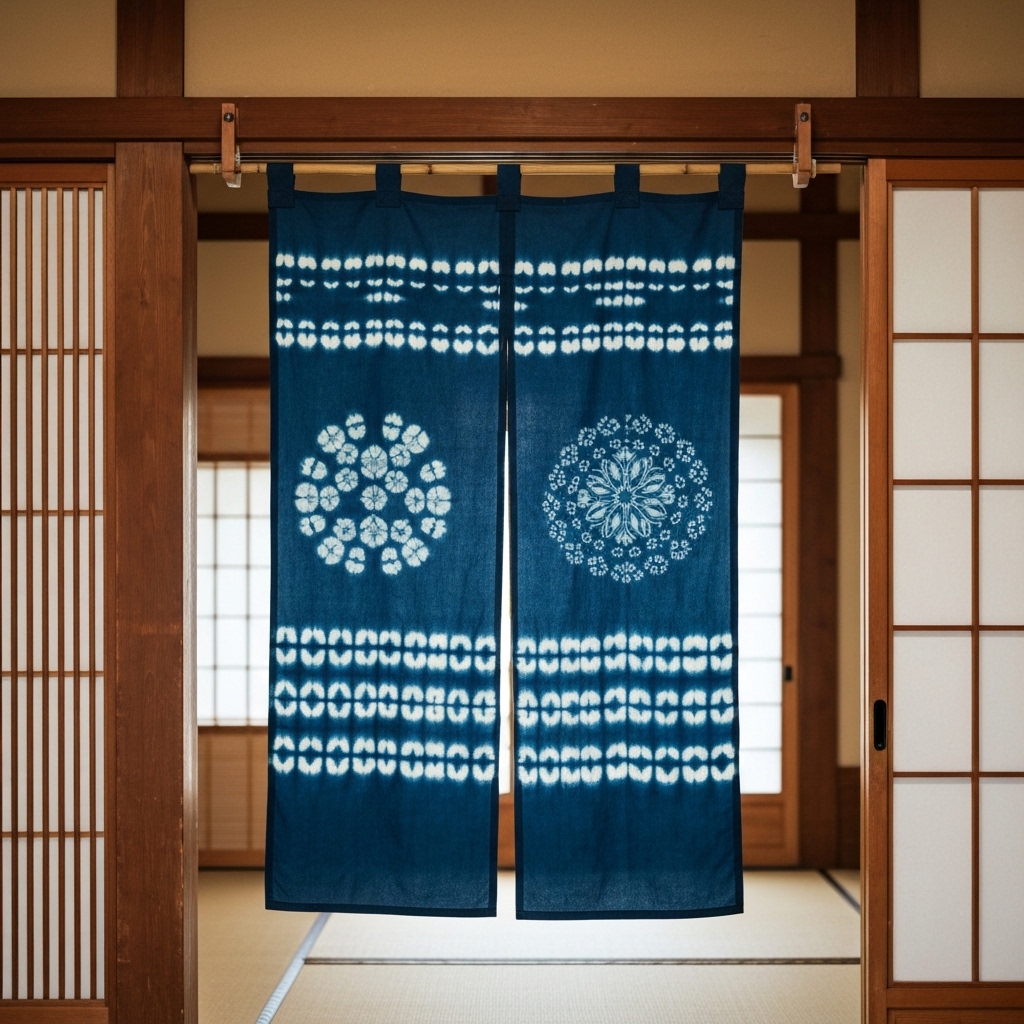
Colors: Certain colors are traditionally associated with specific industries. For example, deep indigo blue, achieved through aizome, is often seen in sake breweries and traditional craft shops. Red is considered auspicious and is frequently used in restaurants and establishments related to celebrations. White often denotes cleanliness and purity, and can be seen in tofu shops or places emphasizing hygiene.
-
Patterns: Motifs hold significant meaning. Bamboo represents resilience and good fortune, while cherry blossoms symbolize the ephemeral beauty of life. Waves signify perseverance and the cyclical nature of time. Cranes and turtles are symbols of longevity and are often found on noren outside shops that have been in business for generations.
-
Crests: Family crests (kamon) are powerful identifiers. They are often prominently displayed on noren, serving as a visual representation of the family's history, status, and values. These crests can range from simple geometric shapes to stylized depictions of plants, animals, or objects. For businesses, the kamon acts as a brand, instilling trust and confidence in customers.
The specific placement of these elements is also important. The shop's name is usually written in bold, clear characters, while the kamon may be positioned more subtly. Understanding this visual language enhances your appreciation for the art of the noren.
Noren in Everyday Japanese Life: Past and Present
From the bustling streets of Edo-era merchant towns to the modern-day urban landscape, the noren has maintained its presence in Japanese daily life. While its functional role may have evolved slightly, its cultural significance remains strong.
In the past, noren were primarily associated with businesses – shops, restaurants, sake breweries, and bathhouses. They served as both advertising and a symbolic barrier between the public and private spaces. Today, you’ll still see them outside countless establishments, beckoning customers inside.
Beyond commercial use, noren have also found their way into private homes. They are often used as room dividers, closet covers, or simply as decorative elements. In homes, noren can add a touch of Japanese aesthetics to any room, whether it's a minimalist modern apartment or a traditional tatami-mat room. The designs used in homes are often less formal than those seen in businesses, featuring more personal and artistic expressions. The fabric used inside might be something like kinu (絹, silk) for decor, or still a durable momen (木綿, cotton) for regular use.
The method for hanging a noren typically involves threading it onto a rod. This rod, called saotooshi (竿通し) sits within a rod pocket, and is most often a tsuppari-bou (突っ張り棒, tension rod) which makes installation very easy without needing nails or drilling. For a complete walkthrough on rods and mounting options, see our how to hang a noren curtain guide.
The noren is a testament to the enduring power of tradition in a rapidly changing world. It's a visual reminder of Japan's rich cultural heritage and a symbol of the country's unique aesthetic sensibilities. To learn more about the origins and deeper cultural meaning, see our article on what noren means and its history.
Expert Insight: When choosing a noren for your home, consider the overall style of your space. A simple, understated design in natural materials like linen will complement a minimalist aesthetic, while a more vibrant and intricately patterned noren can add a pop of color and personality to a more eclectic space. Think about the symbolism and colours, and how it relates to the mood you wish to create.
Materials and Construction: The Anatomy of a Noren Door Curtain
Traditional Fabrics: Hemp, Cotton, and Linen for Noren
For centuries, Japanese artisans have meticulously chosen fibers to craft 暖簾 (noren) that are not only aesthetically pleasing but also durable and functional. Each fiber brings unique characteristics to the finished product. While silk (絹, kinu) noren exist, often displayed indoors or as decorative art, the workhorses of the noren world are undeniably 麻 (asa – encompassing both hemp and linen) and 綿 (men – cotton fabric, especially 木綿, momen).
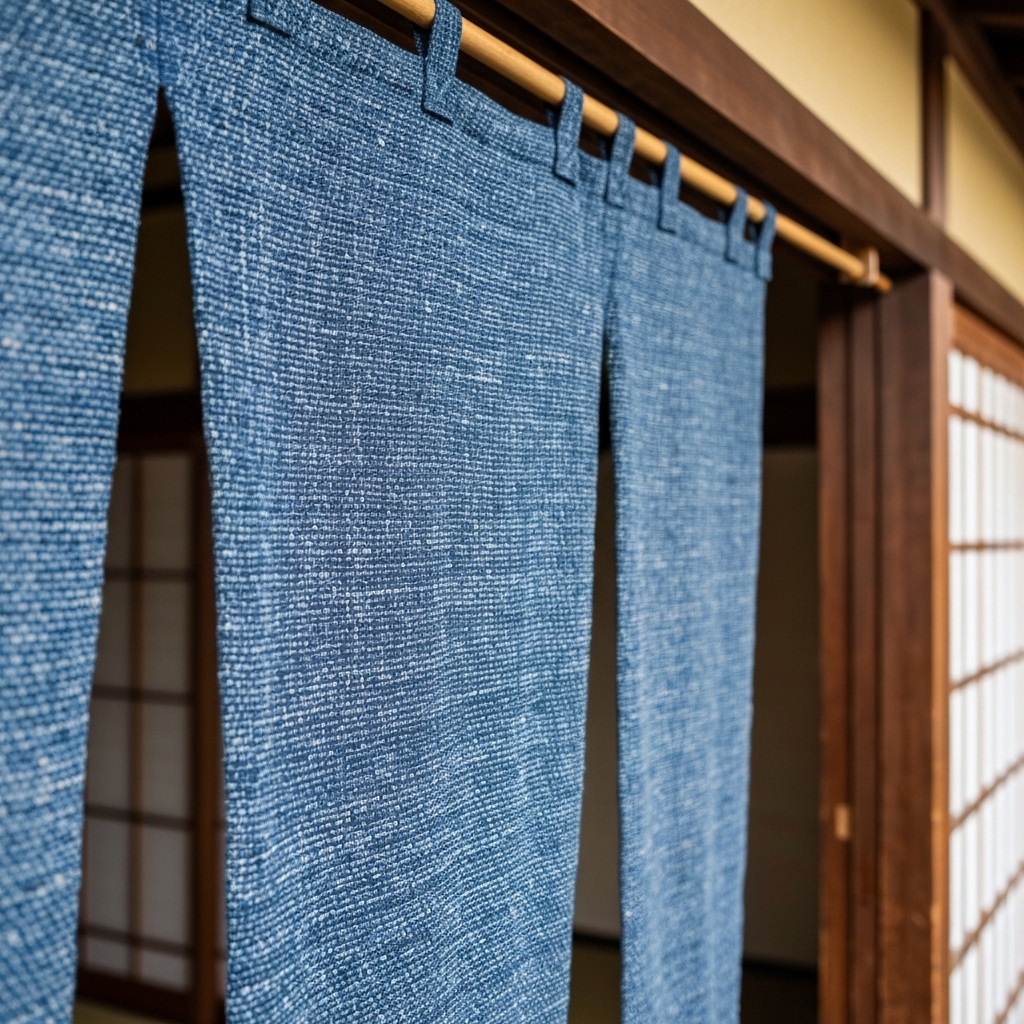
Hemp, particularly its coarser varieties, offers exceptional strength and breathability. Its inherent texture lends a rustic charm, often enhancing the natural dye processes. Consider the noren seen gracing the entrance to traditional soba shops – the thick, slubby hemp providing both privacy and a tangible connection to the earth. A standard thickness for hemp fabric used in noren is around 8-12 ounces per square yard, lending a robust feel.
Cotton, a softer alternative, readily accepts dyes and is easier to manipulate for intricate designs. This made it a popular choice for businesses seeking detailed branding through their noren. Before synthetic options, the durability of cotton noren also made them a popular choice, even outside in some cases.
Linen shares many properties with hemp, including durability and breathability, but typically boasts a smoother texture. High-end noren often feature linen, valued for its drape and ability to showcase fine artwork. For a deeper comparison of all noren fabrics, see our noren materials guide. When using linen for noren, fabric weights in the 6-9 ounce range are typical to provide a nice balance between weight and transparency. The tight weave and smooth surface make linen a good canvas for detailed designs.
Modern Material Adaptations: Polyester and Blends
While tradition holds strong, practicality has ushered in modern alternatives. Polyester, prized for its resilience and colorfastness, has found its way into contemporary noren production. Its resistance to fading and shrinking makes it a practical choice for high-traffic areas or outdoor use. You'll often find polyester noren adorning the entrances of modern ramen shops (ラーメン屋, ramen-ya) or izakaya (居酒屋) where durability is paramount.
Blends of cotton and polyester are common, seeking to combine the natural feel of cotton with the longevity of polyester. These blends offer a middle ground, providing a balance between cost, durability, and aesthetic appeal. The ratio of cotton to polyester affects the final product's drape, texture, and resistance to wear. Often a 65/35 blend of cotton to polyester is used to maintain a natural feeling, while increasing longevity.
Expert Insight: When choosing a modern fabric, consider the intended environment. Polyester holds up very well in rainy weather, and is less likely to stain compared to cotton.
Stitching Techniques and Finishing Details
The construction of a noren is as crucial as the material itself. Reinforced stitching is essential, especially at the top where the 竿通し (saotooshi – rod pocket) is formed to accommodate the hanging rod. This pocket often utilizes a double-folded hem, secured with a straight stitch or, for added durability, a zig-zag stitch. Standard pocket sizes range from 5cm to 7.5cm (approximately 2 to 3 inches) in height, accommodating various rod diameters.
The split at the bottom of the noren, typically one or multiple vertical slits, requires careful finishing. Simple turned hems are common for casual noren, while more elaborate designs might feature decorative stitching or even contrasting fabric edging. The depth of the slit impacts the ease of passage and the overall aesthetic. Shorter slits, perhaps only 15cm (6 inches) deep, provide more privacy, while longer slits, extending halfway or more up the curtain's length, allow for greater freedom of movement. The side seams are typically finished with a simple overlock stitch or a double-folded hem to prevent fraying and ensure longevity. The use of a lockstitch sewing machine creates a durable and lasting seam that can withstand years of use.
Choosing the Right Noren: Sizing, Style, and Placement Considerations
Measuring for the Perfect Fit: Width and Length Calculations
Selecting the appropriate noren size is fundamental to achieving the desired aesthetic and functionality. Rather than thinking solely of covering a doorway, consider the noren as a design element that interacts with the space around it. Width is dictated less by the doorway's exact opening and more by the visual balance you seek.
Typically, a noren should be slightly wider than the doorway it adorns, usually by about 10-20 centimeters (4-8 inches) on each side. This overlap allows for a gentle gathering and provides a more inviting appearance. For narrower doorways, this rule is even more important, preventing the noren from appearing stretched.
Length, on the other hand, is more variable and depends on the intended purpose. A short noren might hang to mid-thigh (around 90-100 cm or 35-39 inches), creating a playful, casual feel, often seen in ramen shops or casual izakaya (居酒屋, pubs). A longer noren might reach to just above the floor (approximately 170-180 cm or 67-71 inches for a standard doorway), offering more privacy and a sense of formality often associated with traditional businesses.
Think also about the height of the saotooshi (竿通し, rod pocket). If the rod is positioned higher than the doorframe, factor that additional height into your length calculation to ensure the noren hangs correctly. This is especially important with tsuppari-bou (突っ張り棒, tension rods) placed at varying heights.
Expert Insight: Before purchasing, use painter's tape to mock up the intended width and length on your doorway. This simple step allows you to visualize the final result and adjust measurements before committing to a specific size. For detailed measurement advice, consult our noren size guide.
Selecting a Style: One Panel vs. Split Noren Designs
The choice between a one-panel and a split noren dramatically impacts the accessibility and visual impact. If you're wondering how noren compare to standard curtains, our noren vs curtain comparison explains the key differences. While one-panel noren are less common in doorways, they find uses as wall hangings or decorative panels. They create an unbroken canvas for displaying artwork or intricate designs.
Split noren, with their characteristic vertical slits, are far more prevalent. The number of splits can vary, but three to five is typical for standard doorways. More splits create a lighter, more flowing appearance, while fewer splits offer greater privacy and a more structured feel.
Consider the ease of passage. More splits make it easier to walk through the noren without fully parting the fabric, ideal for high-traffic areas. Conversely, fewer splits require more deliberate movement, signaling a transition or entry more clearly. The depth of the slits also contributes; deeper slits allow for greater movement and ventilation.
For businesses, the placement of the shop's mon (紋, crest or emblem) is often considered when determining the splits. A mon might be centered on a single panel, or strategically placed across multiple panels to create a complete image only when the noren is at rest.
Placement Ideas: Enhancing Home, Business, and Garden Spaces
Beyond doorways, noren can transform various spaces. Within the home, consider using a noren to subtly divide living areas, creating a sense of separation without fully closing off the space — they're especially handy for apartment and rental-friendly decor. For instance, a noren could delineate a dining area from a living room in a small apartment.
In retail environments, noren aren't limited to the entrance. They can define specific sections within a shop, such as separating the fitting rooms or highlighting a particular product display. A tea room or traditional craft shop might use a series of noren to create a layered, intimate atmosphere.
Even outdoor spaces benefit from the charm of noren. Hang them in garden areas to create shaded walkways or define outdoor dining spaces. Choose noren made from durable materials suitable for outdoor use, keeping in mind exposure to sunlight and moisture.
Within traditional Japanese homes, noren might be used to conceal storage areas or add a touch of elegance to the tokonoma (床の間, alcove). Consider the lighting and existing decor when selecting a placement. A noren can soften harsh light or add a pop of color to a neutral space, seamlessly blending function and aesthetics.
Maintaining Your Noren Door Curtain: Cleaning and Care Tips
Taking proper care of your 暖簾 (noren) ensures its longevity and preserves its beauty. While cleaning seems straightforward, the chosen method can significantly impact the curtain's integrity and appearance. Japanese households have traditionally employed a variety of techniques, adapted to the noren's material and construction.
Washing Instructions: Hand Washing vs. Machine Washing
The decision to hand wash or machine wash your noren depends largely on its fabric composition, embellishments, and overall delicacy. While machine washing offers convenience, it's not always the gentlest option. Remember, a faded or damaged noren loses its charm and, arguably, some of its symbolic value.
For delicate fabrics like silk 絹 (kinu) or those embellished with intricate embroidery, hand washing is invariably the superior choice. Use a mild, pH-neutral detergent specifically formulated for delicate fabrics. Fill a clean basin or tub with lukewarm water – never hot. Submerge the noren and gently agitate it, avoiding harsh scrubbing or twisting. Rinse thoroughly with cool water until all traces of detergent are gone. Gently press out excess water; avoid wringing, which can distort the fabric.
When machine washing is deemed acceptable – typically for durable cotton 木綿 (momen) or linen 麻 (asa) noren with simple prints – take precautions. Place the noren inside a mesh laundry bag to protect it from snags and excessive abrasion. Select the "delicate" or "hand wash" cycle with cold water and a slow spin speed. Use a mild detergent, and consider adding a color catcher sheet to prevent dye transfer, especially for brightly colored or newly purchased noren. Never wash multiple noren together, particularly if they are different colors or fabrics.
Drying and Ironing Techniques for Different Fabrics
The drying method is just as crucial as the washing technique. Avoid using a machine dryer, as the high heat can shrink, fade, or damage the fabric, particularly natural fibers. Instead, air-dry your noren away from direct sunlight. Direct sunlight can cause fading, especially in 藍染め (aizome) or other naturally dyed noren.
For most fabrics, the best method is to gently reshape the noren while it is still damp and hang it on a padded hanger or lay it flat on a clean, dry towel. Allow it to air dry completely. Ensure the drying area is well-ventilated to prevent mildew growth. Avoid using clothespins, which can leave unsightly marks.
Ironing, if necessary, should be done with caution. Always check the fabric's care label before ironing. Use a low heat setting and iron on the reverse side of the fabric to prevent shine or damage to the print. For delicate fabrics like silk, use a pressing cloth between the iron and the noren to protect the fibers. If your noren has embellishments, avoid ironing directly over them. A steamer can also be used to remove wrinkles, especially for fabrics that are prone to creasing.
Expert Insight: To minimize wrinkles, gently stretch the damp noren by hand after washing, focusing on the edges. This helps maintain its shape and reduces the need for ironing.
Storage Solutions: Preventing Fading and Damage
Proper storage is key to preventing fading, damage, and insect infestation when your 暖簾 (noren) is not in use. Before storing, ensure the noren is completely clean and dry. Fold it neatly along its seams and place it in a breathable cotton bag or wrap it in acid-free tissue paper. Avoid plastic bags, which can trap moisture and promote mildew growth.
Store the noren in a cool, dark, and dry place, away from direct sunlight and humidity. A cedar-lined closet or drawer is ideal, as cedarwood naturally repels moths and other insects. Periodically check the stored noren for any signs of damage or discoloration. If you live in a humid climate, consider using desiccant packets to absorb excess moisture.
If your noren is particularly delicate or valuable, consider storing it flat in a specialized garment storage box. This prevents creases and protects the fabric from pressure. Avoid stacking heavy items on top of the stored noren, as this can cause permanent wrinkles or damage. Taking the time to store your noren properly will ensure that it remains a cherished part of your home for years to come.
DIY Noren Project: Creating Your Own Unique Noren Door Curtain
Basic Sewing Skills and Tools Required
Embarking on a noren (暖簾) creation journey is a rewarding experience, even with limited sewing prowess. A basic understanding of straight stitching, hemming, and turning fabric is sufficient for many designs. While hand-sewing is perfectly acceptable, particularly for smaller projects or intricate detailing, a sewing machine will significantly expedite the process, especially for larger noren.
Essential tools include:
- Fabric Scissors: Sharp scissors dedicated solely to fabric are crucial for clean, precise cuts.
- Measuring Tape & Ruler: Accuracy is paramount. A standard measuring tape (in centimeters and inches) and a clear ruler will ensure correct dimensions.
- Pins: Straight pins are indispensable for holding fabric layers together before sewing. Use glass-head pins as they are heat-resistant if you'll be ironing.
- Seam Ripper: Mistakes happen! A seam ripper allows you to undo stitches neatly without damaging the fabric.
- Iron & Ironing Board: Pressing fabric at each stage of the process (before cutting, after sewing seams, and after hemming) yields a professional-looking result.
- Sewing Machine (Optional): A basic sewing machine capable of straight and zig-zag stitches will make the construction much faster and stronger.
- Needles & Thread: Select needles appropriate for your fabric weight and thread that complements or matches your chosen fabric. Consider investing in a variety of thread colors.
- Marking Tools: Tailor's chalk, fabric pencils, or water-soluble markers are ideal for transferring patterns onto fabric without leaving permanent marks.
For more advanced projects, you might consider rotary cutters and cutting mats for quicker fabric cutting or specialized presser feet for your sewing machine, such as a hemming foot.
Designing Your Noren: From Inspiration to Pattern
The design phase is where your creativity takes center stage. Draw inspiration from traditional Japanese motifs – cherry blossoms (桜, sakura), bamboo (竹, take), waves (波, nami), or geometric patterns – or incorporate your own personal style.
Consider the setting where the noren will hang. A noren for a traditional ryokan (旅館, Japanese inn) might feature a simple, elegant design, while one for a child's room could be more playful and colorful.
When translating your inspiration into a pattern, start with a sketch on paper. Determine the desired dimensions of your noren, including the number and depth of the slits (割れ, ware). A typical noren slit extends approximately two-thirds of the way down from the top edge.
Transfer your sketch onto a larger piece of paper, creating a full-scale pattern. This allows you to visualize the finished product and make adjustments before cutting any fabric. Remember to account for seam allowances (typically 1-1.5 cm or ½ inch).
For complex designs, consider using stencils or templates. These can be created from cardboard or acetate sheets and are especially helpful for repeating patterns.
Expert Insight: For a contemporary twist, explore incorporating washi (和紙, Japanese paper) elements into your noren. You can appliqué small pieces of washi onto the fabric or even create pockets to hold decorative washi inserts.
Step-by-Step Guide: Cutting, Sewing, and Finishing
- Prepare the Fabric: Pre-wash and iron your fabric to prevent shrinkage and ensure accurate cutting.
- Cut the Fabric: Lay your fabric flat on a large, clean surface. Secure your pattern onto the fabric with pins and carefully cut out the noren shape, following the pattern lines. Remember to add seam allowances! Cut out any additional pattern pieces.
- Sew the Hems: Fold over the edges of the noren (typically 1 cm or ½ inch) and press with an iron. Fold over again to encase the raw edge and press again. Pin in place and stitch close to the inner fold to create a neat hem.
- Create the Slits: If your noren has slits, reinforce the top of each slit with a small, triangular stitch. This will prevent the fabric from fraying and tearing.
- Construct the Rod Pocket (竿通し, saotooshi): Fold over the top edge of the noren to create a pocket wide enough to accommodate your chosen rod (突っ張り棒, tsuppari-bou, tension rod). Sew along the bottom edge of the fold to create the pocket. Ensure the seam is strong enough to support the weight of the noren. Leave the sides open to slide the rod.
- Add Embellishments (Optional): Now is the time to add any embellishments, such as tassels, beads, or appliqués.
- Final Pressing: Give your finished noren a final pressing to remove any wrinkles and create a crisp, professional finish.
Beyond Aesthetics: Practical Applications of the Noren Door Curtain
Using Noren for Privacy and Partitioning
Beyond their aesthetic appeal, noren (暖簾) serve very functional purposes within the Japanese home and business. They offer a soft yet effective way to create privacy without fully closing off a space. Consider a small apartment where a single room serves multiple purposes. A carefully chosen noren, perhaps one made from a heavier momen (木綿) fabric for more opacity, can visually separate the sleeping area from the living space.
In older homes, where doorways might be wider than standard, a noren acts as an ideal solution for partitioning. Imagine a noren hung between the genkan (玄関, entryway) and the main living area, minimizing drafts during colder months and offering a degree of visual separation without completely blocking natural light. The split in the fabric allows for easy passage, a subtle invitation that a closed door simply doesn’t offer. The average slit will be about 15-20cm (6-8 inches) from the edge, providing adequate room to walk through while maintaining a sense of division.
Even in modern homes, noren find purpose. They can be used to subtly conceal storage areas or simply soften the visual impact of a cluttered bookshelf. It's a gentler alternative to a heavy door, promoting airflow and a feeling of openness while still maintaining a sense of order and defined spaces. This concept extends beyond the home; restaurants frequently employ noren to section off areas for private dining.
Expert Insight: For improved sound dampening in a shared space, choose a noren made from a thicker, quilted fabric. While not soundproof, the added weight will absorb some ambient noise.
Noren as a Branding and Signage Tool for Businesses
The noren's role extends far beyond purely decorative functions; they serve as a subtle yet powerful tool for branding and signage. Historically, businesses hung noren bearing their family crest or shop name outside their establishments as a visual announcement that they were open for business. This tradition continues today, with countless restaurants, shops, and traditional businesses utilizing noren as a core element of their visual identity.
For a restaurant specializing in ramen, a noren emblazoned with the character 麺 (men, noodles) instantly communicates the establishment's offerings. A traditional ryokan (旅館, Japanese inn) might feature its monshō (紋章, family crest) prominently displayed, reinforcing its long-standing reputation and heritage. The fabric itself conveys a message: a simple asa (麻, hemp/linen) noren might suggest a focus on natural, organic ingredients, while a richly dyed kinu (絹, silk) noren hints at a more upscale and refined experience.
The size and style of the noren also contribute to branding. A longer noren reaching closer to the ground creates a more formal and inviting atmosphere. The saotooshi (竿通し, rod pocket) design allows for easy interchangeability, enabling businesses to rotate their noren for special promotions, seasonal themes, or simply to refresh their visual appeal. This flexibility makes noren a cost-effective and versatile branding solution. Even small details, like the number and depth of the slits, contribute to the overall message.
Noren in Seasonal Decorating and Special Events
The Japanese appreciation for seasonality extends to every aspect of life, including interior decoration. Noren are readily incorporated into seasonal displays, reflecting the changing times of year and celebrating special occasions. For sakura (桜, cherry blossom) season, a noren adorned with delicate pink blossoms brings the beauty of spring indoors. As autumn approaches, noren featuring maple leaves in vibrant reds and oranges capture the spirit of koyo (紅葉, autumn foliage).
During traditional holidays, specific noren designs are often displayed. For example, during Shōgatsu (正月, New Year), a noren with auspicious motifs like daruma dolls or pine branches might be hung to welcome good fortune. In summer, light and breezy noren made from sheer fabrics are chosen to promote ventilation and create a sense of coolness.
Special events, such as festivals or store anniversaries, also present opportunities to utilize themed noren. A local festival might commission noren featuring the event's logo or mascot, contributing to the festive atmosphere. Businesses often use uniquely designed noren to promote special sales. Their light weight and ease of setup makes them ideal for short term decoration. This practice extends to personal celebrations too. A family hosting a hanami (花見, flower viewing) party might hang a noren at the entrance to their picnic area, adding a touch of Japanese elegance to the occasion.