Noren vs Curtain: What's the Difference? (Japanese Noren Guide)
A Tale of Two Textiles: Cultural Origins & Intended Purpose
Noren: Japanese Tradition & Shop Signage
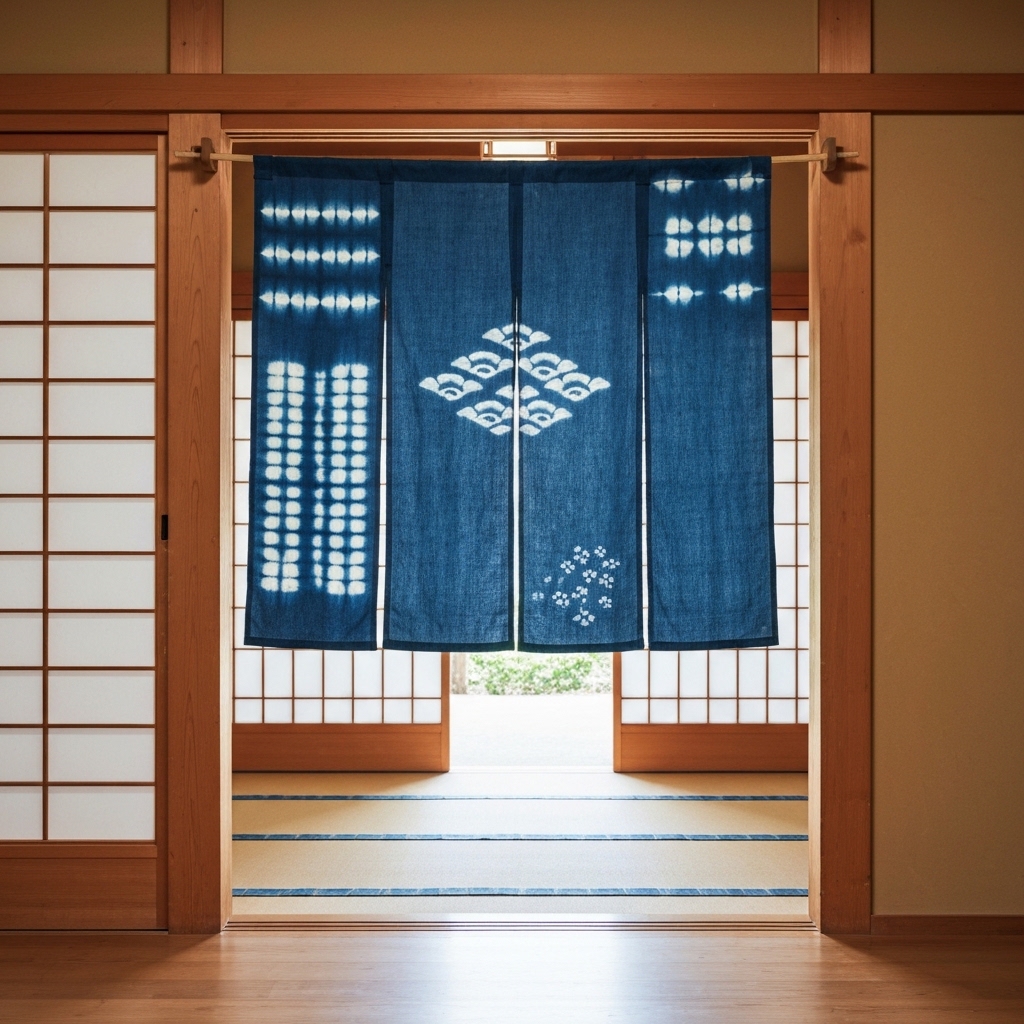
The noren (暖簾) is far more than just a piece of fabric hanging in a doorway; it's a symbol steeped in Japanese history and culture. Imagine strolling through the shitamachi (下町, old town) of Tokyo, or a traditional shopping street in Kyoto. What catches your eye? Often, it's the inviting noren hanging at the entrance of shops, restaurants, and even private homes. These fabric dividers aren't mere decoration; they're an integral part of the building's identity and an indication of what lies within. To dive deeper into noren's cultural roots, see our guide on the history and meaning of noren.
Historically, noren served a very practical purpose. Originally, they were used to protect shops from dust, sunlight, and drafts, especially for businesses crafting items that needed clean environments like sake breweries or dyehouses. Think of a sake brewery, needing to keep out unwanted elements during the fermentation process. A heavy, indigo-dyed noren (藍染め, aizome) made of thick momen (木綿, cotton) would have been ideal.
Over time, however, the noren evolved into much more. They became a form of signage, displaying the shop's name, logo, or even the goods they offered. A restaurant selling soba (そば, buckwheat noodles) might have a noren with the character "蕎" prominently displayed. A dye shop might showcase examples of their katazome (型染め, stencil dyeing) techniques. The designs are often intricate and beautiful, acting as a visual invitation to potential customers.
Traditional noren are typically made from asa (麻, hemp/linen) or momen (木綿, cotton), though silk (kinu, 絹) can be used for more formal or decorative purposes. The standard size is around 85cm (33.5 inches) wide and 150cm (59 inches) long, but this can vary significantly depending on the intended use and the size of the doorway. A shorter noren, called a han-noren (半暖簾), which usually measures half the length of a standard noren, is often used to indicate that a shop is open for business. When the han-noren is hung, it means "welcome". When it is taken down, it means "closed".
Noren are hung using a simple system. A rod pocket, called a saotooshi (竿通し), is sewn along the top edge of the fabric, and a rod, often a tsuppari-bou (突っ張り棒, tension rod), is passed through it to suspend the noren in the doorway. For step-by-step installation instructions, see our guide on how to hang a noren. The split in the fabric, usually one or two slits, allows people to easily pass through. The depth of the split can also hold symbolic meaning.
Expert Insight: When hanging a noren, consider the height of your doorway. Aim for the bottom edge of the noren to be a comfortable height for people to pass through without having to duck or lift the fabric. A good rule of thumb is to leave about 15-20cm (6-8 inches) of space between the floor and the bottom of the noren.
Curtains: Global History & Privacy/Decoration
In contrast to the noren's specific cultural roots, curtains have a much more global and diverse history. Archaeological evidence suggests that rudimentary forms of curtains, made from animal hides or woven plant fibers, were used in ancient civilizations like Egypt and Mesopotamia to provide shade, privacy, and protection from the elements.
Unlike the noren, which often serves as an invitation, the primary function of curtains has traditionally been to create a barrier – to control light, offer privacy, or insulate a space. Think of the heavy velvet curtains in a European palace, designed to block out drafts and create a sense of grandeur, or the simple cotton curtains in a farmhouse, providing privacy and filtering sunlight.
Curtains come in an astonishing variety of materials, styles, and sizes. From sheer lace curtains to blackout curtains, they cater to a wide range of needs and aesthetic preferences. Their hanging mechanisms are equally diverse, ranging from simple rods and rings to elaborate tracks and motorized systems. The designs, too, are limitless, reflecting diverse cultural influences and artistic movements. For noren-specific styling, browse our noren design ideas.
While curtains can certainly be decorative, their core purpose remains largely functional. They are a tool for controlling the environment within a space, whether it's regulating temperature, reducing noise, or creating a sense of seclusion.
Bridging the Divide: Occasional Overlap in Usage
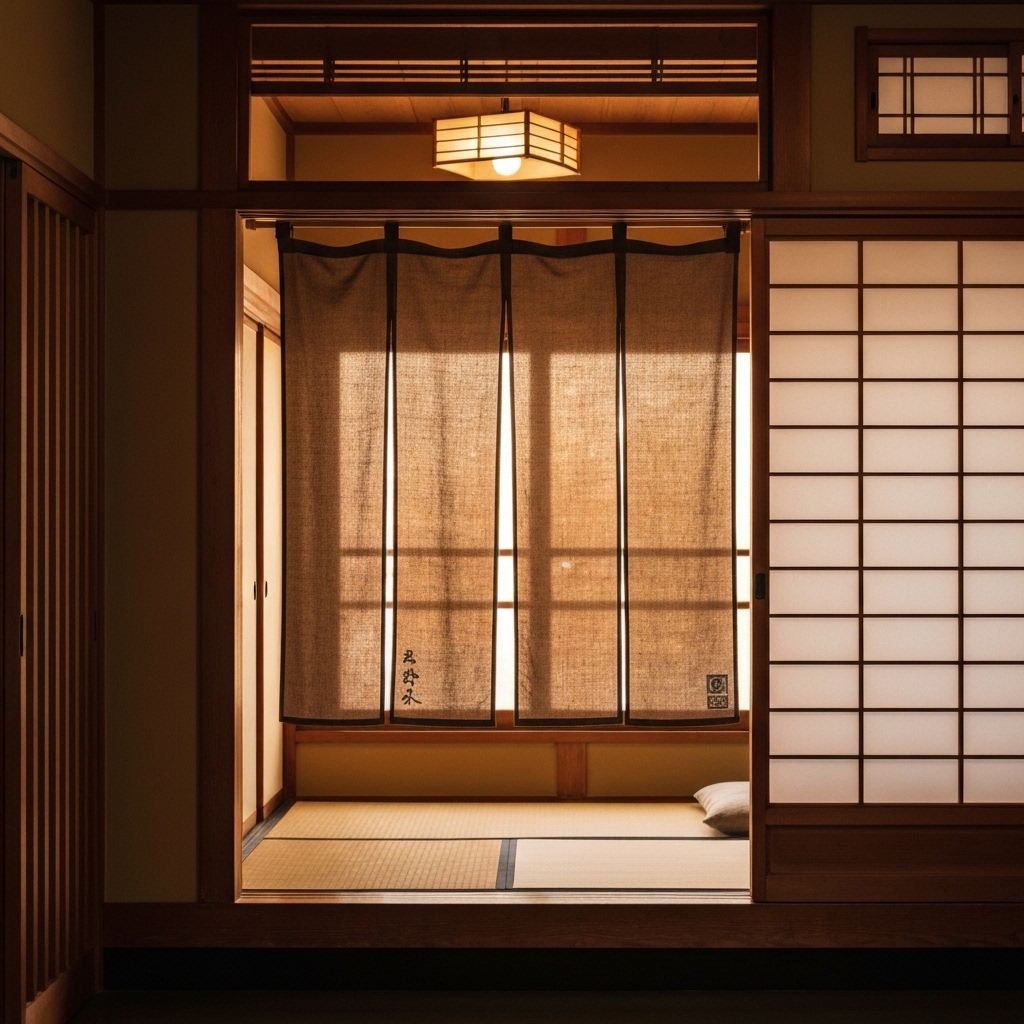
While noren and curtains have distinct origins and primary functions, there are instances where their usage overlaps. For example, in modern Japanese homes, you might find noren used as room dividers or closet curtains, fulfilling a similar role to traditional curtains. Conversely, in Western countries, some restaurants or businesses might use noren-inspired fabric dividers to add a touch of Japanese flair to their décor.
This blending of styles reflects a growing appreciation for cultural exchange and the adaptation of traditional elements to suit contemporary needs. However, it's important to understand the historical and cultural context of each textile to fully appreciate its significance and use it appropriately. Simply put, while a curtain can mimic the look of a noren, it will likely never capture the rich cultural meaning.
Material Matters: Fabric Choices Highlighting Noren vs Curtain Difference
Noren: Lightweight & Durable Materials (Cotton, Linen, Hemp)
The essence of a 暖簾 (noren) lies in its ability to subtly divide while allowing free passage. This inherent function dictates the choice of materials, typically leaning towards lightweight yet durable options that drape well and withstand daily wear. 綿 (men), specifically 木綿 (momen) – cotton fabric – reigns supreme. The natural breathability of cotton ensures that air circulates freely, an essential consideration for doorways in homes and shops, especially during humid Japanese summers. A standard cotton noren might weigh between 200-400 grams (7-14 ounces) depending on its size and the weave density.
麻 (asa), encompassing both linen and hemp, presents another popular choice. While slightly coarser in texture compared to cotton, linen and hemp boast superior strength and resistance to mildew. This makes them particularly suitable for outdoor applications or areas prone to moisture. A noren crafted from hemp might have a more rustic, textured appearance, adding a touch of traditional Japanese aesthetics.
The weave also plays a vital role. A looser weave promotes greater airflow, ideal for summer months, while a tighter weave offers slightly more privacy and protection from drafts during cooler seasons. The specific fiber weight will also vary depending on the construction of the fabric.
Curtains: Wide Variety Ranging from Sheer to Heavy (Velvet, Silk, Polyester)
In contrast to the focused material palette of noren, curtains embrace a vast spectrum of fabrics, catering to diverse aesthetic preferences and functional needs. From the ethereal lightness of sheer voile to the opulent weight of velvet, the curtain world knows no bounds. Silk, often associated with luxury, finds its place in formal living rooms, offering a lustrous drape and a delicate sheen. However, 絹 (kinu=silk) demands meticulous care and may not be ideal for high-traffic areas.
Polyester and its various blends dominate the market due to their affordability, durability, and resistance to wrinkles and fading. These synthetic fabrics can mimic the look and feel of natural fibers, offering practical solutions for modern homes. A heavy velvet curtain designed for light blocking can easily weigh several kilograms (multiple pounds) per panel, while a sheer polyester curtain might weigh just a few hundred grams.
The selection of curtain material hinges on factors like desired level of light control, insulation, privacy, and overall style. The diverse range of choices reflects the broader scope of curtains, extending beyond simple doorway dividers to encompass window treatments, room dividers, and decorative accents.
Performance Properties: Breathability vs. Light Blocking
The performance properties of noren and curtains directly correlate with their respective material compositions and intended uses. A key distinction lies in breathability versus light blocking. Noren prioritize airflow and partial visibility, whereas curtains often aim for privacy and light control.
The breathability of cotton and linen noren allows for natural ventilation, preventing the build-up of stale air and creating a more comfortable environment. While a noren does provide a degree of visual separation, it’s never intended for complete privacy, but rather a suggestion of space. This balance of openness and delineation is crucial to its functionality.
Curtains, on the other hand, are frequently chosen for their ability to block out light. Blackout curtains, made from tightly woven, often coated fabrics, effectively eliminate external light, ideal for bedrooms or home theaters. Thicker fabrics like velvet or densely woven cotton offer substantial light reduction, while sheer curtains provide minimal light filtering. The choice depends entirely on the desired level of light control and privacy.
Expert Insight: For a more traditional and unique noren, consider using a vintage furoshiki scarf repurposed as a doorway covering. Its inherent artistry and history add character and a personal touch. Just make sure to reinforce the 竿通し (saotooshi=rod pocket) area for added durability.
Construction & Design: Structure and Style Distinctions
Noren: Slit(s) for Passage, Rod Pocket Construction, Simple Designs/Logos
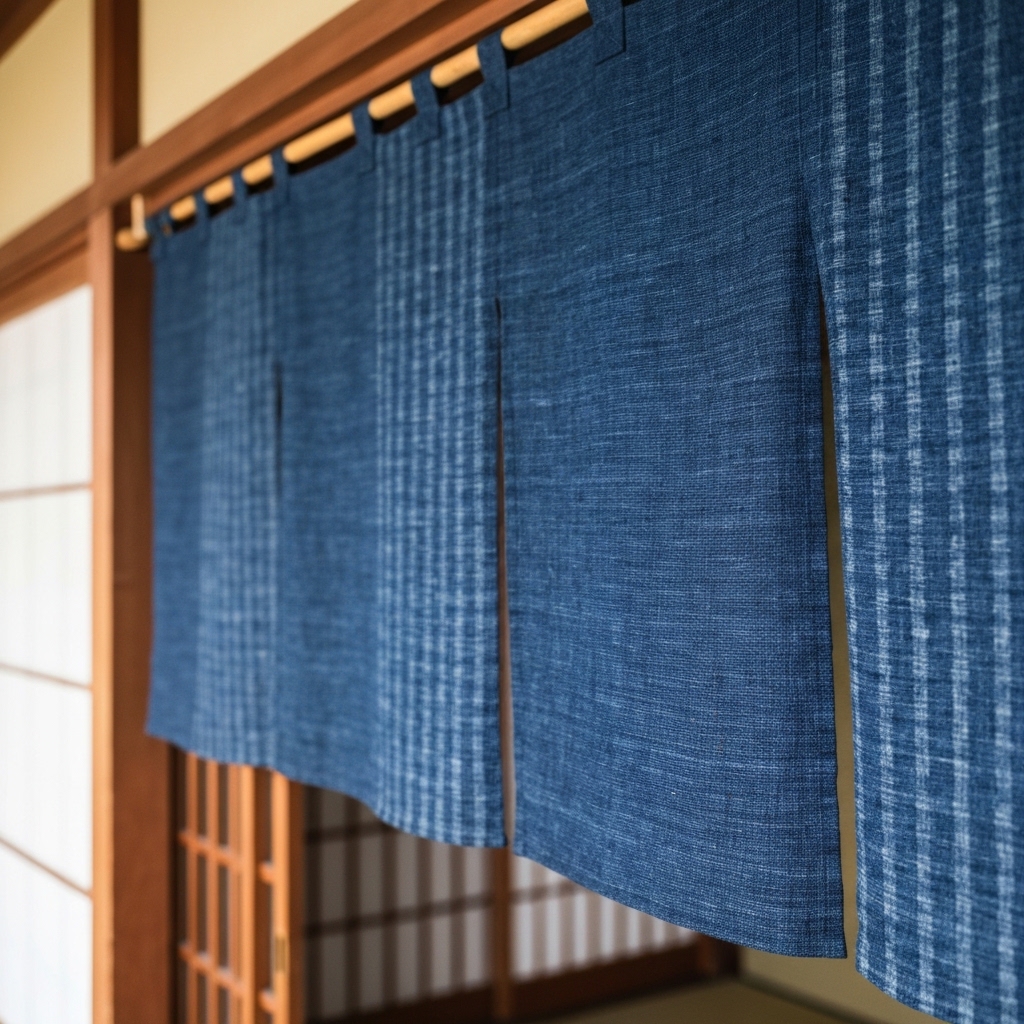
The defining characteristic of the 暖簾 (noren) beyond its cultural purpose is its distinct construction, geared towards both display and ease of passage. The presence of vertical slits, typically extending from the bottom edge upwards to about two-thirds of the noren's height, is paramount. These slits, called kireme (切れ目), are critical. A single slit is unusual; two or three are far more common. The depth of the slits influence not only the ease of entry but also the visual dynamism of the noren as it hangs and moves. In traditional settings like restaurants, a deeper slit might indicate a more casual or approachable atmosphere, while shallower slits might suggest a degree of formality. Consider that some specialized noren, such as those found in traditional dye houses or sake breweries, feature numerous, very deep slits to minimize wind resistance and maximize ventilation.
The saotooshi (竿通し), or rod pocket construction at the top, is intentionally simple. This allows for quick installation and removal. The pocket is typically a folded and sewn channel of fabric, ranging from approximately 5-10 cm (2-4 inches) in height, designed to accommodate a standard-diameter wooden or bamboo pole. The focus is on functionality, not embellishment. Reinforcement stitching around the saotooshi is common, particularly in noren intended for outdoor use, to withstand wind and weather.
Design-wise, noren often prioritize clear messaging and visual brevity. Simple logos, family crests (家紋, kamon), shop names written in bold calligraphy (書道, shodō), or iconic motifs are prevalent. Elaborate, highly detailed patterns are less common than in other textiles. A strategically placed circle or geometric pattern, repeated subtly, is more representative. The intent is to communicate essential information quickly and effectively to passersby. The effectiveness of a noren isn’t in complexity but clarity.
Curtains: Pleats, Grommets, Various Heading Styles, Complex Patterns/Prints
Curtains, in contrast, embrace a wider spectrum of construction and aesthetic possibilities. While a rod pocket is one option, it’s just the starting point. Pleated headings—pinch pleats, goblet pleats, or cartridge pleats—add structure and fullness to the fabric, creating a more formal and voluminous drape. Grommets, metal or plastic rings reinforcing holes along the top edge, offer a contemporary look and facilitate smooth gliding along the rod. Tab tops, tie tops, and even velcro attachments provide alternative hanging solutions.
The freedom in design is equally expansive. Curtains readily accommodate complex patterns, photorealistic prints, intricate embroidery, and a range of embellishments that would be impractical or stylistically inappropriate for a noren. Repeating floral patterns, geometric abstractions, scenic landscapes, and even abstract art find their place on curtain panels. Layering of patterns, textures, and colors is commonplace.
Furthermore, curtains often incorporate linings, interlinings, and weights to control light, improve insulation, and enhance drape. These additions contribute to a more substantial and tailored appearance, differentiating them significantly from the simpler, often unlined construction of the noren.
Hardware and Hanging Systems: Poles, Rods, Tension Rods
While both noren and curtains rely on some form of suspension, the hardware reflects their differing needs. For noren, a simple wooden or bamboo pole passed through the saotooshi is traditional. Often, this pole is simply supported by hooks or brackets attached to the doorframe or lintel. The emphasis is on ease of installation and a minimalist aesthetic. Expert Insight: To prevent a wooden pole from slipping off its supports, consider adding small rubber stoppers to each end.
Tension rods (突っ張り棒, tsuppari-bou) offer a no-drill alternative, particularly for lightweight noren hung in doorways. These rods rely on spring tension to grip the surrounding surfaces. For heavier noren, however, a permanently installed pole with secure brackets is preferable.
Curtains, especially heavier ones, often require more robust hardware. Metal rods in various diameters and finishes, often with decorative finials (end caps), are common. Brackets are designed to support the weight of the curtains and allow for smooth traversing. Traverse rods, equipped with cords or wands, enable easy opening and closing of the curtains. Rings, clips, and hooks connect the curtains to the rod, facilitating movement. The choice of hardware is integral to the overall design and functionality of the curtains.
Sizing & Placement: Achieving the Right Fit for Your Space
Noren: Doorway Width and Height Considerations, Ideal Hanging Height for Easy Passage
When selecting a 暖簾 (noren) for your doorway, understanding traditional Japanese proportions is essential for achieving an authentic aesthetic and practical functionality. Unlike Western curtains designed for comprehensive coverage, noren are intentionally partial, inviting passage and signifying an open, welcoming atmosphere.
The width is generally determined by the doorway opening, but it’s key to choose a noren slightly wider—typically by 5-10cm (2-4 inches) on each side. This allows for gentle gathering when hung, creating a pleasing visual texture and ensuring the fabric isn't stretched taut. A noren installed with no slack can look stiff and less inviting. Imagine the noren at the entrance of a traditional ramen shop; it's always slightly billowy, beckoning customers inside.
Height is where individual preference and the doorway’s purpose play the largest role. Common noren heights range from 90cm (35 inches) to 150cm (59 inches). Our noren size guide walks through how to measure any doorway or opening accurately. For a standard doorway (around 200cm or 79 inches), a noren of 120cm (47 inches) in height leaves ample space at the top and bottom, allowing for easy entry without obstruction.
However, consider the context. A noren for a kitchen entrance might be shorter (90cm), indicating activity within while allowing for easy carrying of dishes. Alternatively, a noren acting as a room divider or to partially conceal a storage area might benefit from a longer length (150cm). The goal is to allow a glimpse, not a full reveal.
Expert Insight: Before purchasing, temporarily hang a sheet or piece of fabric cut to the desired dimensions to visualize the noren's impact and ensure comfortable passage for everyone using the doorway.
Curtains: Window Size, Floor Length vs. Sill Length, Visual Impact Considerations
Curtain sizing focuses primarily on complete coverage and light control for windows. Measuring window width is crucial; curtains typically need to be 1.5 to 3 times wider than the window to achieve desired fullness when drawn. This "fullness factor" creates the soft folds and gathers that are characteristic of window coverings, preventing a flat, lifeless appearance.
Length is equally important and depends on the desired visual effect. Floor-length curtains, stopping just above the floor (around 1-2cm or 0.4-0.8 inches), are considered more formal and elegant, creating a sense of height and grandeur. They are especially suitable for living rooms and bedrooms.
Sill-length curtains, ending at the windowsill, are more practical for kitchens, bathrooms, or rooms where space is limited. They prevent the fabric from dragging on the floor, staying clean and preventing moisture absorption. A third option, apron-length curtains, extend a few inches below the sill, offering a compromise between formality and practicality.
Beyond measurements, consider how curtains will interact with the architecture of the room. A long, flowing curtain in a small room can overwhelm the space, while a short, minimalist curtain in a grand room might appear insignificant. The visual weight of the fabric – determined by its color, pattern, and texture – also impacts how a curtain affects the overall impression of the room.
When to Opt for a Noren Over Curtains (And Vice Versa)
The choice between a noren and curtains ultimately depends on the intended function and aesthetic goal. Noren are ideal for creating a sense of separation and defining spaces within a home or business while maintaining an open, welcoming atmosphere. Their traditional use in businesses, particularly restaurants and shops, highlights their ability to subtly suggest privacy while inviting patronage. Consider using them as a decorative element to partially conceal a pantry, divide a living room area, or even as a noren window treatment to add a touch of Japanese culture to your home.
Curtains, on the other hand, excel at providing complete privacy, controlling light levels, and insulating windows. They are a practical choice for bedrooms, home theaters, or any space where darkness and temperature regulation are priorities. Additionally, the wide range of fabrics, patterns, and styles available in curtains allows for greater flexibility in matching existing decor and creating a cohesive aesthetic throughout a room. Unlike noren that signal "welcome," curtains can communicate "privacy" or "coziness."
Care and Maintenance: Longevity & Upkeep Differences
Noren: Washing Instructions for Natural Fibers, Preventing Shrinkage and Color Fading
Maintaining the beauty and integrity of your 暖簾 (noren) requires a thoughtful approach, particularly when dealing with natural fibers like 綿 (men - cotton) or 麻 (asa - hemp/linen). Unlike some mass-produced textiles, a noren often carries the legacy of traditional craftsmanship, making gentle care essential.
For most 綿 (momen - cotton) noren, hand washing is the preferred method. Fill a basin or tub with cool water – hot water is a major culprit in shrinkage. Add a mild, pH-neutral detergent; harsh chemicals can strip the dyes, especially in traditionally dyed pieces. Gently agitate the water to distribute the detergent, then submerge the noren. Let it soak for no more than 30 minutes. Avoid vigorous scrubbing; instead, gently swish the fabric around to release any dirt.
Rinse thoroughly with cool water until no soap residue remains. To remove excess water, gently press the noren between two clean towels. Avoid wringing, which can distort the fibers. For 麻 (asa) noren, which tend to be more delicate, consider a shorter soak time and even gentler handling.
Drying is a critical step. Never put a natural-fiber noren in a machine dryer. Instead, hang it indoors or in a shaded area away from direct sunlight. Direct sunlight will accelerate color fading, especially in 藍染め (aizome - indigo-dyed) fabrics. A well-ventilated room is ideal to prevent mildew. If hanging, ensure the weight is distributed evenly to prevent stretching. For smaller noren, laying them flat on a drying rack is also an option.
Shrinkage is a common concern with natural fibers. Pre-shrinking the fabric before the noren is made can reduce this effect, but some shrinkage is still possible, particularly after the first wash. Expect approximately 3-5% shrinkage. To minimize this, always use cool water and avoid high heat during drying.
Expert Insight: For antique or particularly delicate noren, consider professional cleaning by a textile conservator. They have the expertise to handle fragile fabrics and historical dyes safely.
Curtains: Cleaning Codes, Spot Treatment, Dry Cleaning Considerations
Curtain care often hinges on the fabric composition, as indicated by cleaning codes typically found on the care label. These codes provide guidance on the appropriate cleaning methods, ranging from vacuuming and spot cleaning to dry cleaning or machine washing.
Spot cleaning is often the first line of defense for minor stains. A gentle, water-based stain remover can be effective for many common spills. Always test the cleaner on an inconspicuous area of the curtain first to ensure it doesn't cause discoloration or damage. Blot the stain gently from the outside in, avoiding rubbing, which can spread the stain and damage the fibers.
For more thorough cleaning, the care label may indicate machine washing. Use a gentle cycle and cold water to minimize shrinkage and color fading. Tumble dry on low heat or hang to dry. However, certain fabrics, such as silk or velvet, are almost always best left to professional dry cleaners.
Dry cleaning uses chemical solvents to remove stains and dirt without water. While effective, it's important to choose a reputable dry cleaner with experience handling delicate fabrics. Be sure to point out any stains or areas of concern to the cleaner before they begin. Some dry cleaning solvents can be harsh, so inquire about their cleaning process and any potential risks to the fabric.
For heavier curtains, consider professional cleaning, even if the care label suggests other methods. The weight of the fabric when wet can damage it during washing or drying.
Ironing and Steaming Techniques for Optimal Appearance
Both noren and curtains benefit from proper ironing or steaming to remove wrinkles and maintain a crisp, clean appearance. However, the appropriate technique depends on the fabric.
For cotton 暖簾 (noren), ironing is generally safe and effective. Use a medium heat setting and a spray bottle of water to dampen the fabric slightly before ironing. Iron on the reverse side to protect the dyes and prevent shine. Pay attention to any embellishments or embroidery, and iron around them carefully.
Linen 暖簾 (noren) can also be ironed, but it requires a higher heat setting and more moisture. Iron while the fabric is still slightly damp for best results. A steam iron can be particularly helpful for stubborn wrinkles.
For curtains, the ironing approach depends on the fabric. Polyester and other synthetic fabrics can usually be ironed on a low heat setting. However, silk and velvet curtains should be steamed rather than ironed to avoid crushing the pile or damaging the fibers. A handheld steamer is a convenient tool for removing wrinkles from curtains while they are hanging. Always test the steamer on an inconspicuous area first to ensure it doesn't cause water spots or damage. Use distilled water in your steamer to avoid mineral deposits.
For both noren and curtains, always iron or steam in the direction of the weave to prevent distortion. With proper care, your textiles can continue to enhance your home for many years.
Beyond the Basics: Repurposing and Creative Uses for Both
Noren: Interior Decoration, Wall Hangings, Room Dividers
Beyond their traditional doorway role, 暖簾 (noren) offer surprising versatility within the home. Consider a shorter, wider 暖簾 (approximately 90cm x 70cm, or 35" x 28") as a striking headboard alternative. Attach it tautly to a wooden frame or directly to the wall for a subtle, artistic statement. A 藍染め (aizome) noren can create a calming, organic ambiance in the bedroom.
For larger, open spaces, multiple 暖簾 hung in succession create a soft, flowing room divider. Layering different lengths and textures adds visual interest and depth. Imagine two 麻 (asa) noren hanging side-by-side, one slightly overlapping the other, creating a dynamic partition between a living area and dining space. Or, consider using a set of three narrower 暖簾 (30-45cm wide, 12-18") to create a more permeable barrier, allowing light and air to flow freely.
Don't limit yourself to doorways or partitions. Smaller, decorative 暖簾 can be repurposed as wall hangings. Frame a particularly beautiful piece, such as one with a bold 型染め (katazome) pattern, to showcase its artistry. For a more casual display, simply hang the 暖簾 using decorative clips or tacks. Consider rotating your wall hangings seasonally to reflect the changing moods and festivities. A vibrant 木綿 (momen) noren featuring cherry blossoms in spring gives way to a cool, indigo-dyed wave design in summer.
Curtains: Headboard Alternatives, Photo Backdrops, Craft Projects
While traditional curtains are primarily window coverings, their fabric panels offer opportunities for creative adaptation beyond the expected. Solid-colored or patterned curtains can mimic the effect of an upholstered headboard without the permanence. Instead of a full-sized noren, a single curtain panel can be hung behind the bed, either gathered for a soft, romantic feel or stretched taut for a cleaner, more modern look. The versatility of curtain fabrics means easy matching to existing bedroom décor.
Curtains, especially those with striking patterns or textures, make excellent photo backdrops. They're easily portable and provide a consistent, professional look for portraits or product photography. Think of a shimmering, velvet curtain as a backdrop for product shots or a linen curtain for a natural light portrait. The large surface area means the options are nearly limitless.
Beyond decorative uses, older or damaged curtains can be deconstructed and repurposed for craft projects. Use the fabric for creating patchwork quilts, tote bags, pillow covers, or even garment linings. The weight and durability of many curtain fabrics make them ideal for projects requiring sturdiness.
Upcycling Ideas: Giving Old Textiles New Life
The key to successful upcycling lies in recognizing the inherent value of the textile itself, regardless of its original purpose. Old 暖簾 and curtains, whether stained, faded, or simply no longer fitting your aesthetic, offer a wealth of material for imaginative projects.
Transform worn 暖簾 into unique tote bags or shopping bags. The 竿通し (saotooshi), the rod pocket, can be repurposed as sturdy handles. For added durability, consider lining the bag with a salvaged piece of curtain fabric.
Old curtains can be used to create custom lampshades. Use the fabric to cover existing lampshades or create entirely new ones using wire frames. Choose fabrics with interesting textures or patterns to add visual interest to your lighting.
Scraps from both 暖簾 and curtains are perfect for crafting small items like coasters, placemats, or even framed textile art. Combine different fabrics and textures to create unique and personalized pieces. Consider using traditional Japanese techniques, such as sashiko stitching, to embellish these creations.
Expert Insight: Before discarding any old 暖簾 or curtains, carefully assess the fabric for potential. Even small pieces can be used for mending other textiles, creating appliques, or adding decorative accents to existing home furnishings. Don't underestimate the value of even the smallest scrap!